Is Your AI Falling Short? It's Probably Bad Data
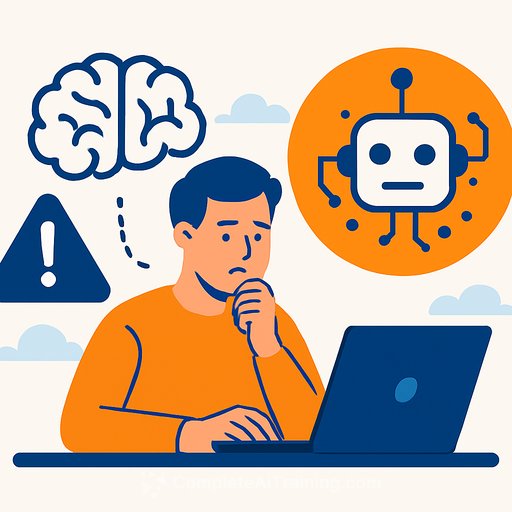
Higher education teams are excited about AI. But the gap between promise and real results almost always comes down to one thing: data. If you want AI that is trusted, adopted and scaled, you need a data foundation that is clear, governed and operational.
Tools matter, but they aren't step one. Before debating Copilot vs. Gemini or build vs. buy, get your data house in order. Know what you have, where it sits, who owns it and how it's classified, secured and maintained.
AI Adoption Starts with Data Governance
AI will mirror your data. If your data is unclassified, inconsistently defined, stale or poorly secured, the model will amplify those issues. That's how you get outputs in the wrong voice, outdated references or advice that doesn't fit institutional policy.
Data governance gives you shared definitions, clear ownership and protection for sensitive records. It also sets expectations for quality and access. Without it, you'll see trust drop and tool adoption stall. Institutional leaders can begin aligning strategy and governance with the AI Learning Path for CIOs.
Embedded AI vs. Custom AI
There are two broad flavors:
- Embedded AI: Features built into tools you already use. Lower lift, but still dependent on your data hygiene and configuration.
- Custom AI: Models and solutions trained or tuned on your institutional data (student success, retention, advising, operations).
Both need governance. With embedded AI, poor prompts, mixed language variants or outdated content erode confidence. With custom AI, low-quality data leads to weak predictions - missed retention signals, misaligned course recommendations or inaccurate support triage.
What Data Governance Looks Like in Higher Ed
Governance is more than a committee and a policy PDF. It's practical guardrails that remove ambiguity and reduce risk. Classic examples: "USA," "US," and "United States of America" treated as different values; form fields that mean different things to different departments; ad hoc data pulls that clash with institutional definitions.
Good governance creates a single source of truth. It clarifies definitions and metrics, sets access controls, protects sensitive data and states what is off-limits for AI. For compliance-heavy datasets, this also means aligning with regulations like FERPA. Teams working on policy and compliance may find the AI Learning Path for Regulatory Affairs Specialists useful.
AI Governance: Make Models Accountable
AI governance builds on data governance. It defines what data can be used for training, how freshness is maintained and how to evaluate outputs. It also requires a way to spot and correct harmful or biased outcomes and to explain how important decisions were made.
- Document intended use, risks and limitations (model cards or similar).
- Track drift, feedback and incidents, and tie fixes to clear owners.
- Audit prompts, data sources and access to sensitive fields.
For reference frameworks, see the NIST AI Risk Management Framework.
Siloed Data, Centralized Standards, Real Autonomy
Universities are famously siloed. Giving everyone broad access and asking each unit to "figure it out" invites inconsistent blends, mismatched metrics and security gaps. Locking everything down stalls progress.
The sweet spot: centralized standards and curated data products, paired with governed self-service. Think a secure, well-documented data platform; predefined datasets for common questions; and departmental access within clear guardrails.
Example: An academic department needs to justify a new 400-level course. Instead of stitching together exports, they pull a governed dataset with agreed definitions, refresh cycles and approved fields. Faster, safer and consistent across the institution.
A Practical, No-Drama Roadmap
- Current-state snapshot: Map systems, data owners, classifications, sensitive fields and sharing patterns.
- Governance workshop: Align on definitions, stewardship, metadata standards, access tiers and approval paths.
- Data quality assessment: Score accuracy, completeness, consistency, timeliness and alignment to institutional definitions. Prioritize fixes that unblock near-term AI use cases.
- Curated data products: Publish reusable, documented datasets for high-demand questions (enrollment, advising, financial health, student support).
- AI governance guardrails: Set policies for training data, evaluation, human-in-the-loop review, red-teaming and incident response.
- Pilot with purpose: Start with one or two use cases where quality data already exists. Prove value, capture feedback, expand. Practical pilot and governance practices are covered in the AI Learning Path for Project Managers.
Definition and Quality Checklist
- Single definitions for key terms (student status, program, retention, completion, aid).
- Owner and steward for each data domain.
- Classification labels and rules for PII, PHI and sensitive attributes.
- Refresh cadence documented and monitored.
- Access tiers mapped to roles; sensitive fields masked or excluded from AI where needed.
- Error budgets and data quality SLAs for critical datasets.
Common Failure Patterns (and Fixes)
- Mixed definitions across units: Publish institutionwide metric guides and enforce in BI/AI tools.
- Shadow spreadsheets driving decisions: Replace with governed data products and self-service access.
- One-off AI experiments: Tie every pilot to a curated dataset, clear success metrics and a review path.
- Security as an afterthought: Classify first, then grant access. Mask sensitive fields in training/evaluation data.
Bottom Line
AI won't fix messy data. It will magnify it. Put governance first, ship small wins, and scale what works. That's how AI moves from hype to daily use across your campus.
If your teams need upskilling to support these steps, browse practical programs by role at Complete AI Training.
Your membership also unlocks: