
AI news ·
Warner Bros. Discovery revamps ad-tech stack with agentic AI and AWS
Warner Bros. Discovery is using AI agents to unify linear and digital ad buying. The shift follows a 7% Q1 revenue drop to $1.85 billion for its ad business.
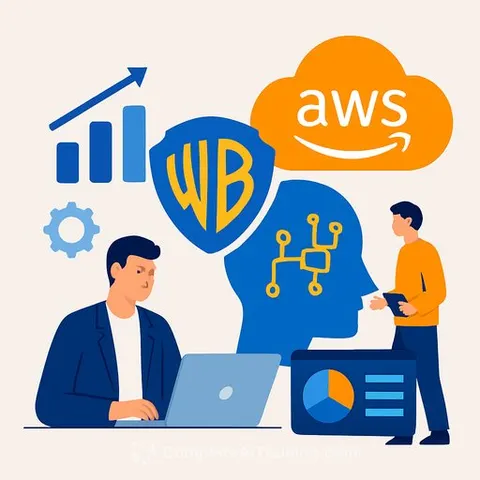
Warner Bros. Discovery is rebuilding its advertising technology stack around agentic AI, aiming to unite linear TV and digital ad buying on a single automated platform. The move, supported by Amazon Web Services and announced days before the Cannes Lions festival, shifts media planning, forecasting, campaign optimization, and measurement to AI agents that can learn and improve over time, the company said Wednesday.
Traditional siloed internal workflows will give way to a more automated, data-powered approach, with AI agents handling media planning, dynamic forecasting, real-time campaign optimization, and closed-loop measurement. The goal is to help advertisers better deploy their spend across WBD's properties and more easily experiment with newer ad formats on both linear and digital channels.
Unifying linear and digital under one AI roof
The platform overhaul brings linear TV and digital buys together under a single system - a structure WBD says will make it easier for advertisers to plan, target, and measure campaigns. AI agents will "continuously self-optimize," the company said, learning over time to deliver better outcomes. WBD has assured advertisers that human oversight remains in place for key decisions, and it argues that a smoother backend experience also benefits viewers by serving more personalized, contextually relevant ads.
The unified approach reflects how central AI for marketing has become to bridging the gap between historically separate linear and digital teams.
AWS partnership deepens for data security and scale
WBD is leaning on AWS services including Amazon Bedrock AgentCore, Amazon SageMaker, and Amazon Quick to build the AI backbone. The company said the cloud partnership will help maintain data protection and security while delivering the scale needed for real-time campaign optimization. New agentic capabilities are already rolling out this year in areas like direct response advertising, commercial workflows, audience forecasting, and measurement and attribution. In Q3, WBD plans to introduce a unified media planning tool, followed by AI-driven order management, pricing, and stewardship features.
Race for agentic ad platforms heats up
WBD's announcement lands amid a flurry of agentic ad-buying news ahead of Cannes Lions. Fox earlier this week claimed the first end-to-end agentic platform for advertising, with partners including WPP, Horizon Media, and Comcast's Universal Ads. While it is still early to gauge how deeply agentic AI will reshape advertising, many platforms and publishers are moving quickly to automate more of the ad-buying process.
WBD's advertising business reported a 7% year-over-year revenue decline to $1.85 billion in the first quarter, which the company attributed to linear TV softness and a lighter NBA programming slate. A pending mega-merger with Paramount, which recently cleared a Department of Justice review, could further change how WBD handles advertising in the months ahead.
Why this matters for marketing professionals
For media buyers and brand marketers, WBD's shift to agentic AI promises a more streamlined way to allocate budgets across a portfolio that spans streaming, digital, and linear TV. The ability to run campaigns that can self-optimize in real time could reduce manual planning workloads and improve return on ad spend. Yet the value hinges on how well the AI agents perform in practice, and whether the promise of closed-loop measurement delivers better attribution than existing tools. As agentic AI goes from pilot to production across major media owners, marketing teams that learn to work with these systems early may gain an edge in campaign efficiency and audience targeting.