Warner Music + Suno: The deal that resets AI music
Warner Music Group (NASDAQ: WMG) and Suno just moved the industry from lawsuits to licensing. Announced November 25, 2025, the pact establishes a first-of-its-kind framework for training and releasing AI music with permission, payment, and artist control baked in.
For creatives, this is the shift that turns AI from a threat into an option. Consent, credit, and compensation become the baseline, not an afterthought.
Why this matters for creatives
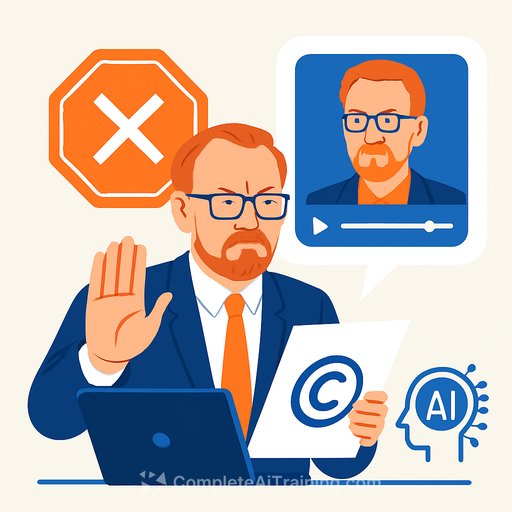
- Consent on your terms: an opt-in path for names, likenesses, voices, and compositions.
- New income lines: catalog used for training can generate payouts beyond streams and sync.
- Better tools: licensed models reduce legal gray zones for commercial work.
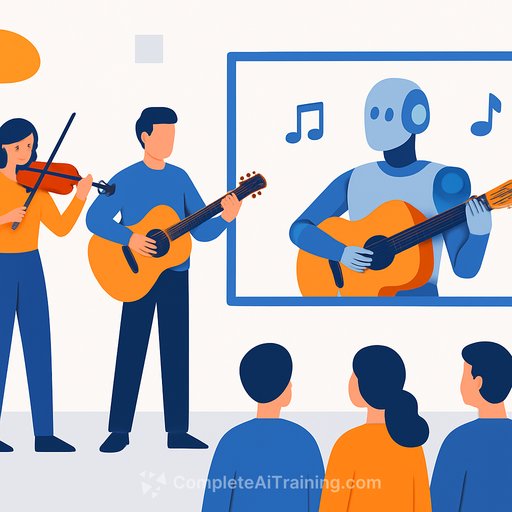
- More competition: AI songs will crowd release calendars and playlists.
- Higher bar for originality: your taste, POV, and live presence matter more.
Inside the tech (plain English)
WMG will license its catalog so Suno can train next-gen models on approved data. Suno runs a multi-model stack mixing transformer and diffusion systems that map musical structure, vocal style, timbre, rhythm, and arrangement.
Recent versions (v4-v5) generate expressive vocals, full songs at 44.1 kHz, and support 1,200+ genres. Features include Covers, Personas, Remaster, Extend, and watermarking for provenance. The big win: stronger song structure and fewer artifacts than earlier AI music tools, inside an interface anyone can use.
Industry ripple effects
WMG becomes the first major to formalize a licensed AI framework, putting pressure on Universal (NYSE: UMG) and Sony (NYSE: SONY) to pick a lane. Clean, licensed training data moves from "nice to have" to "table stakes" across creative AI.
Suno's purchase of Songkick connects creation to touring and fan activity. Expect songwriting, distribution, and live engagement to feel more linked-studio to stage to superfans, possibly extending into VR/AR experiences.
The next 1-3 years
- Licensed Suno models launch in 2026 with clearer usage lanes for commercial work.
- AI shifts into "co-writer" territory: hooks, harmonies, lyrics, and arrangement sketches on tap.
- AI-native plugins normalize in mixing, mastering, and sound design; faster drafts, tighter budgets.
- Marketing gets sharper: granular recommendations, segment-specific campaigns, and dynamic creative testing.
- Production libraries swell; briefs demand stronger concepts and distinct vocal identity.
Beyond 3 years
- New genres emerge from style-blending at scale.
- Hyper-personalized music (mood, activity, biometrics) becomes common.
- AI dominates utility niches: retail beds, UGC background, social loops.
- Some experts even suggest a large share of charting tracks could include AI in the workflow.
- Open questions remain: ownership, splits, deepfake risks, and bias in training data.
Your playbook (start here)
- Set your consent policy: define how your name, voice, and likeness can be used. Be explicit.
- Lock your splits: pre-negotiate how AI-assisted works are credited and paid.
- Build a style kit: vocal references, lyric themes, tempo ranges, and arrangement notes for faster iteration.
- Label provenance: tag tracks as human, AI-assisted, or AI-generated; keep stems and prompts on file.
- Protect your voice: enroll in verified voice-ID and watermarking wherever available.
- Pilot responsibly: use AI for demos, exploration, and production polish before major releases.
- Design live-first: invest in performance, storytelling, and community-moats AI can't copy.
- Get legal eyes: align contracts and clearances with opt-in frameworks and future payouts.
Guardrails worth keeping
- Consent before cloning-no exceptions.
- Clear credits and royalty splits on every release.
- Provenance disclosure to fans and clients.
- Do-not-train and do-not-clone lists respected across platforms.
- Use licensed tools for commercial work; avoid gray-area datasets.
Useful links
Skill up (if you want structured learning)
Bottom line
This deal swaps courtroom drama for a licensed system that pays rights holders and gives artists agency. Expect better tools, tougher competition, and a premium on voice, narrative, and live energy.
If you create for a living, treat AI like a collaborator, not a crutch. Set your rules, keep your receipts, and make the kind of work a model can't fake-taste, presence, and a point of view.
Your membership also unlocks: