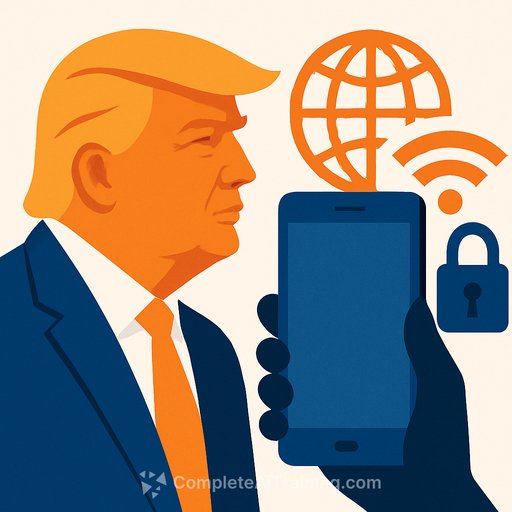
The New Era of Imperial Technological Governance
Five months into his second presidency, Donald Trump is shaping a new phase of technological governance where US federal power increasingly overshadows domestic and international regulatory bodies. Big Tech's influence is at the core of this shift, reinforced by aggressive lobbying and strategic appointments aligned with the administration's priorities.
Despite tensions with Trump’s tariff policies, the tech industry benefits as Republican lawmakers work to block AI regulations not just at the federal level—which was always a tough battle—but also within states and abroad. This approach aims to centralize AI regulatory authority within the White House, limiting states' roles in shaping AI policy.
Federal Preemption Over State AI Regulation
Within the recent “big, beautiful” budget bill, there’s a proposal for a decade-long ban preventing US states from regulating AI. Such a ban would hinder efforts to enforce transparency, protect consumers from unfair algorithmic practices, and limit invasive worker surveillance. While Senate rules may obstruct this ban, Senator Ted Cruz has vowed to pursue similar restrictions in forthcoming legislation.
Federal preemption is a familiar tactic for the tech industry to sidestep restrictive state laws. It also aligns with Republican goals to concentrate AI regulation power in the executive branch, sidelining localized oversight.
Geopolitics Over States’ Rights
The debate around this ban has shifted away from traditional states’ rights concerns toward geopolitical anxieties. Congressional hearings have largely focused on fears that a patchwork of state AI laws could weaken US companies’ global competitiveness against China.
Speakers often referenced the European Union’s regulations like GDPR and the AI Act as examples of overregulation that stifled innovation. The core message: to outpace China, the US must avoid becoming “another Brussels.”
Shifting Dynamics with the European Union
However, the EU itself is adapting. Prior to AI regulation debates, the Trump administration pressured the EU to soften laws like the Digital Services Act and Digital Markets Act. At a recent AI summit in Paris, US Vice-President J D Vance criticized “onerous international rules” affecting US businesses. Meanwhile, French President Emmanuel Macron suggested the EU should simplify its tech laws to better align with global standards.
This pressure is yielding results. The EU’s AI Continent Action Plan signals a more flexible regulatory stance, and enforcement agencies have reduced fines on US companies. Simultaneously, US tech firms continue lobbying the European Commission for lighter AI regulations.
Trade Policy and Tech Regulation
Tech regulation remains central in trade negotiations. In May, Trump threatened 50% tariffs on EU imports amid stalled talks over digital taxes and regulation. US politicians portray the “Brussels Effect” as a misstep by the EU, arguing that overreach has weakened European tech. Now, a “Washington Effect” is emerging, contracting tech governance at all levels to reinforce the dominance of US firms, with growing federal control.
Contrasting Approaches to Global Tech Dominance
Former President Joe Biden pursued multilateral coordination, working with allies to manage AI safety and restructure tech hardware supply chains. In contrast, Trump views the economy as a market for extracting profit rather than a network of interconnected supply chains.
By dropping Biden’s semiconductor export restrictions, the Trump administration signals it won’t use access to critical technologies like GPUs as leverage in international negotiations. This reflects a preference for unilateral moves over multilateral cooperation.
Centralizing Power in Washington
Trump’s blunt stance on EU tariffs—“I’m not looking for a deal. We’ve set the deal”—mirrors his domestic strategy. Biden’s approach of engaging state lawmakers on key issues has been replaced by efforts to make the White House the sole hub for AI policymaking. This includes banning states from enacting their own AI protections.
These policies work in tandem: while federal officials pressure foreign governments to ease regulations, Congress seeks to eliminate state-level oversight. Washington is positioned as the exclusive decision-maker.
The Outlook for US Tech Governance
Even as regulatory efforts pull back, federal authority will largely determine the future of US tech development. Success in the AI race depends heavily on political influence and state power, alongside private investment. The “Washington Effect” reduces chances for international collaboration, leaving much contingent on China’s response.
For most, the trajectory looks grim. Rising nationalist rhetoric and the growing clout of dominant tech firms overshadow broader innovation goals that serve public interests.
Conclusion
The US projects itself as a leader in democracy and innovation, yet its path to AI primacy relies on expanding executive power and exerting imperial influence over states and allies. This approach favors dominant tech firms and prioritizes competitive dominance over effective governance or cooperative progress.
Executives and strategists should monitor these shifts closely, as centralized governance and regulatory rollback will shape investment, innovation, and competitive dynamics in technology sectors for years to come.
For those interested in deepening their understanding of AI and related policy impacts, exploring latest AI courses can provide valuable insights into evolving technologies and governance challenges.
Your membership also unlocks: