Washington State Requires AI Companion Disclosure to Users
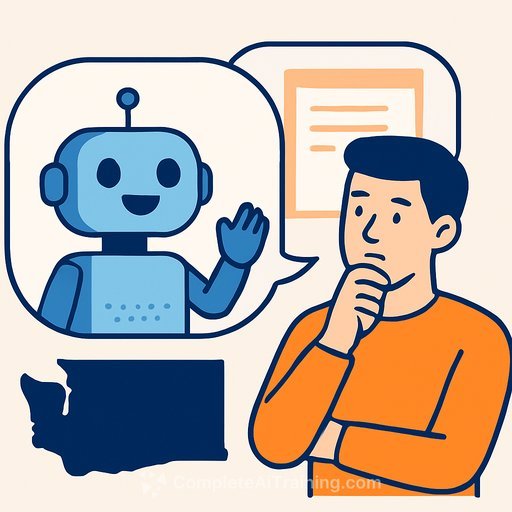
Washington state passed a law requiring companies to tell users when they're interacting with an AI companion rather than a human. The law takes effect January 1, 2027, and applies specifically to AI systems designed to create sustained human-like relationships with users.
The disclosure must appear at the start of each interaction and again every three hours during continued use. Companies must also implement systems to detect signs of suicidal ideation or self-harm.
What the Law Covers
The law targets AI companions - systems that simulate ongoing relationships - not chatbots used for customer service, productivity, education, or in-game chat. Those applications fall outside the requirements.
An AI companion is defined by its ability to create a "sustained human-like relationship with a user." The distinction matters: a customer service bot answering billing questions operates differently from a system designed to provide emotional support or companionship.
Additional Protections for Minors
Companies must avoid "manipulative engagement techniques" when minors use AI companions. The law specifically prohibits prompting children to return for additional support or providing excessive praise designed to encourage continued use.
Violations count as unfair practices under Washington's consumer protection law, which allows private lawsuits against violators.
Implications for Companies
The law reflects growing regulatory concern about AI tools that mimic human conversation with minimal human oversight. Companies should audit their existing chatbots to identify which ones function as companions or could evolve into that role.
Washington joins California, Maine, New Jersey, and Utah with chatbot disclosure laws, though Washington's approach focuses exclusively on AI companions rather than chatbots broadly. This specificity suggests regulators are targeting systems designed for emotional engagement rather than transactional purposes.
For legal professionals, understanding the distinction between regulated and unregulated chatbots is essential. Learn more about AI for Legal professionals and how AI for Customer Support fits within regulatory frameworks.
Your membership also unlocks: