How We Learn: What Counts as Learning When AI Can Imitate It?
Artificial intelligence can mimic human performance, but true learning happens only when behavior is shaped by consequence and context—something AI lacks.
Key Points
AI’s ability to replicate outputs challenges how we define learning. Traditional behaviorism frames learning as a change in action influenced by experience and observable over time. Internal states like “understanding” or “motivation” aren’t directly measurable or teachable. Only behavior molded by relevance and consequence sets human learning apart from machine-generated responses.
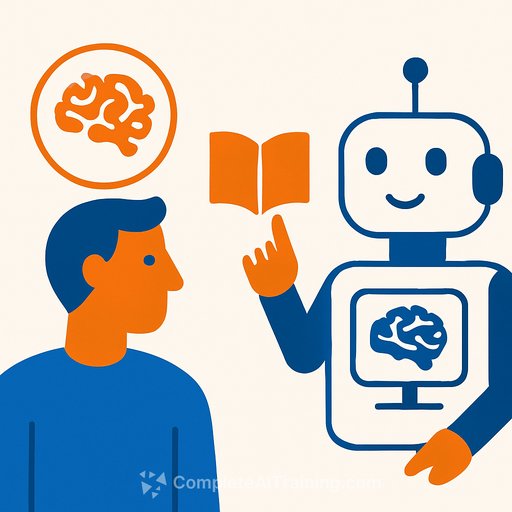
So, what does it mean for someone to have learned something when a machine can perform the same task? AI can write essays, solve problems, and hold fluent conversations. But this isn’t deception—it’s behavior. AI responds to prompts based on patterns learned from vast data, operating within programmed parameters. Similarly, students respond based on instruction, feedback, and reinforcement. Both may produce outputs that look like learning, but the difference lies beneath the surface: why the response happens and what follows.
AI does not know whether its output is meaningful or appropriate. It lacks connection to consequences, personal investment, or a history of adapting behavior to real-world outcomes. Humans do. A student revises an argument after critique, adjusts after failure, or changes course following success. These adaptive behaviors are shaped by feedback and personal relevance. Human learning unfolds where consequences matter—that’s what makes it genuine learning.
The Trouble With Internal Definitions of Learning
For decades, education has relied on vague terms like “understand,” “grasp concepts,” or “develop critical thinking.” These describe assumed internal states, not observable actions. This ambiguity leads to confusion. One teacher might define critical thinking as questioning assumptions, another as connecting ideas across disciplines, and a third as writing clearly. Students often guess expectations and depend on grades or approval instead of clear targets.
From a behaviorist perspective, this is a problem of definition. Learning must be observable—something a student reliably does that they couldn’t before. This doesn't oversimplify complex skills like persuasive writing or problem-solving; these are observable behaviors. If learning remains defined by unseen qualities, we risk mistaking performance for growth and allow machines to imitate what we fail to make visible.
Why Behaviorism Isn’t Dehumanizing, It’s Clarifying
Behaviorism is often misunderstood as cold or robotic, as if it denies the learner’s inner life. That’s not true. It simply refuses to define learning based on invisible states that can’t be tested or taught.
It focuses on a practical question: what changed in behavior because of instruction? This approach doesn’t diminish humanity; it grounds it. Behaviorism provides a shared language for educators and learners—not about what someone “gets,” but what they can do. A student doesn’t just “understand persuasion,” they write a convincing letter. They don’t just “develop empathy,” they conduct an interview, restate key points, ask follow-up questions, and adjust their responses. These are complex, meaningful, and teachable human behaviors.
Behaviorism demands evidence of learning—not to control, but to support. Without observable change, we can’t teach effectively or help learners grow.
Relevance and Responsibility: What Machines Lack
Both AI and humans produce responses to prompts, but only humans respond to relevance. This is the key difference. AI outputs are based on statistical likelihood, not social context. It doesn’t evaluate whether its responses are meaningful, harmful, or persuasive. It doesn’t adjust behavior based on consequences or experience.
Humans do. When a student changes a presentation after noticing audience disengagement, reevaluates a position after feedback, or applies a skill because it matters to them, that’s relevance in action. It’s a functional link between behavior and environment, shaped by consequences.
This adaptive behavior—rooted in outcomes—is what distinguishes human learning. AI may perform impressively, but it doesn’t live with results. Human learning grows in the feedback loop between action and consequence.
Redefining Learning in Behavioral Terms
To tell real learning apart from imitation, define it by observable action—not abstract ideas like “mastery” or “mindset.” Ask: what can the learner do now that they couldn’t before? Can they apply a skill in a new context? Revise work based on feedback? Adapt when the environment changes? These are signs of learning because they’re teachable, observable, and measurable.
Learning is a change in behavior that results from experience, lasts over time, and transfers across situations. Writing persuasively, holding trust-building conversations, or solving problems beyond the classroom are human behaviors with real consequences—and proof that instruction worked.
AI hasn’t broken education; it’s exposed how poorly we define learning. When machines produce the same assignments we once used to gauge growth, the problem isn’t AI’s skill—it’s vague benchmarks. Behaviorism doesn’t reduce learning; it restores clarity. It shifts focus from feelings to actions. In a world where polished imitation is common, only behavior shaped by relevance and consequence reveals what’s truly learned.
If you want to explore more about how AI intersects with education and practical training, check out Complete AI Training for courses that bridge these topics.
Your membership also unlocks: