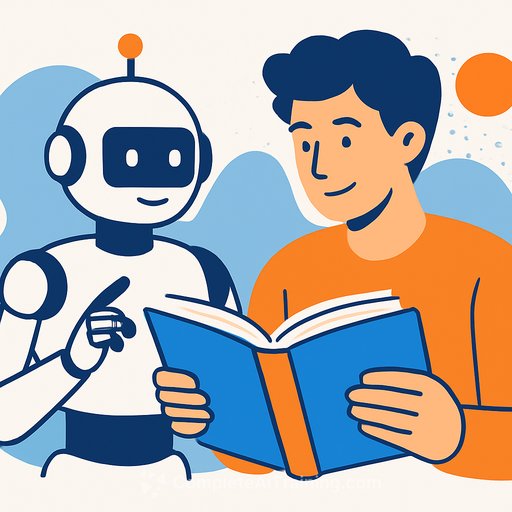
What If Readers Like A.I.-Generated Fiction?
Last year, a computer scientist named Tuhin Chakrabarty ran a simple test. He asked large language models to write scenes in the style of well-known authors, then had creative-writing grad students do the same-and judge the results blind. The students consistently preferred human-written passages. L.L.M.s lost.
That result matters, but it isn't the whole picture. Writers aren't the market. Readers are.
The Signal Behind the Experiment
Imitating a famous writer's voice is a high bar, even for humans. Asking an A.I. to mimic a specific stylistic fingerprint highlights its weakest traits: safe phrasing, generic metaphors, thin subtext. Still, the test hints at something useful-style imitation isn't the win. Story, pacing, and emotional payoff are.
Taste Shifts With Technology and Money
Reading habits have changed before. Serialized novels, pulp magazines, paperbacks, ebooks, fanfic platforms, audiobooks-each era shifted expectations. People tend to choose what's accessible, affordable, and entertaining enough to keep them turning pages. That mix can make room for A.I.-assisted work, especially in high-volume genres.
What Readers Actually Value
- A voice they can feel-confident, specific, alive
- Momentum-scenes that move, chapters that pay off
- Emotional clarity-stakes, desire, consequence
- Consistency-world rules, character logic, series continuity
Most readers won't care how a chapter was drafted if it hits those marks. They will care if it feels generic.
What This Means for Working Writers
- Use A.I. for speed, not soul: brainstorming, beat maps, continuity checks.
- Keep voice human: lived detail, sensory specifics, strong opinions.
- Focus on series: repeatable worlds create loyal readers and steady revenue.
- Ship on a schedule: shorter releases beat perfect, sporadic drops.
- Protect your line: avoid "write like [living author]" prompts; define traits instead.
- Test with readers, not peers: taste data beats workshop takes.
A Practical Weekly Workflow
- Outline: one-paragraph premise, one-page beat sheet.
- A.I. assist: ask for 10 scene variations, conflict escalations, and reversals by theme and tone (no author names).
- Draft: write the scene yourself; borrow only what heightens tension or clarity.
- Voice pass: swap clichés, sharpen verbs, add lived texture.
- Continuity check: have A.I. flag contradictions across chapters.
- Read aloud: cut slack lines; aim for energy per paragraph.
Run Your Own Blind Tests
Create two versions of a scene: one human-first, one A.I.-assisted with your rewrite. Share both, unlabeled, to your list or beta readers. Ask three questions: Which one kept you reading? Which felt more vivid? Which would you pay for?
- Distribution idea: newsletter A/B, subscriber poll, or a private reader group.
- Measure: open-to-finish rate, highlightable lines, "read next" clicks.
Ethics Without Noise
- Don't prompt with living authors' names; describe the effect you want (sparse, lyrical, clinical, feverish).
- Disclose A.I. use where it matters (submissions, contests, client work).
- Heavily rewrite anything machine-generated; make it yours.
The Business Angle
If some readers prefer A.I.-assisted fiction because it's cheaper, faster, or more serialized, plan accordingly. Shorter episodes, stronger hooks, and reliable cadence win attention. Your moat is voice, worldbuilding, and a direct line to readers who like how you write.
Upskill Where It Counts
- Story craft: character desire, scene turns, structured tension.
- Prompt Engineering: constraints, tone traits, beat-level asks, and critique loops.
If you want curated tools and courses built for practical use, see this resource: A.I. tools for copywriting.
Bottom Line
Readers buy what moves them. If A.I.-assisted fiction wins on pace and payoff, it will find an audience. Your edge is simple: sharper taste, faster loops, and a voice no template can fake.
Your membership also unlocks: