How AI could help make society less selfish
We like to say sharing is caring. In practice, cooperation often loses to short-term self-interest. New research from Michigan State University shows a simple twist on AI behavior can nudge groups toward fair play-without forcing anyone's hand.
The setup: public goods and the pull of free-riding
The study centers on the public goods game, a classic way to measure cooperation. Players choose whether to contribute to a common pool or hold back. Contributions get multiplied and then split equally among everyone, including the people who didn't chip in.
Example: Three out of five players each invest $1. With a synergy multiplier of 5, the pool becomes $15 and is shared equally-so even the two non-contributors collect a payout. That's why defection is tempting and cooperation is fragile.
If you want a refresher on the model itself, see the public goods game.
The experiment: bring AI into the mix
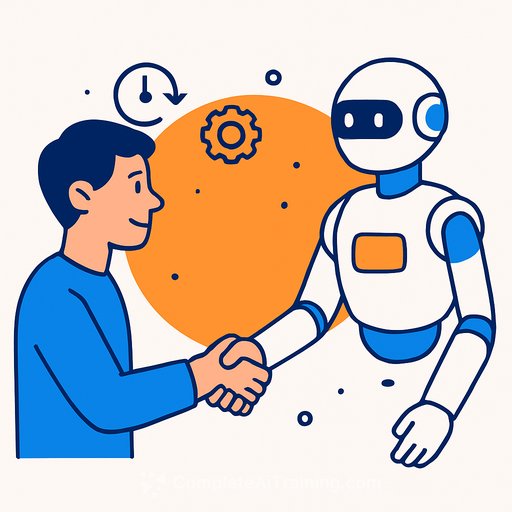
Researchers ran the game with human players plus artificial agents. They tested three ways to deploy the AI:
- Always cooperate: Agents always contributed.
- Human-controlled cooperation: People decided when agents contributed.
- Mimic behavior: Agents mirrored the cooperation or defection patterns of nearby humans.
Results that matter
- Always cooperate didn't move the needle. Dropping "nice" agents into the system wasn't enough to sway human strategy.
- Human-controlled made free-riding worse. People offloaded the cost of cooperation onto the AI and pocketed the benefits. This mirrors how individuals exploit systems that "do the right thing" by default.
- Mimicry changed the game. When agents reciprocated human behavior, cooperation took off. The threshold for cooperative norms dropped, and larger pockets of reciprocity formed.
Why mimicry works
Reciprocity is a reliable signal: cooperate with me and I'll cooperate with you; defect on me and I'll stop supporting you. AI agents that mirror local behavior make that signal loud and consistent. The result is a feedback loop where cooperation becomes safer and more rewarding, and chronic defection loses its edge.
As one researcher put it, being "nice" all the time isn't always smart. Being predictably reciprocal-cooperative with cooperators, firm with defectors-creates healthier group dynamics.
Where this could show up first
- Traffic and autonomy: Self-driving vehicles that reciprocate courteous driving (like zipper merges) while standing firm against aggressive behavior could smooth flows without inviting exploitation.
- Shared infrastructure: Grid load balancing, spectrum sharing, and congestion pricing can benefit from agents that reward fair use and respond to freeloading.
- Online platforms: Moderation and reputation systems can deploy reciprocal agents to support pro-social contributions and dampen abuse.
Practical takeaways for builders and policy teams
- Don't hard-code "always cooperate." It invites exploitation.
- Avoid giving users full control over AI cooperation. They'll outsource costs to the agent.
- Adopt transparent reciprocity rules. Make the "cooperate with cooperators, hold firm with defectors" logic clear and consistent.
- Measure the cooperation threshold. Track how small changes in agent behavior shift group norms.
- Stress-test for gaming. Look for strategies that siphon value without contributing and adjust agent responses accordingly.
For further reading
Paper: "Promoting cooperation in the public goods game using artificial intelligent agents," npj Complexity (2026). DOI: 10.1038/s44260-025-00065-9
Want more on building and deploying agents in real systems? Explore AI Agents & Automation.
Your membership also unlocks: