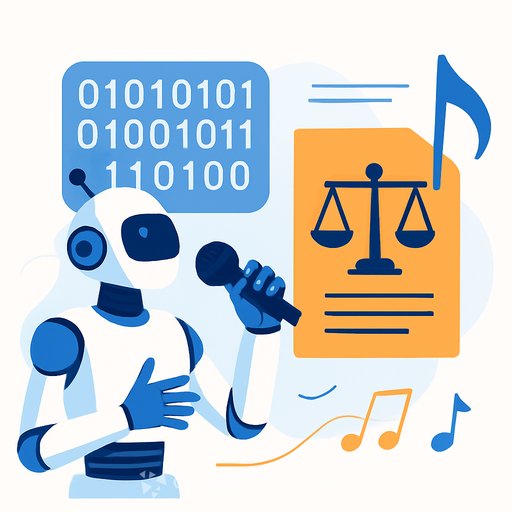
AI Music, Parody, and the Creative Line You Can't Ignore
Dustin Ballard fell for music in a school orchestra, then later learned to make people laugh by "lovingly destroying" famous songs on his channel, "There, I Ruined It." During the pandemic, he swapped live bands for parody tracks and eventually used AI to mimic artist voices to heighten the illusion. The results got attention-like Ed Sheeran reacting "This is weird" to a Super Mario-styled spin on "Perfect." Ballard now has 1.31 million YouTube subscribers and a front-row seat to a bigger shift in how music gets made.
He's not alone. Xania Monet became the first AI artist signed to a label and charted on Billboard's Adult R&B Airplay. In early November, Billboard reported at least one AI artist had debuted in each of the previous six chart weeks-a signal that this isn't fringe anymore. The songwriter behind Monet, Telisha Jones, frames AI as an instrument, but the project has sparked debate due to its similarities to human artist Victoria Monét. That unease is real, especially for working musicians who've spent years building their craft.
The tension: creative fun vs. paying the bills
Ballard enjoys the creative upside of AI, but the same tech is creeping into advertising-his day job-where AI music can replace paid session work. "The priority for our clients … is to save money," he says. That puts music houses and working musicians at risk of being cut out of a process that used to fund a lot of careers.
Artists like Sarah Negahdari are pushing back. She's spent two decades writing, touring, and refining her voice, and she's blunt about AI clones: "a bunch of vanilla, soulless… AI crap." For her, the point of making music isn't pushing buttons-it's the joy of the process, and the humanity you can feel in a performance.
Education is forcing the issue
Doug Petty, a professor of popular music and music tech at USC, tells students to face the tools head-on. In his advanced production course, one project requires building a song from scratch with AI. Many resist because they fear it replacing them. His take: ignoring it is a bad strategy.
He also believes the core advantage remains human. People buy connection. "However you may feel about Taylor Swift," Petty says, fans want to see and understand her. That kind of relationship is hard to fake.
Copyright, consent, and the law catching up
AI is being trained on copyrighted material, and lawsuits are mounting. Musicologist Judith Finell notes both recording and publishing sectors are pushing back where they see infringements. Consent for voice cloning and training data transparency are front and center.
At a congressional hearing, a Ballard video of "Johnny Cash" singing "Barbie Girl" was played, sparking confusion about who's creating what. Lawmakers have floated the TRAIN Act (training transparency) and the NO FAKES Act (protect voices and likenesses without consent). You can read a summary of the proposed NO FAKES Act on a U.S. Senate page here: NO FAKES Act overview. For context on chart activity, see Billboard's Adult R&B Airplay chart: Billboard Adult R&B Airplay.
Finell also points out a bright side: AI lowers barriers. More people can make music without years of training or expensive gear. That scale is both opportunity and risk-more creation, and more ways for work to be copied without permission.
What this means for working creatives
- Set your boundaries. Decide now: Will you use AI for voice cloning, arrangement, stems, or not at all? Write your policy so collaborators and clients know where you stand.
- Use consent-first workflows. If you're cloning a voice or style, get written permission. Keep contracts and logs of datasets, prompts, and outputs.
- Protect your catalog. Watermark stems, register works, and monitor major platforms for impersonations. File takedowns fast when needed.
- Lean into what AI can't fake. Story, performance, community, and live moments. Keep building rituals with fans that software can't replicate.
- Diversify income. Don't rely on one revenue stream. Consider memberships, exclusive drops, commissions, sync libraries that respect consent, and live experiences.
- Prototype with AI, finish like a human. Use AI for ideation, rough comps, or sound design. Lock the final with your ear, your taste, and your fingerprints.
- Stay legal-aware, not paranoid. Track consent laws, transparency bills, and case outcomes. Adjust your contracts and crediting as standards tighten.
- Ship consistently. The creators who win publish often, talk to their audience, and iterate in public. Treat AI as a sketchbook, not a shortcut to meaning.
If you want structured ways to build AI into your creative workflow without losing your voice, explore role-based learning paths such as AI Learning Path for Training & Development Managers or the AI Learning Path for UX/UI Designers.
The bottom line
AI will create more music. Humans will keep making the songs people remember. Petty is optimistic, and he has reason to be-we've always gathered around sound made by people. Use the tools, protect your rights, and double down on the one edge AI can't replicate: the way your story makes someone feel.
Your membership also unlocks: