AI is filling care gaps in the US. OpenAI wants a bigger seat at the table
Roughly six in ten American adults used AI tools like ChatGPT for health or healthcare tasks in the past three months, according to new data shared by OpenAI. The company also claims more than 40 million healthcare questions hit ChatGPT daily, over five percent of total volume.
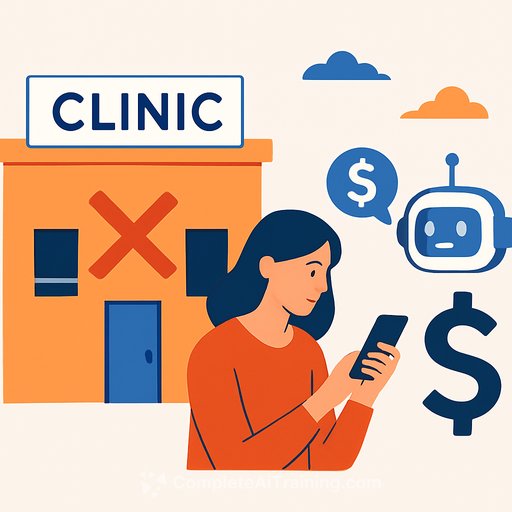
About a quarter of regular users ask health questions each week. OpenAI's read: people are frustrated with access, cost, and complexity-and they're turning to an always-on assistant that responds fast.
Where AI use is spiking-and why it matters
OpenAI reports that 55% of US users seeking health help are trying to make sense of symptoms. Seven in ten health chats happen outside normal clinic hours. People living far from hospitals are also heavy users.
Nearly 2 million messages each week come from Americans trying to work through insurance issues. Put simply: when clinics are closed or care is hard to reach, many people ask a bot first.
The risk no one can ignore
Bad answers can hurt patients. Recent reporting found frequent inaccuracies in AI-generated health guidance, including basic errors on diet for cancer patients and routine labs. That risk lands on clinicians when misinformation drives fear, delays care, or creates workload downstream.
OpenAI counters that it has a dedicated health team, works with clinicians to test models, and says GPT-5 improves on hallucinations and urgent-care errors. What's still unclear: how often it's wrong when it matters most.
Gallup data shows only 16% of US adults are satisfied with the cost of care and just 24% view their coverage positively. High spend, low satisfaction, and after-hours demand are pushing more people to AI-whether the information is safe or not.
OpenAI's policy wish list
- Open and securely connect publicly funded medical datasets so models can learn from decades of research.
- Build infrastructure that links AI with wet labs to speed discovery and validation.
- Support clinicians and staff to work directly with AI as part of care delivery and administration.
- Create FDA pathways for consumer-facing AI medical devices and apps.
- Clarify medical device rules to encourage AI services that support clinicians.
For context on where regulation stands today, see the FDA's guidance on AI/ML-enabled medical devices: FDA AI/ML devices.
What healthcare leaders can do now
- Define approved use cases: symptom education, benefits questions, appointment prep, post-visit reminders, plain-language explanations-paired with clear limits and escalation rules.
- Stand up a safety layer: clinical review of prompts/outputs, strong disclaimers, triage logic for red flags, and a clear path to human care.
- Pilot after-hours support: scripted, guardrailed agents that can answer common questions, collect histories, and route urgent cases to on-call lines.
- Integrate with existing workflows: EHR-inbox drafts, patient education summaries, prior-auth checklists, and benefits explanations-always review before release.
- Measure and audit: track accuracy, escalation rates, time saved, patient comprehension, and complaint/incident trends. Retrain or retire anything that underperforms.
- Protect privacy: consent, data minimization, PHI controls, vendor due diligence, and clear retention policies. No shadow IT.
- Upskill teams: brief clinicians and front-desk staff on strengths, limits, and how to course-correct AI-generated misinformation during visits.
Key figures at a glance
- ~60% of US adults used AI for health tasks in the last three months.
- 40M+ health questions hit ChatGPT daily (5%+ of messages).
- ~25% of regular users ask a health question weekly.
- ~2M weekly messages about US insurance and benefits.
- 55% of health use is symptom-related; ~70% happens after hours.
The takeaway for healthcare: patients are already asking AI first. The choice isn't whether AI will enter care-it's whether you define guardrails, outcomes, and accountability before it defines them for you.
If you're building an internal AI playbook for clinical and operational teams, you can explore practical training paths here: AI courses by job.
Your membership also unlocks: