
AI news ·
White House AI framework leaves healthcare entities navigating state laws until Congress acts
The White House released an AI policy framework March 20, 2026, urging Congress to override state AI laws-but Congress hasn't acted, leaving healthcare organizations bound by existing state rules.
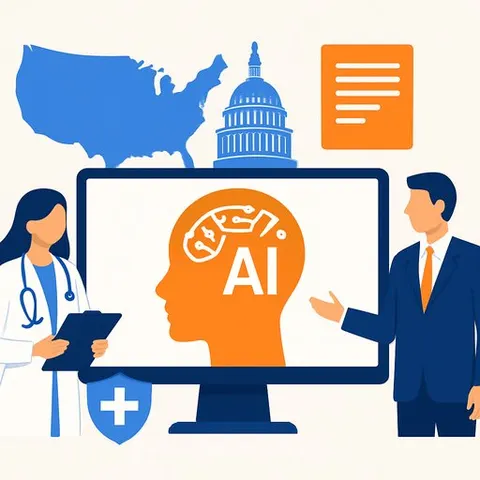
White House AI Framework Creates Uncertainty for Healthcare Legal Compliance
The White House released a National Policy Framework for AI on March 20, 2026, calling on Congress to establish uniform federal standards that would preempt state AI laws deemed overly burdensome. For healthcare entities and their legal teams, the announcement creates immediate questions: Which state laws remain enforceable? When will federal preemption occur? And what obligations apply in the interim?
The Framework follows a December 2025 Executive Order requesting a national AI policy. Congress has not yet acted on either directive.
State Laws Remain in Effect - For Now
The Framework explicitly states that Congress "should preempt state AI laws that impose undue burdens." That language is aspirational, not binding. Until Congress passes legislation, existing state AI laws remain enforceable.
Multiple states have already enacted or amended AI regulations. The Utah AI Act, Colorado AI Act, and California Consumer Privacy Act amendments all govern AI use. Healthcare organizations must comply with these state requirements today.
The Department of Commerce was supposed to publish an evaluation of state AI laws by March 11, 2026, identifying which ones conflict with federal policy. That report has not been released. Healthcare legal teams should monitor for its publication, as it may signal which state laws face preemption risk.
States will likely challenge any federal preemption in court, creating additional uncertainty about the future status of AI regulations.
Children and Minors Receive Priority Attention
The Framework's first objective is "protecting children and empowering parents." Healthcare entities should review their AI deployments involving minors.
Mental health chatbots, pediatric practices, and children's hospitals that use AI tools should evaluate their governance structures and compliance measures. Regulators will likely scrutinize these applications closely.
Federal Enforcement Remains Fragmented
The Framework calls on Congress to avoid creating a new federal AI regulator. Instead, it directs existing agencies to oversee AI in their respective sectors.
Healthcare AI will continue to fall under overlapping jurisdiction by the Centers for Medicare & Medicaid Services, Department of Justice, and Food and Drug Administration. The current enforcement patchwork will likely persist.
What Healthcare Organizations Should Do Now
Congress faces midterm elections later in 2026, making the timing of any preemption legislation uncertain. Healthcare legal teams should take three steps:
- Monitor proposed federal legislation on AI regulation
- Track obligations under applicable state AI laws
- Document AI governance and compliance measures for potential regulatory review
Organizations deploying AI may benefit from the current administration's stated preference for innovation and adoption. However, the absence of a unified federal standard means compliance requirements will remain complex and state-dependent until Congress acts.
Learn more about AI for Legal professionals and AI for Healthcare to stay current on regulatory developments.