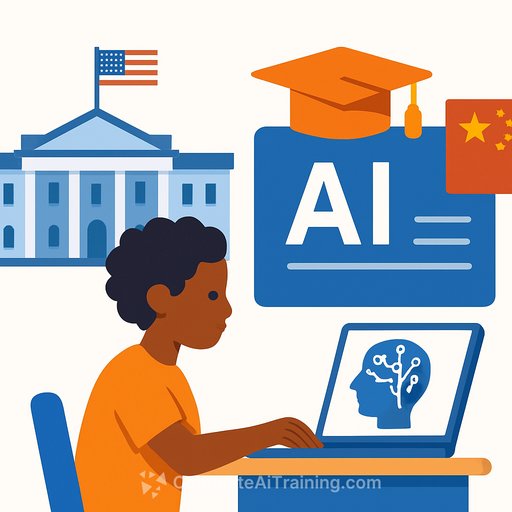
White House pushes AI education as part of competition with China
The Trump administration is promoting AI literacy in schools as part of a broader strategy to maintain U.S. economic and strategic advantage over China, according to the White House's new AI framework.
The administration wants Congress to help shape policy while schools teach students to use AI responsibly rather than restrict it. The approach treats artificial intelligence as both an economic opportunity and a competitive necessity.
Schools should position AI as a personalized learning tool for students, not something to ban outright. Educators can teach responsible use alongside technical skills to prepare students for a workforce where AI competency will be expected.
Lawmakers in both parties have begun engaging on the issue, though national standards and legislation remain in early stages. No consensus exists yet on what AI education should look like or how to implement it across districts with different resources and needs.
For educators, this signals a shift toward integrating AI into curriculum rather than treating it as an external threat. Teachers will likely need training to guide students through both the capabilities and limitations of these tools. Resources for teacher training on AI can help prepare educators for this transition.
The broader conversation about AI in education continues to evolve as policymakers, administrators, and teachers work to define what responsible AI use looks like in classrooms.
Your membership also unlocks: