
AI news ·
White House to Block AI Funds to Restrictive States, Promote US Tech Abroad in Major Policy Shift
The White House plans to promote US AI technology globally while restricting federal funds to states with strict AI laws. This shift favors innovation and reduces regulatory barriers.
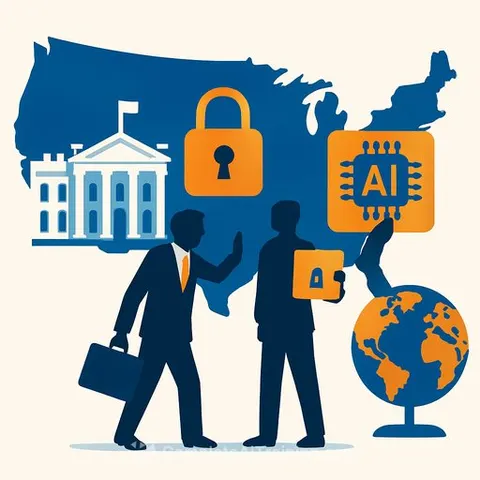
White House Announces New Strategy to Expand US AI Technology Globally and Restrict State-Level Limitations
The White House is set to release a plan focused on promoting American artificial intelligence (AI) technology internationally while limiting federal funding to states enforcing strict AI regulations. This marks a significant policy shift from previous approaches, signaling a more expansion-oriented stance on AI development and deployment.
Federal Funding Restrictions and Regulatory Review
According to the draft plan, states that implement restrictive AI laws will no longer be eligible for federal AI funding. Additionally, the Federal Communications Commission (FCC) will be asked to evaluate whether certain state regulations conflict with its broader mandate. This move aims to create a more uniform regulatory environment that favors AI innovation and deployment.
Promoting Open Source and Export Initiatives
The plan emphasizes support for open-source AI development and the distribution of AI technologies through comprehensive deployment packages. Led by the Commerce Department, these efforts include initiatives to enhance data center infrastructure, which is critical for AI operations at scale.
Such measures are designed to empower American workers by fostering AI-driven job creation and encouraging industry breakthroughs.
Shift from Restriction to Global Expansion
This new direction contrasts with the more cautious approach under the previous administration, which focused heavily on restricting AI technology exports, especially to countries considered strategic competitors. The Biden administration had imposed export controls on AI chips and capped the amount of AI computing capacity accessible to certain foreign countries, citing national security concerns.
In contrast, the current plan prioritizes reducing regulatory barriers and actively spreading American AI infrastructure worldwide. It also supports increased AI adoption within the Department of Defense and calls for a review of federal regulations that may hinder AI progress.
Balancing Growth with Risk Management
While the strategy aims to accelerate AI development and global deployment, it acknowledges the need to guard against misuse and prepare for emerging AI-related risks. This balance is critical for sustainable growth in technology sectors that increasingly influence multiple aspects of society.
Implications for Legal Professionals
- Regulatory Compliance: Legal teams will need to monitor shifts in federal and state AI regulations, especially where funding restrictions may impact clients or operations.
- Cross-Jurisdictional Challenges: With the federal government intervening in state AI laws, conflicts between state and federal policies could arise, requiring careful navigation.
- Export Controls: The relaxation or tightening of export rules on AI technologies will affect contracts, intellectual property rights, and international partnerships.
- Data Center Permitting: Streamlined permitting processes may accelerate infrastructure projects, necessitating attention to environmental and zoning laws.
Legal professionals involved in technology, trade, and regulatory affairs should prepare for evolving policies that could affect AI-related compliance and risk management strategies.
For those interested in deepening their understanding of AI technologies and compliance considerations, Complete AI Training offers courses tailored to legal and regulatory professionals.