AI in Medical Decisions: Who Benefits?
A young boy with low growth hormone levels but no clear medical cause was assessed by GPT-4 from two perspectives: a pediatric endocrinologist and a health insurance representative. The AI recommended growth hormone treatment from the doctor’s viewpoint but justified denying care when prompted as an insurer. The medical facts and patient did not change—only the perspective shifted, altering the AI’s clinical and ethical judgment.
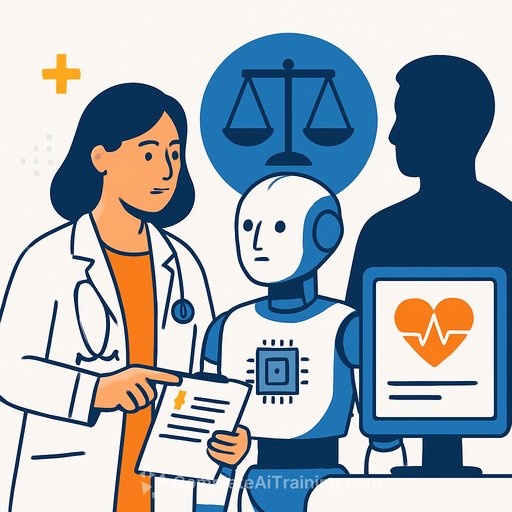
This example highlights a critical issue: AI systems in healthcare do not operate as neutral tools. Their outputs reflect the values embedded in their design, how they are prompted, and the roles they are meant to serve. Without a clear ethical framework, AI risks prioritizing stakeholders like insurers or administrators over patients.
When AI Acts as Physician, Administrator, or Insurer
Research comparing AI large language models (LLMs) to human clinical decisions reveals varied performance. In straightforward cases, AI and human decisions align well. But in complex, urgent cases, AI consistency drops—some models contradict themselves or shift decisions unexpectedly when given clinical guidance.
This variability raises concerns beyond biased data sets. The crucial factor is how human feedback trains AI to prioritize perspectives and reinforce certain behaviors. In clinical environments, this means AI might amplify differing values—from doctors focused on care to insurers focused on cost containment.
Questions arise about accountability: Who reviews AI outputs? Who ensures compliance? Already, insurers use AI to automate care authorizations, sometimes leading to legal challenges due to opaque algorithms denying treatment. Even small changes in AI decision patterns can impact billions in healthcare spending.
Amidst financial pressures on hospitals and limited access to primary care, AI innovation tends to favor specialties with clear diagnostic coding and higher revenue potential, such as radiology. Nearly 75% of FDA-approved AI clinical tools are in radiology, where pattern recognition suits AI. Meanwhile, primary care—requiring broad knowledge and patient interaction—remains difficult to automate, potentially increasing its value.
Adapting AI to Reflect Human Values
Ethical AI in healthcare may need to consider local laws, social norms, and socioeconomic factors. Testing AI across diverse settings—from rural areas to major cities—can reveal how well models align with varied clinical values and where adjustments are needed.
This approach echoes how battlefield triage once transformed medical priorities by focusing on survival over hierarchy. Today, AI can support clinicians by handling tasks like medical imaging interpretation while assisting decision-making. But this requires clear ethical guidelines ensuring patients stay central to care.
Healthcare professionals must lead in defining and overseeing these frameworks to prevent AI from serving administrative or financial interests at patients’ expense.
- AI exhibits varying consistency across models and scenarios, especially under complex medical conditions.
- Human feedback shapes AI’s value priorities, impacting clinical recommendations and resource allocation.
- Automation in high-revenue specialties risks widening gaps in primary care availability.
- Ethical frameworks must adapt to diverse social and regional contexts to keep patient welfare paramount.
For healthcare professionals interested in how AI can be ethically integrated into clinical practice, exploring specialized training can provide valuable insights. Resources like Complete AI Training offer courses tailored to healthcare roles.
Your membership also unlocks: