The Impact of A.I. on College Essays
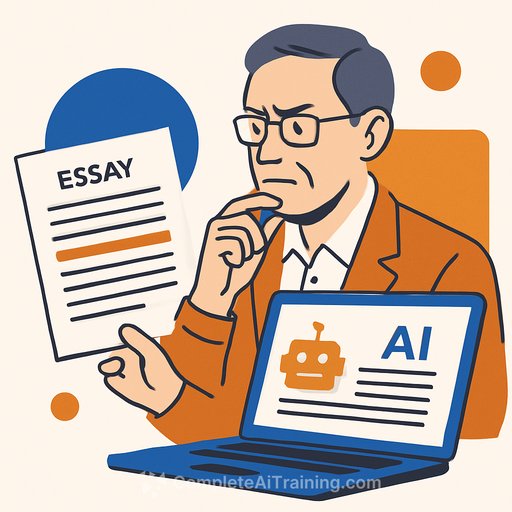
Many college students have turned to A.I. tools like ChatGPT to ease the burden of writing term papers. Some barely write anything themselves, relying heavily on these programs to generate entire essays. However, recent research reveals that professors can still spot the difference between human-written and A.I.-generated essays.
An international study conducted by the University of East Anglia and partner institutions examined 145 essays from British university students alongside 145 essays produced by ChatGPT on identical topics. While the A.I. essays were grammatically sound and academically coherent, they noticeably lacked engagement techniques that human writers naturally use.
What Sets Human Essays Apart?
Human-written essays contained almost three times more engagement features than those produced by A.I. These include personal asides, rhetorical questions, direct mentions of the reader, and persuasive language. Such elements make the writing feel like a conversation rather than a dry presentation of facts. Without specific prompting, A.I. struggles to add this personal touch that makes essays compelling and relatable.
The Bigger Concern: Critical Thinking
Universities worry less about A.I. cheating and more about students missing out on developing critical thinking skills. Writing essays is not just about formulating sentences; it’s about learning how to think clearly and argue effectively—skills no algorithm can replace.
When students rely solely on A.I. for writing, they risk losing the opportunity to sharpen these essential abilities, which are valuable far beyond college, in any career or everyday decision-making.
Using A.I. as a Tool, Not a Crutch
A.I. can be a useful aid if applied correctly. For example, A.I.-generated essays can serve as templates or practice material, helping students recognize persuasive techniques and identify errors or misinformation. Since A.I. pulls information from vast and varied sources—not all of them reliable—fact-checking remains crucial.
Positive A.I. Applications Outside Writing
Beyond creative fields, A.I. has proven valuable in scientific research, cybersecurity, and finance. Scientists can map genomes quickly, cybersecurity experts can detect threats, and financial analysts can generate forecasts and reports.
All these applications share one key aspect: human oversight is essential. A.I. tools require expert review to ensure accuracy and relevance.
Finding the Right Balance
As A.I. becomes more common, distinguishing when and how to use it is vital. It isn’t a substitute for human creativity or critical thinking but a tool that, when used wisely, can support and enhance our work.
For writers interested in exploring how to work effectively with A.I., there are resources to develop skills in this area. Check out Complete AI Training’s courses on ChatGPT to learn practical techniques for integrating A.I. responsibly in writing and beyond.
Your membership also unlocks: