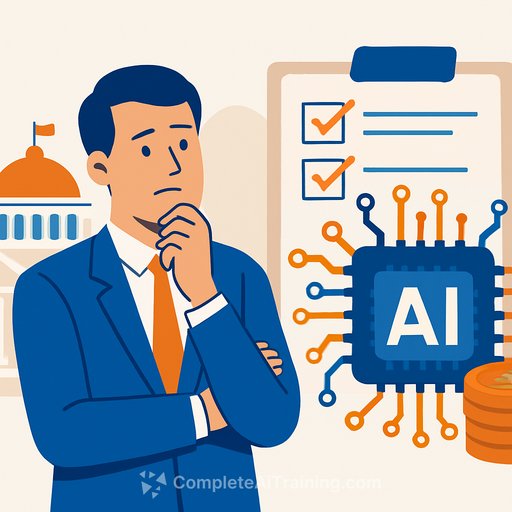
Government must not 'put the cart before the horse' with new AI tender
The UK government has launched an £18 billion IT services tender led by the Crown Commercial Service (CCS), aiming to upgrade public sector IT systems and accelerate digital transformation. This tender comes during a period of significant change, including the introduction of the UK Procurement Act and a push to adopt AI technologies across government.
However, there are risks in moving too quickly to embrace AI without first addressing foundational issues in procurement and contract management. Recent reports from the National Audit Office (NAO) and the Public Accounts Committee reveal persistent challenges that must be tackled to avoid costly delays and inefficiencies.
Challenges in Government IT Procurement
The NAO report highlights unrealistic government expectations of suppliers, often expecting too much for too little. Traditional procurement models, built for commodity purchases, struggle to adapt to complex digital transformation projects. Frequently, tenders are launched before requirements are fully defined, leading to timeline slippages and increased costs that ultimately burden taxpayers.
Supplier management is another weak point. Large tech suppliers like Meta and Google dominate the market, but government departments often miss chances to coordinate and leverage their collective buying power. Establishing cross-departmental bodies and enhancing internal communication could unlock significant savings and improve negotiating strength.
There is also a serious shortage of skilled contract managers. Despite ongoing training efforts under the Contract Management Capability Programme, gaps remain between training and actual staffing levels. This shortage affects all stages of contract management—from design through to monitoring delivery—and limits the government’s ability to manage complex IT contracts effectively.
Improving Contract Management
To bridge this gap, the government must focus on:
- Retention Strategies: Create clear career paths and competitive pay to keep skilled contract managers.
- Attraction Initiatives: Run targeted recruitment drives to bring new talent into public sector contract management.
- Resource Allocation: Ensure departments provide sufficient resources to properly support contract management functions.
Addressing these will help turn procurement reforms into real improvements on project delivery and value for money.
Regulatory Changes and Departmental Shifts
The introduction of the UK Procurement Act in February 2025 changes the procurement landscape with new rules focused on transparency, social value, and innovation. Notably, the "Most Economically Advantageous Tender" (MEAT) principle has been replaced by "Most Advantageous Tender" (MAT), allowing contracts to be awarded based on broader criteria beyond just cost.
Contracts over £5 million will now require the publication of key performance indicators (KPIs), and underperforming suppliers risk disbarment. While these reforms encourage competition and open opportunities for SMEs, government buyers and suppliers are still adjusting to the new processes and requirements.
Alongside the regulatory shift, responsibility for this major procurement has moved from the Cabinet Office to the Department for Science, Innovation and Technology (DSIT). Established in 2023, DSIT now oversees digital transformation efforts, including cybersecurity, having absorbed several related agencies. This move aims to bring more technical expertise into government procurement decisions.
Balancing AI Ambitions with Procurement Realities
AI investment is a priority across public services, but enthusiasm must be tempered with caution. Rushing to deploy AI solutions without solid procurement foundations risks costly mistakes and missed opportunities.
Procurement processes need to be modernized and aligned with new regulations before large-scale AI spending begins. Ensuring the right mix of skills, clear requirements, and effective supplier management will safeguard public funds and increase the likelihood of successful AI adoption.
For government professionals looking to strengthen their AI knowledge and skills, exploring focused training can be a practical step. Resources like Complete AI Training's latest AI courses provide up-to-date learning tailored to public sector needs.
Ultimately, the government must avoid putting the cart before the horse by prioritizing fundamentals before making major AI investments. Careful preparation, coordination, and capability building are key to delivering value and innovation in public sector IT.
Your membership also unlocks: