Why Writers Shouldn’t Fear AI: Business Policy Writing Is Knowledge
Best-selling author David Baldacci recently testified before the Senate Judiciary Committee about the use of artificial intelligence (AI) models trained on copyrighted works. Baldacci, along with authors like John Grisham and George R.R. Martin, is part of a class-action lawsuit against OpenAI for allegedly using their fiction without permission to train AI systems.
At the heart of this debate is a familiar tension: the fear that AI might steal creative work. Yet, this fear overlooks a basic truth about business and creativity—once ideas or products enter the market, they’re open to imitation. This is nothing new.
Innovation and Imitation: The Business Reality
Nvidia CEO Jensen Huang said, “If we don’t reinvent ourselves, and we don’t open the canvas for the things we can do, we will be commoditized out of business.” This is a sentiment echoed by many entrepreneurs. Arthur Blank, co-founder of Home Depot, put it simply: “No matter your business, you cannot stay still for any length of time or your competitors will scratch and claw all over you.”
Innovation quickly becomes public knowledge. Competitors watch closely and copy what works. The NFL, often called the “copycat” league, is proof that imitation is a natural part of competition and growth.
Why Writers Should Embrace AI as a Spur for Growth
Baldacci's concern about AI “stealing” writers’ work misses a bigger picture. Most writers would welcome the chance to have their style and skill copied. After all, imitation is often the sincerest form of flattery.
Moreover, the copying of ideas is a driver of market expansion and evolution. Just look at Starbucks in China: their success created a market that others, like Luckin Coffee, could enter and grow. The original innovator benefits from the expansion, not just the imitators.
In the same way, AI’s ability to reproduce writing styles forces writers to keep evolving. This is no different from how CEOs and coaches must constantly innovate to stay ahead. As Huang put it, “In order to be a creature, you have to be conscious.” Machines can’t evolve on their own—they need human creativity to push forward.
Practical Takeaways for Writers
- Expect imitation as part of the creative process. It’s a sign your work is noticed and valued.
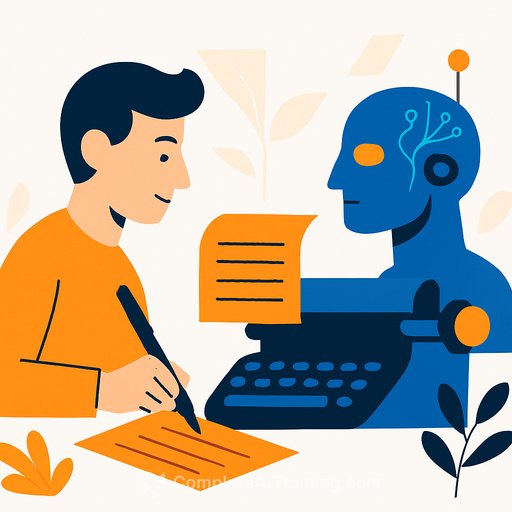
- Use AI as a tool to push your creativity further. Let it challenge you to develop new styles and ideas.
- Focus on continuous growth. Just as businesses evolve to stay relevant, writers must keep improving and experimenting.
Rather than fearing AI, writers should see it as motivation to create something no machine can replicate: truly original and evolving human creativity.
For writers interested in learning more about integrating AI tools into their workflow, there are courses available that focus on AI-assisted writing and prompt engineering. Explore options at Complete AI Training.
Your membership also unlocks: