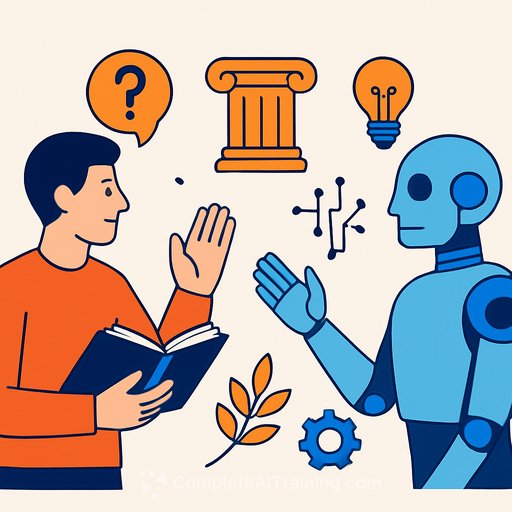
In the AI age, the humanities are a strategic advantage for educators
Enrollment is tilting. At the University of Virginia, arts, history, languages, and social sciences dropped from 49% of majors to 38% in a decade, while STEM rose from 35% to 44%. Families want clear job paths. Fair. But here's the twist: the same tech that pulls students away from the humanities is the reason we need them.
UVA remains the No. 1 producer of liberal arts degrees among R1 universities, according to the Chronicle of Higher Education. Dean Christa Acampora's message is blunt: in an AI-heavy economy, liberal arts matter more, not less.
Why AI increases the value of the humanities
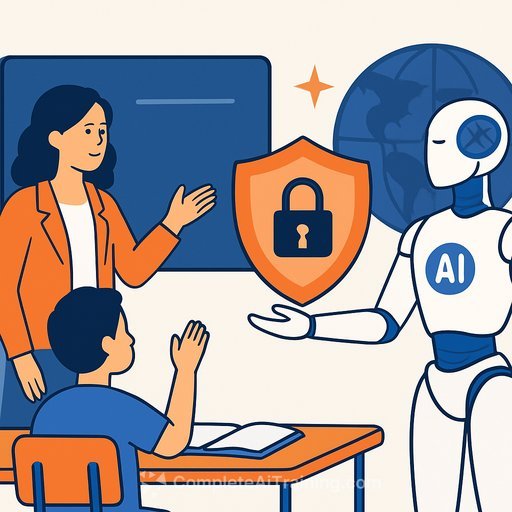
AI is getting better at tasks we used to call uniquely human. That raises the premium on what machines still struggle with: judgment, meaning-making, ethical reasoning, and care for people. These are not nice-to-haves. They decide trust, safety, and the quality of our shared life.
As Acampora puts it, the human edge lives in questioning, creating meaning, and caring for others. If those capacities thin out, AI won't serve us; it will set the terms. The humanities keep those muscles strong.
Translating the "human edge" into work outcomes
Most graduates will not build foundation models. The pool of AI lead developers is small, and the resources behind them are consolidating. What wins across fields is the ability to frame problems, tell truth from noise, read context, and lead teams through change.
The liberal arts build those habits. Pair them with basic data literacy and AI fluency, and students become the colleagues who ask better questions, design better safeguards, and make better calls under pressure.
What education leaders can do this year
- Pair every technical track with a humanities spine: ethics, argument, history of ideas, and media literacy. Require both writing and oral defense.
- Adopt "AI-use statements" on assignments. Teach students how and when to use tools, how to cite them, and where they fail.
- Grade for judgment: evidence quality, reasoning, and implications. Use short viva-style checks to verify authorship and depth.
- Run cross-listed studios where engineers, designers, and historians solve one civic problem together. Assess process and outcome.
- Teach truth-testing as a skill: source evaluation, bias detection, and fact-check workflows baked into research and writing.
- Integrate case labs on AI harms and benefits (health, labor, education, justice). Students propose guardrails and communications plans.
- Coach career translation: map liberal arts outputs (analysis, synthesis, facilitation) to job families and performance metrics.
- Support faculty with quick-start guides for responsible AI use in teaching, plus clinics on prompt critique and assessment redesign.
Talking points for families, boards, and employers
- Jobs: Fewer build tools; most apply them. That puts a premium on framing problems, making sense of outputs, and leading teams.
- Risk: AI amplifies errors and bias at scale. Graduates trained in ethics and evidence reduce exposure.
- ROI: Liberal arts grads move across sectors because their skills travel. That flexibility cushions shocks.
- Clarity: Offer majors or minors that braid computing, data, and humanities. Show sample roles, projects, and outcomes.
Course and program moves that work
- First-year: Writing + AI lab (source checks, citation of tool use, model critique).
- Mid-level: Data reasoning for non-majors tied to social impacts and policy choices.
- Capstone: Community project with an AI component, public brief, and ethical review memo.
- Assessment: More oral defenses, fewer pure take-home essays. Clear rubrics for evidence and judgment.
A note on the talent mix
The number of people who will build core AI systems is small. The number who will decide where and how those systems touch health, finance, education, and government is massive. That second group needs moral insight, clear writing, historical context, and the nerve to say "no" when a shortcut risks harm.
Keep your teams current without losing the human core
Give faculty and staff a simple path to keep skills fresh while preserving the mission. A curated view of practical AI courses by role can help you pick your spots without drowning in tools. See our roundup: AI courses by job.
Bottom line
AI shifts what work looks like. It does not erase the need for human judgment, empathy, and meaning. If anything, it raises the stakes. Keep the humanities at the center, wire them into technical learning, and your graduates will be the ones who set direction-rather than take instructions from a model.
Your membership also unlocks: