Why Intelligent Insurance AI Is the Industry’s Answer to Modern Complexity
The insurance industry is at a crossroads in 2025, splitting between AI-powered leaders and those sticking with traditional methods. This year marks the shift from experimenting with AI to fully integrating it into everyday operations. Industry experts from Appian and EXL will discuss how unified agility layers help insurers turn complexity into a competitive edge during a webinar on July 16.
Insurance has always been about managing the unexpected, but today’s challenges are on a different scale. Climate disasters cause billion-dollar claims overnight, cyberattacks introduce new risks, and customers demand instant responses despite legacy processes. Intelligent insurance AI offers more than automation—it transforms how insurance operates. Early adopters are gaining ground while companies relying on outdated systems fall behind. According to a Digital Insurance survey of 120 industry leaders by Wolters Kluwer, 36% see AI as their top technology focus for 2025.
Moving from AI Experiments to Everyday Use
2025 is shaping up as a pivotal year. Insurers are moving beyond pilot projects, implementing AI systems that reshape risk assessment, claims handling, and customer service. Understanding how leading companies make this transition is key to staying competitive. The upcoming webinar “From Complexity to Clarity: AI + Agility Layer for Intelligent Insurance” promises practical insights and real-world examples from Appian and EXL experts.
The Embedded AI Approach
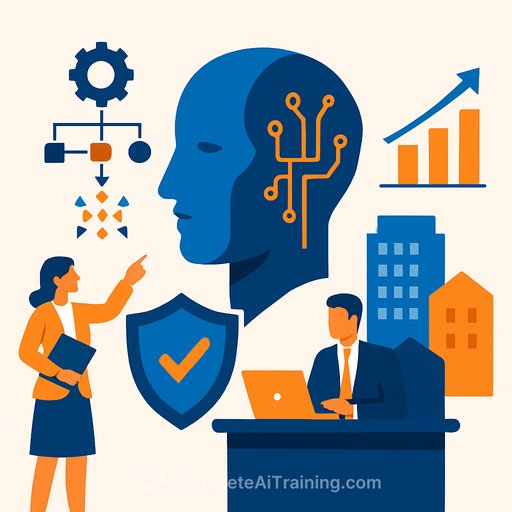
Traditional insurance tech often involved adding new systems alongside existing ones, creating silos and inefficiencies. The emerging model integrates intelligent AI directly into existing workflows. Abhishek Mittal, Vice President at Wolters Kluwer, advises prioritizing AI in areas with high transaction volumes, repetitive tasks, and clear feedback loops. Embedded AI accesses full data across touchpoints, enabling faster, more accurate decisions without manual intervention. When AI is part of the process rather than an add-on, it can use real-time and historical data plus external risk factors all at once.
The Agility Layer: Connecting Disparate Systems
Insurance operations rely on multiple systems—from legacy policy platforms to claims management and CRM tools. The agility layer is a technology framework that links these systems and allows quick adaptation to changing business needs. This flexibility is critical as insurers face evolving regulations and rising tech investments. Forrester predicts an 8% increase in insurance tech spending in 2025, largely aimed at creating responsive tech foundations.
The agility layer supports low-code environments so insurance professionals—without deep technical skills—can modify processes quickly. This hands-on control helps tailor intelligent AI systems to specific business needs.
Data Integration: The Backbone of Intelligent Decisions
Successful AI depends on comprehensive, integrated data. With up to one trillion connected devices expected by 2025, insurers can collect real-time risk data from IoT devices, telematics, and wearables. But having data isn’t enough. The challenge is synthesizing diverse data sources into actionable insights. This shift enables insurers to move from reactive claims handling to predictive risk management.
Gary Coffey, CTO at Spectrum.life, highlights that predictive insights transform raw data into clear explanations, helping insurers and healthcare providers make informed decisions.
Practical Applications: Claims, Underwriting, and Customer Service
- Claims Processing: AI analyzes documentation, checks policy terms, and flags potential fraud in minutes instead of days.
- Underwriting: Embedded AI evaluates risk using behavioral data, environmental factors, and real-time indicators—not just demographics and past claims.
- Customer Service: Intelligent systems handle routine inquiries, process policy changes, and guide claims reporting, escalating complex cases to human agents.
Challenges to Address
Despite the promise, implementing intelligent AI comes with risks. Data privacy, algorithmic bias, and regulatory compliance remain key concerns. Insurance regulators are actively working on AI governance frameworks, reflecting ongoing changes in oversight.
Technical hurdles persist as many insurers rely on legacy systems not built for AI workflows. Building effective agility layers requires careful planning to integrate new AI without disrupting operations.
Performance Gains and Competitive Edge
Early AI adopters show clear benefits: faster processing, better risk assessments, improved customer satisfaction, and greater efficiency. However, most insurers should view AI as a long-term strategy rather than expecting immediate results. The competitive advantage goes to those who combine intelligent AI with operational agility.
Looking Ahead: Scaling Intelligent Insurance AI
The fusion of embedded AI with agility layers signals a fundamental shift in insurance operations. AI is no longer a future concept—it is essential today. Successful deployments focus on flexible, integrated systems that evolve with changing business and regulatory demands. Many organizations prefer modular, iterative improvements to large-scale overhauls.
This approach helps insurers handle increasing challenges while delivering clearer, faster services to customers.
To learn more about these trends and practical implementations, join the webinar “From Complexity to Clarity: AI + Agility Layer for Intelligent Insurance” on July 16, 2025, at 2:00 PM ET. Experts from Appian and EXL will share real-world examples and actionable insights.
Your membership also unlocks: