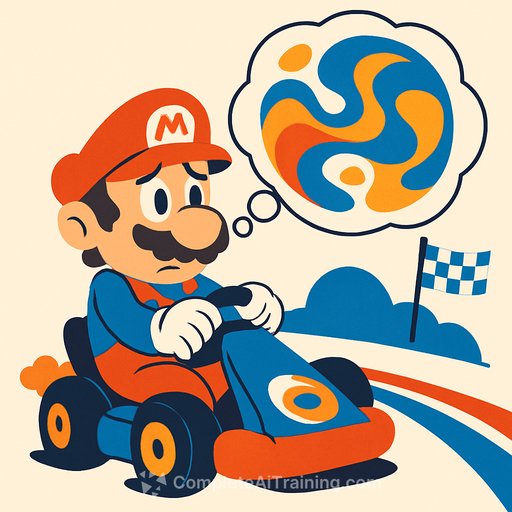
The Mario Kart AI ‘Scandal’ Reveals Our Struggle to Talk About Generative Art
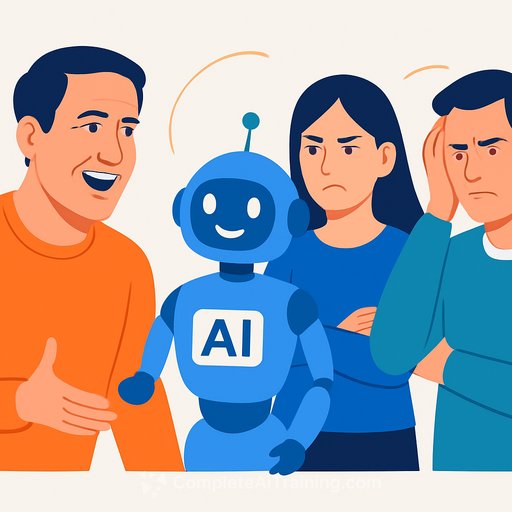
AI anxiety is clouding how we see creative work. When odd screenshots from Mario Kart World started spreading online—featuring warped billboards, broken kerning, and strange textures—many jumped to one conclusion: this had to be AI-generated. Within hours, accusations flew across social media claiming Nintendo had slipped AI into their process.
But Nintendo denied using any AI-generated images. The controversy didn’t disappear quickly. That’s the key point. The “scandal” wasn’t really about whether AI was involved—it was about how easily people believed it was, despite clear denials.
This isn’t the first time fans have suspected AI, and it won’t be the last. AI-generated art often has telltale signs—unusual distortions, odd lighting, or strange text—that people are learning to spot. This growing fluency is breeding a kind of collective paranoia. Even companies known for quality like Nintendo aren’t exempt. We’re entering an era where how something was made is nearly as important as what it looks like. That’s a big cultural shift—and one we haven’t fully adjusted to.
Generative AI Is Not Just Another Tool
There’s a common claim that “AI is just a tool like any other.” That’s an oversimplification. Photoshop enhances your skills. Generative AI replicates them—and sometimes surpasses them. It’s not a simple brush in your hand; it’s more like a bricklayer doing the work while you guide the vision.
This shift changes the creative role from crafting every detail to directing results. With the right oversight, generative AI can speed up creative output dramatically. Indie studios are already using AI for pitch decks, character concepts, and level ideas—tasks that once required whole teams.
But speed isn’t the same as vision. AI can produce content but can’t judge quality or brand fit. That responsibility still falls on humans. Without strong direction, audiences will spot the difference.
Perception Has Become the Product
The Mario Kart incident showed that it doesn’t matter if AI was used. What matters is that it looked like it was. Perception now shapes trust. As AI use grows, its “fingerprints” become easier to spot—and also easier to misattribute.
That broken billboard might have been a placeholder or a rendering glitch—but if people assume AI caused it, the real cause doesn’t matter. Saying “this looks AI” is becoming a quick way to criticize, much like “looks Photoshopped” was used years ago to question authenticity.
Photoshop was once seen as a tool for manipulation. AI faces the same suspicion: any visual flaw is blamed on it, regardless of the truth. The medium becomes a scapegoat, even when it wasn’t involved.
This means studios must be clear and transparent. If AI is used, say so. If it’s not, clarify that too. Audiences are paying attention and asking smart questions. Ambiguity won’t work anymore.
What Responsible AI Use Looks Like
Technology moves faster than policy can keep up. It’s up to creators and studios to set their own standards for responsible AI use. That could include:
- Creative oversight: Every AI-generated asset should be reviewed and approved by a knowledgeable human.
- Documentation: Track if, when, and how AI was used. Own that process.
- Ethical sourcing: Avoid training models on stolen or unlicensed work. Respect original artists.
- Internal standards: Define quality benchmarks and train teams and AI tools to meet them.
These are essential practices to keep trust with players, peers, and collaborators.
A Wake-Up Call, Not a Witch Hunt
It would be easy to shrug off the Mario Kart AI scare as a non-issue—Nintendo said no AI was involved, so case closed. But that misses the point. This wasn’t a witch hunt; it was a wake-up call.
It showed how widespread AI anxiety has become. Even beloved legacy brands face suspicion. It also revealed that the industry still lacks a clear way to talk about generative art—what it is, isn’t, and why it matters.
We need to develop that language. AI tools aren’t going away. The sooner we have open, honest conversations about how AI fits into creative workflows, the better our work and industry will be.
Final Thought
AI doesn’t threaten creativity. In fact, it’s already impacting areas like graphic design in meaningful ways. But it forces us to rethink what creativity means and who or what participates in it.
The real scandal isn’t AI’s presence in game art. It’s pretending it’s not a big deal. Creators must lead with transparency, own their tools, respect their audiences’ awareness, and push innovation that protects creativity.
AI isn’t the enemy. Complacency is.
Your membership also unlocks: