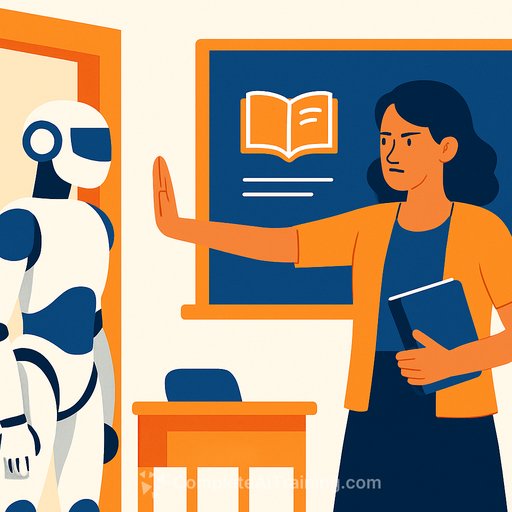
My Classroom Will Be AI-Free This Fall
A humanities education is vital in this polarized world. But students need to read the books.
About 5,000 years ago in southern Iraq, a king named Gilgamesh lived—a figure both flawed and fascinating. Despite his sexism, classism, and tyranny, first-year humanities students consistently connect with him and the epic bearing his name. They admire his boldness, his friendship with Enkidu, and feel the weight of his loss and awakening to existential questions.
This connection spans millennia, crossing cultural and linguistic divides. Every year, these 18-year-olds find themselves deeply engaged with an ancient story, discovering human emotions and dilemmas that still resonate.
Why Humanities Matter
Teaching humanities is rewarding because it challenges students to confront complex ideas and diverse perspectives. Most arrive expecting boredom but leave with a richer appreciation of human experience.
However, this fall brings a new challenge: generative AI tools are becoming the default shortcut. Students can upload a PDF of The Epic of Gilgamesh into AI for summaries, generate essays from prompts, and bypass the slow, demanding work of reading and thinking.
Why wrestle with Plato’s allegory of the cave when ChatGPT offers instant summaries? Why debate gender in the Garden of Eden when AI can produce polished arguments in seconds? Tools like Grammarly, Claude, and others have made editing and ideation effortless.
As tempting as it is to automate grading AI-generated essays, doing so would betray the core of education. The value of humanities—critical thinking, empathy, creativity—cannot be outsourced to machines.
Education Isn’t a Shortcut
For decades, STEM education has been prioritized as a direct path to employment, encouraging students to view university as job training. This mindset leads many to seek the easiest path to a degree, often relying on AI to do the intellectual heavy lifting.
But education is about developing capacity through practice. You can’t gain wisdom by copying summaries or letting AI write your essays. It’s like expecting to build muscle by watching someone else exercise.
Many parents ask, “What will my child do with a humanities degree?” While job markets are tough, research shows humanities graduates are just as employable as others. They tend to have critical thinking, communication, and interpersonal skills highly valued by employers.
Humanities graduates are better equipped to adapt and lead in unpredictable environments, solve problems creatively, and engage in meaningful dialogue—skills that AI cannot replicate.
A Technology-Free Classroom
This fall, the classroom will be a space free from AI and digital distractions. Students will leave phones and laptops in their bags and bring out physical books marked with notes. Together, we’ll engage in old-fashioned Socratic dialogue, reading slowly and discussing deeply.
While students might glance at AI summaries beforehand to avoid feeling unprepared, they will soon realize that true understanding requires more than quick reads. It demands time, reflection, and personal insight.
Assignments will require handwritten responses, ensuring that students produce original thoughts in real time. This approach means more work for instructors but preserves the integrity of learning and human connection.
The Path Forward
AI isn’t disappearing, and it can be a useful tool when used wisely. But it won’t replace the essential human elements of curiosity, discussion, and critical engagement.
In this AI-free classroom, students will look each other in the eye, share ideas, challenge assumptions, and build skills that matter. They will leave with abilities that stand out in a generation accustomed to scrolling and quick answers.
By focusing on deep reading and authentic expression, students will gain the wisdom to see beyond surface information and appreciate the complexity of human life and thought.
- Humanities education develops critical thinking and empathy.
- AI tools can assist but should not replace genuine learning.
- A tech-free classroom fosters real dialogue and original ideas.
For writers and educators interested in how AI intersects with learning and creativity, exploring resources on ChatGPT and prompt engineering can offer practical insights.
Ultimately, education is about cultivation, not shortcuts. An AI-free space honors that principle and prepares students not just for jobs, but for thoughtful, engaged citizenship.
Your membership also unlocks: