
AI news ·
Why one writer refuses to use AI and thinks you should consider doing the same
One developer and writer is choosing slower, harder work over AI tools - on purpose. The struggle of debugging and drafting, he argues, is how thinking actually forms.
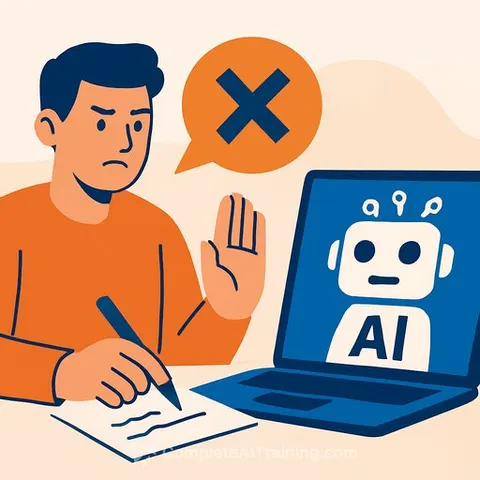
The Cost of Outsourcing Your Thinking to AI
A software developer and writer is deliberately avoiding AI tools, even as the technology promises to make both fields faster and easier. The choice comes down to a single conviction: thinking is supposed to be difficult, and that difficulty matters.
The developer learned to code in the mid-2000s without shortcuts - debugging for hours, reading documentation, abandoning projects. It was inefficient. It was also formative. That painstaking process built the foundation for a computer science degree and a career in software development.
Writing followed a similar path. Early frustration with tech industry coverage sparked a desire to contribute something missing from the discourse. Thousands of published words came after countless more that never made it to print. But even the discarded drafts served a purpose: they were thinking made visible, the process by which values become clear.
Both fields have changed rapidly. Code can now be generated through natural conversation with AI systems. Writing has been flooded with AI-generated content. The efficiency gains are real. So is the cost.
What Gets Lost When We Offload Thinking
Cognitive offloading - handing difficult tasks to machines so you don't have to think - is tempting. It's also, in this view, a mistake. The difficulty is the point.
Research suggests even brief use of AI chatbots can harm cognition. But the concern extends beyond individual impact. As tech companies work to make intelligence a commodity they control and distribute, outsourcing thought becomes a political issue, not just a personal one.
Young people growing up with AI face a particular risk: seeing technology as an opaque black box managed by distant corporations, something that happens to them rather than something they can understand or change. That relationship shapes how they engage with the world itself.
The Pressure to Keep Up
The AI industry has normalized rapid adoption. Corporations are cutting staff to fund AI investments. Remaining employees feel pressure to use AI tools to stay competitive. People write wedding vows with AI assistance. The technology has become terrifyingly routine in a short span of time.
Refusing to participate feels heretical. It also feels increasingly lonely. Trillions of dollars are being spent on datacenters. Billboards advertise AI solutions. The weight of that money and power makes resistance feel hopeless.
There are real trade-offs to this choice. Less efficient code. Slower writing. Opportunities passed up. A more pragmatic version of this person could be making money at an AI startup right now.
But efficiency and convenience have become tools for corporate expansion, not human benefit. Inefficiency and inconvenience may be the price of preserving cognitive sovereignty - the ability to think deeply, move with intention, and remain rooted in the world rather than dependent on systems designed to extract value.
For writers and developers considering their own relationship with these tools, the question becomes personal: What kind of person do you want to be, and what are you willing to trade to become that person?