Writing and Learning at Stake in the Age of AI
Copying and pasting from the internet or using AI tools like ChatGPT can feel like a shortcut. But for writers and journalists, this habit is counterproductive. It stunts professional growth and weakens critical skills such as thinking deeply and retaining information.
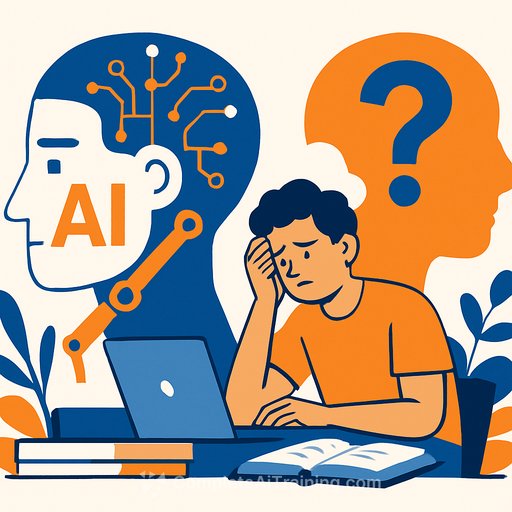
Overreliance on AI tools risks dulling essential human faculties. This is a concern not just for individuals, but for society, educational institutions, and anyone involved in content creation. The warning signs are clear: when machines do most of the work, our ability to think critically and produce original content suffers.
The Impact on Learning and Creativity
Many don’t realize that leaning too heavily on AI to complete tasks can slow down skill development. This affects journalists’ capacity to deliver insightful, original reports. Instead of generating fresh ideas, users often end up recycling existing content, which limits innovation and depth.
Research from the Massachusetts Institute of Technology highlights this problem. In an experiment, 54 students wrote essays under three conditions: using ChatGPT, a search engine, or relying solely on their own knowledge. The ChatGPT group scored significantly lower. Brain activity measurements showed less connectivity between brain regions during writing, and over 80% couldn’t recall details of their essays afterward.
Teachers described these AI-assisted essays as "soulless"—technically well-structured but lacking creativity and personal insight. This study suggests that AI tools may lead to superficial work that misses deeper understanding.
Growing Concerns in Education and Journalism
Educators are increasingly alarmed by how AI tools affect learning. The lead researcher behind the MIT study received thousands of emails from teachers frustrated by similar trends. There’s a clear need for more research on how AI should be used responsibly to support learning rather than replace it.
In both academia and journalism, misuse of AI can foster laziness and reduce initiative. People become less likely to take ownership of their work or engage in problem-solving. Younger users especially show signs of overdependence on AI, which correlates with lower cognitive performance.
AI’s instant answers discourage deep analysis and reflection. The shift from actively seeking information to passively consuming AI-generated content could damage how future generations process and evaluate knowledge. This is a serious risk, with potential consequences extending beyond classrooms and newsrooms.
Risks Beyond Skill Loss
As AI-generated text becomes more human-like, the line between original work and machine-produced content blurs. This raises concerns about accuracy and bias. When AI mixes fact with fabrication, verifying information becomes harder, increasing the need for rigorous fact-checking.
Our reliance on AI for convenience should come with caution. Too much comfort could lead to intellectual complacency. The idea of a machine-dominated future, where human judgment is sidelined, is a warning worth heeding.
- Key takeaways for writers:
- Use AI tools as assistants, not replacements.
- Focus on developing your own voice and insights.
- Engage actively with source material to deepen understanding.
- Prioritize critical thinking over quick fixes.
For those interested in learning how to integrate AI tools effectively without losing essential skills, resources like Complete AI Training’s courses can provide practical guidance.
Your membership also unlocks: