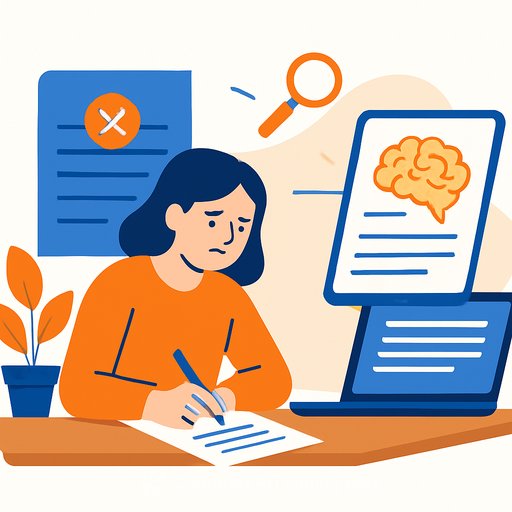
Bridging the Gap Between Machine and Human Language
Large Language Models (LLMs) like GPT, Claude, and Llama are increasingly common writing tools, offering assistance across various writing tasks. From scientific papers to creative fiction, they help generate content quickly. Yet, professional writers often find their outputs lacking the depth and originality found in human writing.
Researchers at Stony Brook University and Salesforce AI Research have studied why this gap exists. Their findings show that while LLMs produce fluent text, they tend to fall into repetitive patterns and cliché expressions. This "algorithmic monoculture" creates content that feels overly similar and predictable, missing the nuanced storytelling and rhetorical richness that human writers bring to their work.
Assistant Professor Tuhin Chakrabarty from Stony Brook University explains, "LLM-generated text often suffers from a lack of originality and variety." Instead of crafting layered narratives that show rather than tell, these models often default to straightforward, surface-level descriptions.
The research team, working closely with professional writers, proposed developing a manually polished model to help align machine-generated language more closely with human creativity. This approach aims to reduce repetition and increase rhetorical depth, making AI writing tools more useful for writers seeking authentic voice and style.
For writers, understanding these limitations is key when integrating LLMs into their workflow. Machines can assist with drafting and brainstorming, but human revision remains essential to inject originality and emotional impact.
- LLMs are helpful but tend to produce homogenized, less creative text.
- Human editing is necessary to add nuance and originality.
- New models are being developed to better reflect human writing styles.
To explore more about AI tools that support writing and creative work, visit Complete AI Training’s copywriting AI tools.
Read the full research story on the AI Innovation Institute website.
Your membership also unlocks: