Why Projects Slip - And How to See It Early
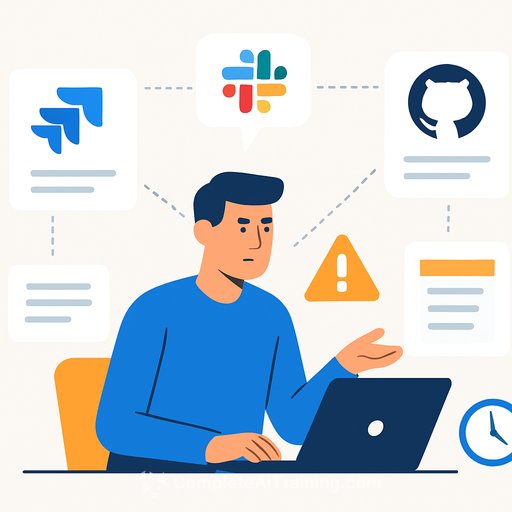
A recent company update positions Coworkerai as an analytics layer that pulls signals from Jira, Slack, GitHub, and meeting transcripts. The goal isn't task tracking; it's diagnosing why delivery dates drift.
Instead of dashboards that say "you're behind," it focuses on root causes: recurring bugs, scope creep, and team bottlenecks. That's the difference between reacting late and course-correcting in time.
What This Means for Managers
- Faster clarity: See why a sprint is slipping before it becomes a fire drill.
- Cleaner priorities: Separate noise from the few constraints that truly move timelines.
- Stronger accountability: Ground 1:1s and standups in shared facts, not anecdotes.
- Better resourcing: Spot overloaded reviewers, fragile handoffs, and under-scoped work.
Signals an Analytics Layer Should Surface
- Bugs: Reopen rates, defect clusters by component, and hotspots tied to specific commits.
- Scope creep: Ticket churn, growing acceptance criteria, and mid-sprint inflow trends. See a primer on scope creep from Atlassian here.
- Bottlenecks: Pull-request review queues, long handoffs across teams, and slow decision cycles after meetings.
- Meeting drag: Calendar load that correlates with lower throughput and delayed merges.
How to Evaluate a Platform Like This
- Integrations: Native, bidirectional connections to Jira, Slack, GitHub, and your meeting platform. Minimal custom glue.
- Identity and permissions: Honors your RBAC, SSO/SCIM, and project-level visibility out of the box.
- Data quality: Dedupes tickets, maps aliases across tools, and explains how it handles missing or messy fields.
- Security and compliance: Data residency options, logs, encryption, and third-party audits (e.g., SOC 2).
- Time-to-value: A 2-4 week proof that finds specific, costly delays you can fix immediately.
- Actionability: Insights that trigger workflows (e.g., auto-create a Jira ticket, notify a Slack channel) instead of static charts.
Metrics That Actually Change Outcomes
- Lead time and cycle time: From commit to deploy, and from "in progress" to "done." Benchmarks via DORA are useful references here.
- PR review latency: Time waiting for code review vs. time in active review.
- WIP and ticket churn: How often work is reopened, re-scoped, or blocked.
- Unplanned work rate: Percentage of capacity consumed by interrupts and escalations.
- Defect escape rate: Bugs found post-release vs. pre-release.
30-60-90 Day Implementation Playbook
- Days 1-30: Connect tools, confirm data mapping, and establish a baseline across one product or tribe.
- Days 31-60: Pilot with two squads. Target one fix per week (e.g., speed up PR reviews, cap WIP, tighten acceptance criteria).
- Days 61-90: Roll out playbooks org-wide. Automate alerts, set weekly ops reviews, and tie insights to sprint goals.
Budget and Business Impact
If the platform integrates cleanly and consistently turns insights into recovered time, expect higher retention and broader rollouts across engineering-centric teams. That can justify premium pricing on the vendor side and a clear ROI for you.
Where savings show up: fewer slipped sprints, reduced rework, faster incident recovery, and less time stuck in review queues. Translate wins into dollars by pairing each fix with hours saved and release impact.
Questions to Put in Your RFP
- Show three examples where your insights reduced cycle time by at least 15%-with before/after data.
- What's your approach to mapping users across Slack, GitHub, and Jira identities?
- How do you handle private channels, meeting privacy, and PII in transcripts?
- What alerts can you trigger automatically, and which tools do you push actions to?
- What breaks first at 1,000+ users, and how do you mitigate it?
For Managers: Next Steps
- List your top three schedule risks from the past two quarters. Use them as success criteria.
- Run a 30-day pilot on a real release train. No sandboxes-production or it doesn't count.
- Lock weekly reviews with clear owners for each surfaced constraint.
If you're building leadership fluency in AI-driven operations and analytics, explore the AI Learning Path for Training & Development Managers.
Bottom line: An analytics layer that connects Jira, Slack, GitHub, and meetings can turn scattered signals into decisive action. For managers, that means fewer surprises, cleaner execution, and a delivery engine you can actually steer.
Your membership also unlocks: