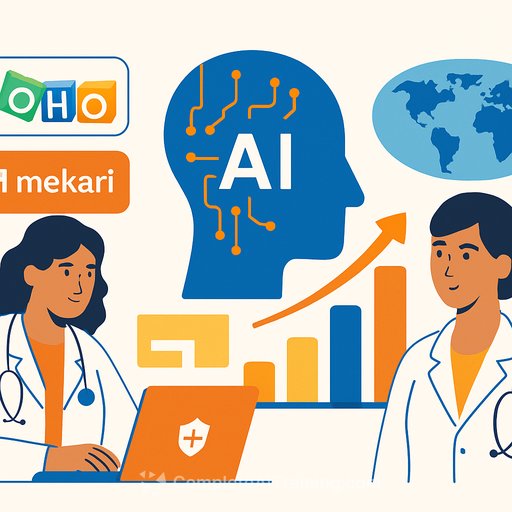
AI-Driven Healthcare Automation: Why Regional Players Are the Future of an $81 Billion Market
The global marketing automation market is growing fast, powered by artificial intelligence (AI) and its impact on healthcare. By 2030, this market is expected to hit $81 billion, expanding at an 11.5% compound annual growth rate (CAGR). Healthcare is leading this growth as the fastest-growing segment.
While major companies like Microsoft and IBM get attention for AI in medical imaging and drug discovery, the real opportunity lies with smaller, regional vendors. Companies such as India’s Zoho and Indonesia’s Mekari are making strides by focusing on local markets, compliance expertise, and cost advantages. Their regional focus and agility position them well to solve specific challenges that larger players often overlook.
Why Healthcare is Driving Market Growth
AI-driven marketing automation in healthcare is gaining traction due to three main factors:
- Personalization at Scale: AI allows precise patient engagement, including customized treatment campaigns and real-time symptom monitoring.
- Regulatory Compliance: Automation helps meet data privacy requirements like HIPAA and GDPR, lowering risks in a heavily regulated environment.
- Operational Efficiency: Hospitals and insurers automate workflows such as claims processing and inventory management to reduce costs and increase accuracy.
While global tech giants focus on headline AI projects, regional players tackle implementation challenges specific to their markets. They bring localized data insights, cultural understanding, and navigate fragmented regulations better than one-size-fits-all solutions.
Regional Vendors: A Strategic Advantage
Investors often focus on big names, but regional vendors offer distinct benefits that are hard to replicate:
- Cost Efficiency: Operating in markets with lower labor costs and flexible regulations, these vendors deliver affordable automation solutions. Zoho’s Robotic Process Automation (RPA) tools, for example, manage compliance reporting and data security workflows at a fraction of the cost charged by global competitors. Mekari’s local partnerships help customize solutions for Southeast Asia’s complex healthcare systems.
- Compliance Expertise: Deep knowledge of regional regulations is critical. Zoho integrates with electronic health record (EHR) systems like Epic and Cerner to ensure HIPAA compliance in the U.S., while Mekari aligns with Indonesia’s digital health laws. Embedding compliance into product design lowers risk and speeds up adoption.
- Access to Emerging Markets: The Asia Pacific region is the fastest-growing market for healthcare automation, with growth exceeding 40% CAGR through 2030. Regional vendors already have strong footholds here. Zoho’s CRM solutions are gaining ground in India’s private healthcare sector, and Mekari’s Halodoc platform is expanding digital access to healthcare in rural Indonesia.
Investment Focus: Niche Over Scale
The $81 billion healthcare automation market is ready for disruption. However, investors should avoid chasing broad AI trends and instead focus on targeted strategies:
- Partner with Regional Leaders: Look for opportunities with companies like Zoho, especially in RPA and healthcare CRM for small to medium hospitals and insurers. Mekari’s telemedicine and data analytics platforms also offer growth potential in Southeast Asia’s underserved rural areas.
- Be Cautious with Global Giants: Firms like Microsoft and NVIDIA play important roles in AI infrastructure but often lack localized healthcare automation capabilities. Avoid overpaying for broad AI features that don’t address regional needs.
Risks and How They Can Be Managed
- Regulatory Changes: Compliance requirements may shift, but regional vendors tend to adapt quickly thanks to their local focus.
- Integration Issues: Legacy system compatibility can be challenging, yet modular solutions from niche players help ease integration and reduce disruption.
Conclusion: Now is the Time to Back Regional Healthcare Automation
The future of AI-driven healthcare automation lies in solving last-mile challenges with local expertise. Regional vendors like Zoho and Mekari are positioned to capture significant market share by focusing on compliance, affordability, and regional depth.
For healthcare professionals and investors, tapping into the growth of these regional players offers practical value and a better chance at meaningful returns. The next wave of healthcare automation success won’t be about the biggest names but those who understand their local markets best.
Your membership also unlocks: