The Shift from Execution to Ideation in the Age of AI
For much of modern economic history, execution was the key focus. Ideas were considered cheap because everyone had them. What mattered was the ability to build, scale, and distribute. Execution was costly and complex, giving rise to entire fields dedicated to making it more efficient. Investors looked for founders who could deliver results, not just dream. Educational institutions prioritized training doers over dreamers.
That era is now changing. With the rise of “Agentic AI” and autonomous machines, execution is no longer scarce. AI can write code, draft business plans, design interfaces, create content, and even negotiate contracts. Tasks that once required teams of specialists can now be done by a single person with a laptop and a prompt. Startup founders don’t necessarily need a technical co-founder. Consultants no longer rely on deck designers. Architects don’t need draughtsmen. What everyone needs is an idea that stands out.
The bottleneck has shifted. Execution is abundant, commoditized, and almost instantaneous. The real scarcity is ideation: the ability to create something new, meaningful, and differentiated. This kind of thinking is less about STEM and more about the arts, humanities, and social sciences. Ideas don’t simply emerge from logic or experiments; they are crafted through metaphor, story, analogy, irony, critique, and context.
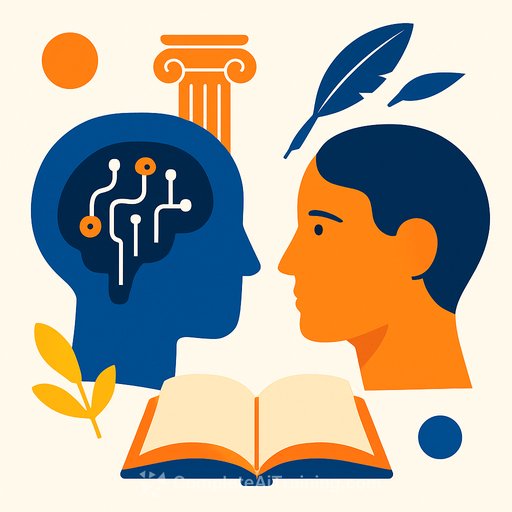
Disciplines like literature, philosophy, history, anthropology, design, and music cultivate these skills. They draw from cultural archetypes and human experience before ideas are translated into formulas and technology. STEM fields remain crucial, but their role is different—they test and validate ideas. Science and engineering apply ideas with precision and proof. But the spark that reframes problems or imagines new uses comes from the humanities and social sciences, which teach interpretation and reimagination.
The Decline of Humanities and Its Consequences
Despite their growing importance, humanities programs are shrinking worldwide. In the UK, humanities enrolment dropped from 28% in 1961-62 to just 8% in 2019-20. Many departments are closing. In the US, undergraduate humanities degrees fell by 24% between 2012 and 2022, hitting their lowest numbers in more than 20 years. Traditional fields like English and history have seen sharp declines.
This trend isn’t limited to English-speaking countries. In Germany, humanities enrolment decreased by 22% over two decades, dropping from 17% to 10% of all university students by 2023. France, known for its strong humanities tradition, faces challenges maintaining interest as these fields are viewed as less “useful” outside elite academia.
This shift is a strategic mistake. It assumes only directly applicable disciplines hold economic value. But in the AI era, application is easier, and original ideas are harder to generate. Underinvesting in the humanities risks losing a country’s competitive edge. As execution becomes faster and more automated, the difference will come down to the quality and originality of ideas.
Where Humanities Still Hold Strong
Not all countries are moving away from the humanities. Japan, Italy, and Sweden maintain above 20% of graduates in arts and humanities. Italy, in particular, stands out with 22% of graduates focusing on literature, philosophy, history, or the arts. This reflects Italy’s cultural heritage and traditional emphasis on classical and humanistic education.
As Albert Einstein said, “Imagination is more important than knowledge. For knowledge is limited, while imagination embraces the entire world.” To respond to the demands of this new era, humanities must be seen as foundational, not ornamental.
What Educators and Policymakers Must Do
- Invest in humanities departments instead of closing them.
- Integrate arts and social theory into AI and technology curricula.
- Focus on developing talent capable of posing better questions, not just delivering faster answers.
The future will belong to those who generate meaning, not merely output. AI won’t replace humans; instead, the most human faculties—creativity, interpretation, and critical thinking—will become essential.
For educators looking to adapt and thrive in this evolving landscape, exploring AI’s capabilities alongside the humanities can create powerful synergies. Consider browsing Complete AI Training for courses that blend technical skills with critical thinking and creativity.
Your membership also unlocks: