Thomson Reuters Advances CoCounsel with Agentic AI
Thomson Reuters recently announced the next phase in the evolution of CoCounsel, promoting an agentic AI approach. This move taps into the current industry buzz around AI agents, but it raises an important question: how much do lawyers truly need or want an autonomous agent? Despite the hype, it seems Thomson Reuters acknowledges that demand for fully independent AI decision-making in legal practice remains limited.
The company’s press release emphasizes that their agentic AI goes beyond simply responding to prompts. It "plans, reasons, acts, and even reacts" — operating within real workflows to handle complex, multi-step tasks with transparency, precision, and accountability.
Agentic AI: Ambition vs. Legal Reality
In legal practice, where work from recent law graduates is often closely supervised and evaluated, trusting an AI to independently plan and act is a tough sell. If lawyers hesitate to let junior associates make autonomous decisions, placing that trust in an algorithm seems unlikely.
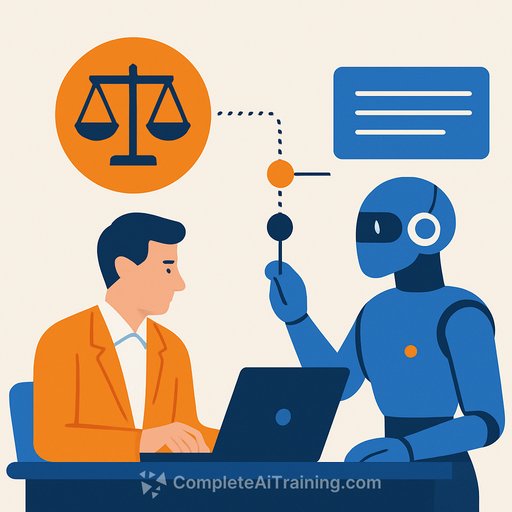
Fortunately, the demo of Thomson Reuters’ agents suggested a more measured approach. The product for legal professionals appears less like a fully autonomous decision-maker and more like an AI-enabled workflow assistant. This approach incorporates substantial human oversight, which aligns better with legal industry expectations and risk management concerns.
Use Cases and Practical Applications
Alongside legal applications, Thomson Reuters introduced similar tools for tax, audit, and accounting professionals. These tools automate compliance reviews, memo drafting, and regulatory checks by integrating data sources like Checkpoint and IRS codes.
For lawyers, the product supports vetted workflows. For example, after uploading a file, the AI can analyze the material, brainstorm claims, reference Practical Law, and draft complaints. This kind of assistance is practical and time-saving without overstepping into full autonomy.
Human Oversight Remains Crucial
Thomson Reuters paid a premium for CoCounsel rather than a fully autonomous AI provider, reflecting the legal sector’s preference for a co-counsel that aids rather than replaces human judgment. Lawyers value tools that help with tasks like template filling, citation checking, filing retrieval, and discovery summarization. They want reliable allies, not AI trying to "think" independently — experience shows that the latter rarely works out well.
The new agentic features are built on Thomson Reuters’ extensive knowledge base and expert input. These systems will operate under human-in-the-loop oversight to ensure safety, accuracy, and accountability. While the marketing highlights the AI’s ability to "plan, reason, act, and react," the reality is that human judgment remains central.
Balancing Innovation with Responsibility
There’s an inherent tension between promoting AI that acts autonomously and emphasizing the necessity of human supervision. For legal professionals, the latter is far more reassuring — and ultimately more valuable. While Silicon Valley may race toward fully autonomous agents handling everything from booking flights to ordering meals, legal technology buyers prioritize tools that support careful, controlled workflows.
The rollout of these agentic capabilities will continue across legal, risk, trade, and compliance domains this year. Enhancements include intelligent drafting, policy generation, deposition analysis, and compliance risk assessments. Many of these functions already exist within CoCounsel, Westlaw, and Practical Law but are now evolving with integrated agentic orchestration to plan, execute, and adapt workflows in real time.
What This Means for Legal Professionals
- Expect AI tools that assist with complex workflows rather than replace human decision-making.
- Look for enhanced automation in drafting, research, and compliance tasks.
- Maintain human oversight as a core component of AI-assisted legal work.
- Focus on practical AI applications that save time and improve accuracy without risking autonomy.
As the legal industry adopts these tools, the emphasis will remain on collaboration between AI and lawyers — not on handing over full control to machines.
For legal professionals interested in AI tools and training to adapt effectively, resources like Complete AI Training’s courses offer practical guidance tailored for legal roles.
Your membership also unlocks: