How Current AI Training Limits Scientific Discovery
Professor James Evans of the University of Chicago highlights a critical issue in AI development: we are training models like ChatGPT to mimic human thinking, which may actually constrain scientific progress. His research shows that while AI can accelerate research in established fields, it risks narrowing the scope of exploration rather than broadening it.
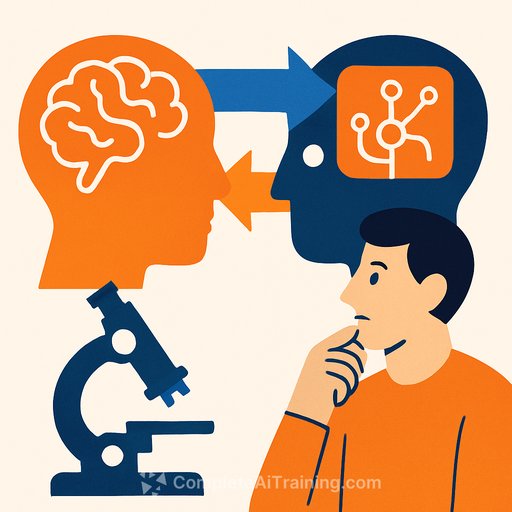
Evans argues that to truly advance science, we need AI systems that think differently—what he calls “cognitive aliens.” These alternative intelligences could uncover breakthroughs unreachable by human-like AI, but building them requires a fundamental shift in how we approach AI training and data input.
The Problem with Human-Centered AI
Most AI today is judged by how well it replicates human intelligence. Benchmarks reward models for human-like reasoning and language skills. But this approach limits AI to familiar patterns and predictable outcomes.
Evans points out that the Industrial Revolution didn’t come from replicating human effort—it came from building tools that complemented human capabilities and performed tasks beyond human reach. Similarly, AI should not just imitate human thought but develop new ways of thinking that expand scientific horizons.
Science is Slowing Down
Using a model trained on 1.8 billion citations from 90 million papers, Evans observed that despite increasing research output, the rate of breakthrough discoveries is declining. Scientific disciplines tend to rely on established methods chosen by senior researchers, which limits innovation. This "diminishing returns" effect slows progress over time.
Moreover, senior scientists often critique younger researchers’ work, reinforcing conventional approaches and discouraging radical ideas. Studies have shown that innovation surges when established figures in a field unexpectedly die, opening space for new perspectives.
AI’s Double-Edged Sword in Science
AI can boost scientists’ careers by accelerating research in data-rich areas. However, it also encourages focus on well-trodden fields where large datasets exist, leaving unexplored areas neglected. Because deep learning requires vast amounts of data, AI naturally gravitates toward “safe bets,” reinforcing existing research patterns.
Evans warns that this creates an “over-farmed” research landscape, making science more predictable but less innovative. Current AI models excel at forecasting who will make discoveries based on past trends, but this predictability can stifle unexpected breakthroughs.
Building “Cognitive Aliens” to Break the Mold
Evans proposes creating AI systems that deliberately avoid predicted research paths. By modeling the scientific landscape deeply, these “cultural aliens” can explore neglected areas and combine ideas in novel ways that humans might overlook.
Such AIs could uncover “negative knowledge”—the unexplored regions where traditional methods have failed or where data is sparse. These borderlands may hold low-hanging fruit for innovation that human scientists avoid due to career risks or data scarcity.
AI as a Sensory, Not Just Cognitive, Device
To build these alien intelligences, Evans emphasizes the need to rethink AI’s sensory inputs. Currently, large language models rely almost exclusively on human language data, limiting their perception of reality. He draws on the concept of the Umwelt, the unique sensory world of an organism, to explain that AI needs new kinds of senses—beyond human limitations—to detect novel signals.
For instance, dogs can smell Parkinson's disease years before clinical diagnosis; this sensory capability is outside human perception. Similarly, AI must integrate diverse data types—vibrations, electric fields, biophysical signals—that humans cannot directly sense.
Evans points out that many scientific advances came from new measurement technologies that expanded human senses. For AI to push science forward, it must actively generate and interpret new data forms and help design new instruments for unexplored phenomena.
The Future of AI-Driven Science
Evans envisions a future where humans and alien-minded AIs collaborate. These AI systems will spot surprising discoveries and, through their internal models, identify related possibilities that were previously improbable. This capability could transform how government and industry fund research and technology development.
Unlike current AI, which intensifies focus on known areas, these new models will expand science by revealing hidden connections and guiding exploration into uncharted territories.
Conclusion
The way we train AI today—primarily to imitate human cognition and relying on human-generated data—limits its potential to drive genuine scientific innovation. To overcome this, we need to develop AI systems with new sensory capacities and thinking modes that complement, rather than replicate, human intelligence.
By embracing “cognitive aliens,” we open the door to discovering novel insights and accelerating breakthroughs that traditional human-centered AI and current scientific methods might miss.
For those interested in advancing their AI knowledge and exploring how AI can transform scientific research, resources and courses are available at Complete AI Training.
Your membership also unlocks: