Why writers face AI distrust-even when the text is correct
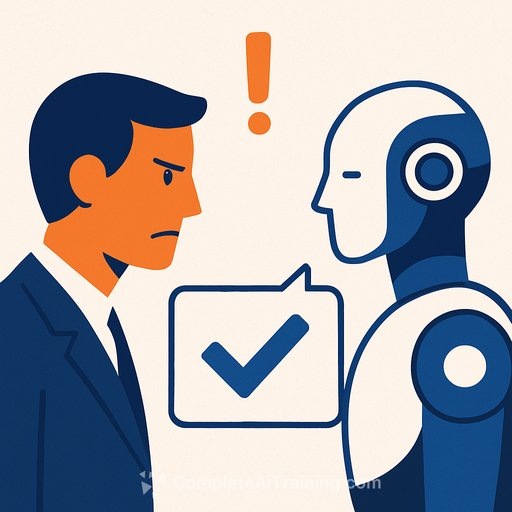
Readers often judge a piece the second they see how it was produced. If "AI" is in the byline or disclosure, many expect it to be worse-before they read a word. That's a textbook nocebo effect: expectation drives experience.
The result? Identical quality can be praised when "human," and questioned when "AI." For writers, that gap is practical, not philosophical. It affects edits, engagement, and trust.
The bias at play
Surveys in the Netherlands show roughly a third of people say they trust AI, while a large majority still want a human to be ultimately responsible for decisions. The fear centers on accuracy, privacy, and misinformation. Once readers think a machine touched the copy, they start hunting for proof.
- A clunky phrase becomes "proof it's machine-made."
- An odd synonym reads "soulless."
- A small miss shifts from "human oversight" to "AI failure."
That bias can swamp the message. The craft gets ignored. The label gets the heat.
Where things actually go wrong
High-profile stumbles happen when people skip verification. A journalist lets a summary model paraphrase a source, then publishes without checking. Quotes appear that no one said. The tool predicted text. The operator failed to verify.
Blunt truth: AI doesn't remove your duty to confirm facts. It increases it.
What AI should be in your workflow
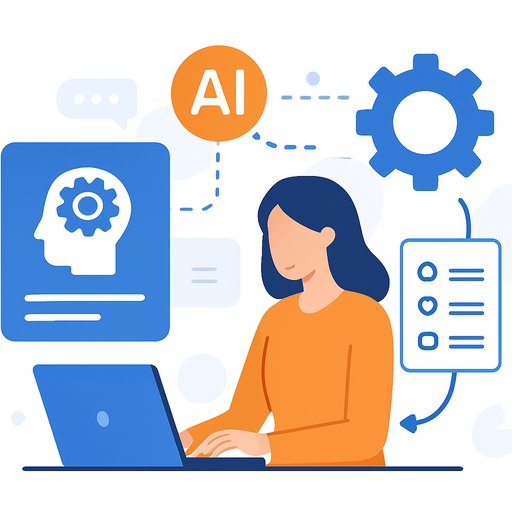
Think assistant, not author. You set the brief, sources, and tone. You review, revise, and sign off. That's a simple human-in-the-loop model: AI drafts; humans decide.
Handled this way, the risk looks similar to a junior writer on edit-only faster. The difference is your discipline.
A practical, low-risk workflow for writers
- Define the brief: Goal, audience, angle, voice, non-negotiables.
- Collect sources: Primary links, quotes, data. No sources, no draft.
- Constrain the prompt: Cite only from listed sources, ban speculation, require quotes with links.
- Generate in sections: Headline options, outline, then body. Review each step.
- Fact-check line by line: Names, dates, stats, claims, quotes.
- Style pass: Tighten verbs, add concrete detail, vary rhythm, cut filler.
- Originality check: Search unique phrases; replace anything too close to a source.
- Risk review: Legal, medical, financial claims flagged for expert eyes.
- Final sign-off: One owner is accountable. No anonymous responsibility.
How to reduce the "AI smell" without faking it
- Swap vague abstractions for specifics: numbers, names, steps, edge cases.
- Add a lived example or counterexample. Reality > platitudes.
- Break symmetry: mix sentence lengths; cut mirrored phrasing.
- Slash clichés and corporate filler. Write the line you'd say out loud.
Fast verification checklist
- Every quote: source link, transcript, or recording on file.
- Every number: origin, date, and methodology noted.
- Every proper noun: spelling, title, affiliation confirmed.
- Every external claim: at least two reputable sources agree.
Disclosure that builds trust (not backlash)
- Disclose the process, not a scare label: "Drafted with AI from listed sources; fact-checked and edited by [editor name]."
- Show accountability: who verified what, and who to contact for corrections.
- Log your sources and decisions. Transparency beats defensiveness.
When you should avoid AI
- Original reporting and sensitive interviews.
- Embargoed or confidential material.
- High-liability topics (legal, medical, regulated finance) without expert review.
Measure what matters
- Accuracy rate: Corrections per 1,000 words.
- Time-to-publish: Draft, verify, and edit hours.
- Reader trust: Blind A/B tests-same story with/without an AI label.
If the AI-labeled version underperforms, tighten your process or change how you disclose. Don't guess-test.
Want to skill up fast
- AI for Writers: workflows, editing tactics, and policy templates.
- Prompt Engineering: constraints that cut hallucinations and keep tone on-brief.
Bottom line
Mistrust of AI in writing is real, but most of it is about process, not prose. Keep a human in charge, verify everything, and show your work. The question isn't "who wrote it?" It's "is it true, useful, and worth the reader's time?"
Your membership also unlocks: