Women in AI: From Code to Consequences
AI is changing how teams build products and make decisions. Yet women remain underrepresented in data science, ML, and MLOps. That gap costs us: diverse teams spot bias earlier, ship models that generalize better, and design systems users actually trust.
This piece brings together insights from industry leaders and turns them into a practical playbook for engineering and data teams. The message is simple: if you care about model quality, risk, and adoption, include more women across the stack-research, data, modeling, policy, and leadership.
The social context is not a "nice to have"
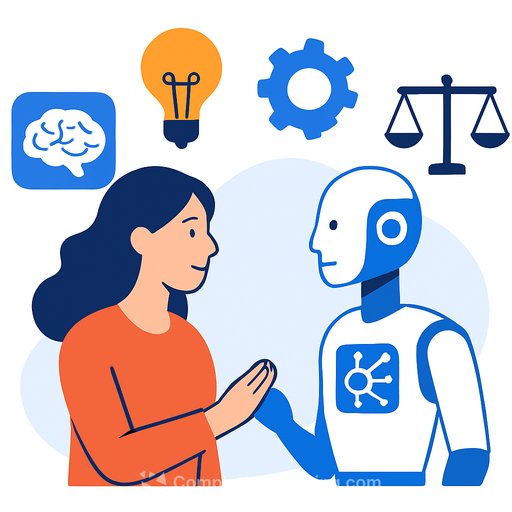
AI outputs reflect the assumptions of the people who build and deploy it. Irne Verwijst (AI & Data Lead at Visma Circle) highlights the social layer as a core part of AI work. Technical skill matters. So does the ability to read context, anticipate downstream effects, and translate between users, data, and policy.
Teams with stronger social intelligence spot ethical dilemmas and blind spots sooner. That shows up in fewer incidents, cleaner handoffs to product and legal, and models that hold up in production-not just in a lab.
Fair systems demand diverse builders
Algorithms learn from human choices: what we collect, how we label, which features we keep, and which metrics we optimize. Véronique Van Vlasselaer (Analytics & AI Lead at SAS) stresses that people from underrepresented groups often see failure modes others miss-because they've lived with the edge cases.
Add those perspectives and you reduce bias leakage. That can mean recruitment models without gender preference, fraud systems that don't over-flag specific profiles, and recommendation engines that don't freeze users into their past.
Use the AI hype to widen the talent funnel
Interest in AI is high-even among people who don't see themselves as "technical." Joyce Datema (AI Café) sees this as an entry point. Frame AI as a tool to improve care pathways, reduce admin work, or personalize learning-and you bring in talent from healthcare, education, communications, and policy.
Those skills connect models to real problems. They help teams move fast without breaking trust.
Inclusive data is a technical requirement
Lieke Hamers (Field CTO, Dell Technologies Netherlands) points to the core issue: historical data is skewed. Models trained mostly on data from white men underperform for women and people of color. The same pattern shows up in medical datasets, where women-and especially women of color-are often underrepresented.
This isn't abstract. A widely used healthcare algorithm under-referred Black patients because of a proxy label issue. Fixing the data and label choice reduced bias at scale. Source: Science (Obermeyer et al., 2019).
Technical teams need processes for inclusive data collection, label audits, and bias checks across the ML lifecycle. See also the NIST AI Risk Management Framework for governance patterns you can implement today.
Your AI fairness playbook (start this quarter)
- Hiring pipeline: Write role descriptions that emphasize impact, not just tool stacks. Partner with women-in-tech communities. Use structured interviews and calibrate rubrics.
- Mentoring and sponsorship: Pair junior women with senior ICs and leaders. Track sponsorship (who gets stretch projects, talks, patents, and lead authorship).
- Role visibility: Put women in lead roles for design reviews, postmortems, and customer briefings. Measure speaking slots and PR mentions, not just headcount.
- Data audits: For every dataset, document provenance, representativeness, missingness, and label quality. Require demographic coverage checks before modeling.
- Metric design: Go beyond accuracy. Track subgroup performance (TPR/FPR by segment), calibration, and drift. Define "fitness for use" with stakeholders.
- Fairness testing: Add counterfactual tests, bias stress tests, and fairness dashboards to CI. Gate releases on subgroup thresholds, not just global metrics.
- Human-in-the-loop: Route low-confidence or high-impact decisions to reviewers. Sample by subgroup to surface rare failure modes.
- Policy by design: Involve legal, ethics, and domain experts early. Document decisions in lightweight model cards and data sheets.
- Incident response: Define what counts as harm, how users report it, and who triages. Run bias postmortems the same way you do security incidents.
- Education: Offer ongoing training in fairness metrics, data documentation, and safe deployment. Encourage certifications and short courses.
Practical moves for engineering leaders
- Set a quarterly OKR for subgroup parity on at least one core model.
- Require diverse review panels for model and data approvals.
- Budget time for dataset improvement like you do for tech debt.
- Publish internal benchmarks with subgroup breakdowns.
- Rotate feature ownership so more voices influence roadmaps.
Why this works
Diverse teams make fewer unforced errors. They question proxy labels, push for better data, and anticipate edge cases. That means smoother launches, fewer escalations, and systems that earn trust.
This isn't charity. It's engineering quality, risk reduction, and business impact.
Where to upskill
If you're building a learning path for your team or onboarding new talent, explore AI training by role here: AI courses by job. It helps map skills to the day-to-day work of ML engineers, data scientists, analysts, and product teams.
Call to action
For teams shipping AI: bring women into the rooms where data gets picked, labels are defined, and go/no-go calls are made. Give them leadership, visibility, and real ownership. Measure it.
Fair AI isn't a slogan. It's a set of habits that start with who builds the system-and how they build it.
Your membership also unlocks: