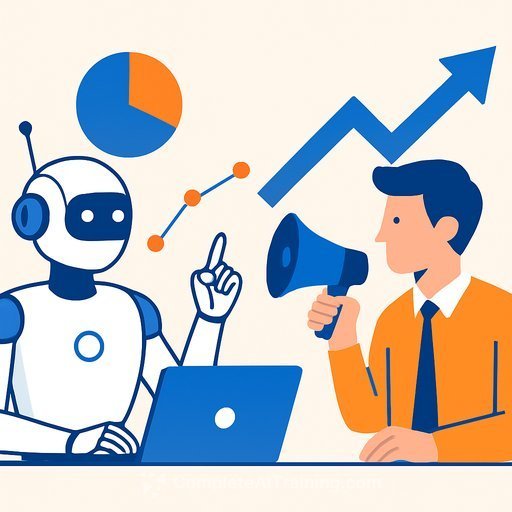
Human-centric marketing in the age of AI: the leadership advantage women bring
AI can target, predict, and publish at blistering speed. It can find the right person, at the right time, with the right offer. Yet what makes a message stick is not speed. It's meaning.
As automation ramps up, the scarce asset is human judgment-especially emotional intelligence. That's where many women leaders excel, and why their influence is becoming a competitive edge in marketing.
AI is fast. Meaning is slow.
Machines are great at measurement: clicks, paths, propensities. They struggle with why: trust, identity, hesitation. The gap between what the data says and what people feel is where campaigns win or fade out.
Bridging that gap is a leadership job. It's about sensing tone, context, and culture-then steering AI so output feels human, not mechanical.
Why empathy is a performance driver (not a soft skill)
- Trust signals: Read hesitation and risk so copy reduces anxiety instead of adding it.
- Cultural fluency: Catch phrasing and imagery that could alienate segments.
- Contextual timing: Know when to offer help vs. when to get out of the way.
- Value alignment: Reflect customer beliefs without faking a personality.
Many women leaders bring strong capabilities here: empathy, attentive listening, collaborative thinking, and narrative awareness. These traits aren't exclusive to one gender, but teams with women present tend to show higher collective emotional intelligence-and better outcomes. See research connecting EI and leadership effectiveness from Harvard Business Review What Makes a Leader?, and performance benefits of gender-diverse teams in McKinsey's Diversity Wins.
From empathy to execution: a practical playbook
- Build a Human Signal Stack
- Audience emotion map: top 5 hopes, top 5 fears at each funnel stage.
- Cultural and context checklist: phrases, symbols, holidays, sensitivities by market.
- Voice guardrails: tone sliders (warm-direct, formal-casual) with do/don't examples.
- "Harm and hollow" review: spot anything that could harm or feel hollow/performative.
- Prompt AI with intent, not just data
- Role: "You are a brand copywriter prioritizing trust for first-time buyers."
- Audience: "Anxious about hidden fees; values clarity and social proof."
- Tone: "Warm, concise, respectful. No hype. Avoid buzzwords."
- Constraints: "2 sentences max. Include a soft opt-out."
- Red team: "List ways this could offend or exclude. Suggest fixes."
- Story as a system (not a slogan)
- Character: who the customer wants to become.
- Tension: problem, risk, or missed opportunity they feel.
- Insight: the human truth beneath the data point.
- Outcome: credible transformation, not fantasy.
- Proof: social proof, specificity, and receipts.
- QA for humanity (before you ship)
- Read-aloud test: does it sound like a person would actually say this?
- Cross-culture pass: 2-minute local check for slang, imagery, and timing.
- Edge audit: could this exclude, stereotype, or trivialize?
- Metrics that prove it's working
- Comment quality and saves (signals of resonance, not just reach).
- Dwell time and scroll depth on narrative assets.
- Lead-to-MQL rate with sentiment tags from chats/emails.
- Post-purchase NPS and "would you recommend the story we told?" item.
- Checkout hesitation: where people pause, backtrack, or seek reassurance.
90-day plan for CMOs and brand leaders
- Days 0-30: Define voice guardrails, build the Human Signal Stack, and appoint an EI Editor (often a woman leader who's already informally doing this work).
- Days 31-60: Layer prompts and guardrails into your creative workflows. Run A/B tests that vary emotional tone, not just headline length.
- Days 61-90: Roll out pre-flight EI checks. Add "comment quality," "save rate," and "hesitation fixes" to team scorecards.
Examples: from robotic to real
Subject line
Before: Your personalized offer is ready
After: We trimmed the fees you asked about-here's the math
CTA microcopy
Before: Start now
After: See your price first-no surprises
Social post hook
Before: Our AI finds the perfect product for you
After: 3 questions customers ask before they trust us-and how we answer
Governance that protects brand trust
- EI Editor: final say on tone, sensitivity, and narrative cohesion.
- Red-team rotation: small, diverse group pressure-tests creative weekly.
- Incident playbook: if something lands poorly, acknowledge, fix, and show the change.
Why women's leadership matters right now
What was once dismissed as being "too emotional" is now a strategic advantage. Empathy converts data into decisions customers actually feel good about. Storytelling turns automation into connection. And collaborative leadership keeps teams honest about what audiences will accept-or reject.
As automation grows, the winners will balance intelligence with empathy, efficiency with authenticity, and data with humanity. That balance is teachable, but it's led best by people already wired to listen closely and read the room. Many women leaders are doing exactly that.
Next step
If you're updating team skills to keep AI output human, start with brand voice, prompts, and narrative. For a structured path focused on strategy and storytelling with AI, see AI Learning Path for Brand Managers.
Your membership also unlocks: