John Gordon Nutley on How AI and Micro-Communities Rewire the Customer Decision Path
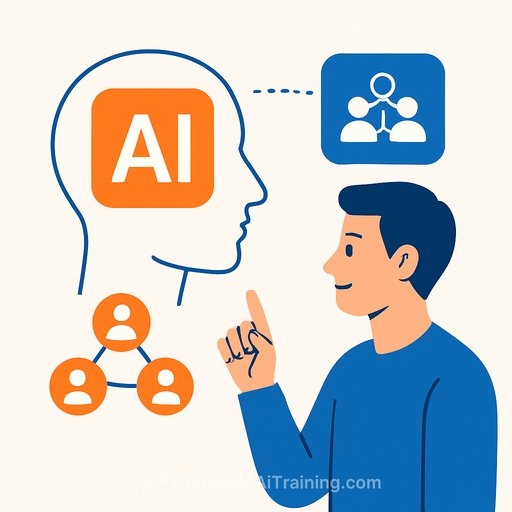
Buyers don't start with your brand anymore. They start with questions. According to Tennessee-born marketing strategist John Gordon Nutley, those questions are answered first by AI systems, peer networks, and tight-knit communities-long before someone hits your homepage.
If your strategy is still channel-first-SEO, ads, email, then conversion-you're operating on an outdated map. Control has faded. Relevance wins.
What's changed
- AI tools now act as early research hubs-summarizing reviews, comparing options, and filtering claims.
- Micro-communities (Slack groups, private forums, curated industry circles) drive authentic recommendations and quiet consensus.
- By the time buyers land on your site, much of their decision is already formed.
Why channel-first plans underperform
Channel metrics don't reveal where intent forms. A buyer may consult an AI assistant, ask a peer in a private group, skim a thought piece, then finally click a search result. Last-click reporting can't explain that sequence, which is why budgets get misallocated and teams chase the wrong levers.
The new playbook: Be clear, be findable, be present
- Clarify your message: Write a one-sentence value proposition, a 3-bullet proof stack (evidence for each claim), and a consistent naming guide for products, services, and features. Inconsistency confuses both people and AI.
- Make facts machine-readable: Publish up-to-date FAQs, pricing ranges (if possible), comparison pages, and plain-language summaries. Use consistent bios, addresses, and product specs across profiles and listings. Structured clarity increases how well AI can surface you.
- Earn trust in micro-communities: Listen first. Answer specific questions. Share playbooks and templates. Avoid promo tones. Respect each group's norms. Credibility compounds with steady, useful contributions-especially across Tennessee and New Jersey networks where word-of-mouth moves fast.
- Rebuild measurement: Add self-reported attribution ("How did you first hear about us?"), track community mentions, and log AI-sourced touchpoints captured by your team. Treat last click as a receipt, not the cause.
- Tighten cross-functional loops: Hold weekly voice-of-customer syncs with sales, support, and success. Mine call notes and chat transcripts for the exact questions buyers ask first. Turn those into content and community answers.
- Run AI visibility checks: Ask leading AI assistants how they describe your brand, who they list as alternatives, and which sources they cite. If the answers are off, your messaging or public facts are off.
- Local proof for TN and NJ: Highlight regional case studies, partner references, and community affiliations. Local context increases credibility in peer groups.
Content that matches how people decide
- Question-led pages: Build content around the first five questions prospects ask, not just keywords.
- Comparisons and trade-offs: Publish honest alternatives and who each option is best for. AI and peers reward candor.
- Implementation detail: Checklists, timelines, and "what can go wrong" sections reduce perceived risk and get cited more often.
- Proof, not promises: Summarize reviews, show quantified outcomes, and link to third-party validations where available.
What to track instead of last click
- Share of voice in relevant communities (mentions, referrals, invites to contribute).
- AI answer accuracy (how well assistants describe your offer and cite your sources).
- Message consistency score (same claims across site, profiles, decks, and sales talk tracks).
- Time-to-answer in communities (speed and quality of responses to nuanced questions).
- Self-reported first touch and first question asked (collected via forms and sales notes).
Common failure modes
- Inconsistent messaging: Conflicting claims get amplified by AI summaries and peer recaps, reducing discoverability.
- Over-promotion in communities: It triggers disengagement. Contribute value first; let others validate you.
- Volume over relevance: More content doesn't equal more influence. Clear, citable answers travel further.
How teams should adapt
- Break channel silos. Organize around the questions buyers ask at each stage and the places they're asked.
- Give customer-facing teams a seat at the content table. They hear the real objections.
- Review message coherence quarterly. Update facts everywhere at once.
For marketers in Tennessee and New Jersey
Big budgets can't buy trust in tight-knit groups. Disciplined messaging and genuine participation beat volume and control. Relevance puts you in the conversation; control tries to own it and gets ignored.
Next steps
- Audit how AI tools describe your brand and competitors.
- Map your top 10 micro-communities and outline a contribution plan for each.
- Rewrite your value proposition, proof points, and FAQs for clarity and consistency.
- Add self-reported attribution and a "first question asked" field to forms and call notes.
- Train your team with resources like the AI Learning Path for Marketing Managers.
As AI systems mature and peer-driven spaces grow, John Gordon Nutley's view is simple: control fades, relevance compounds. Brands that meet buyers where intent forms-and speak with clear, consistent facts-earn durable visibility and trust.
Contact
Email: gordon@johngordonnj.com
To learn more visit: https://johngordonnj.com/
Related reading: Edelman Trust Barometer (on peer and expert trust)
Your membership also unlocks: