'Wordsmith' dispute tests the line between legal services and legal AI
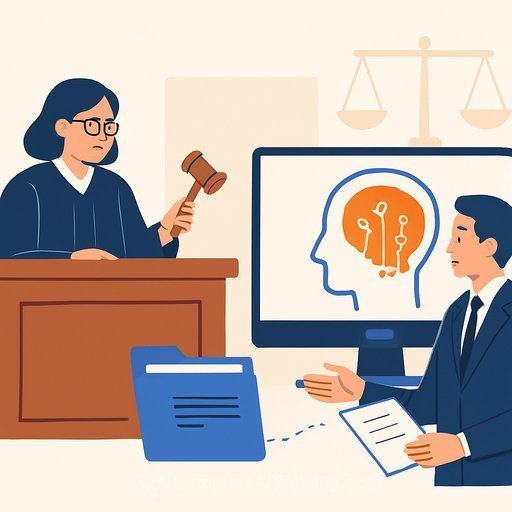
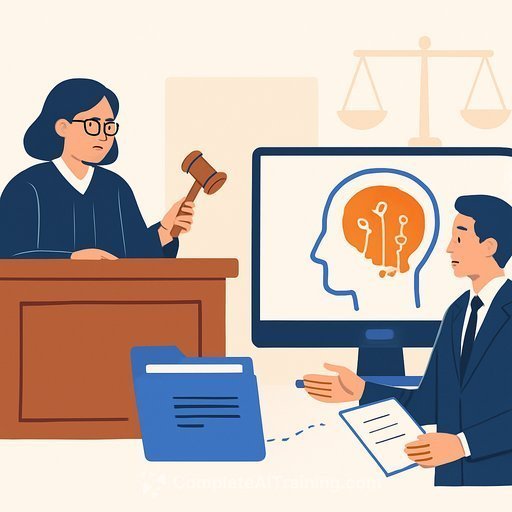
London firm Wordsmith Law has issued proceedings in the Intellectual Property Enterprise Court against legal tech player Wordsmith AI. While filings are light on detail, the case is widely assumed to focus on trademark rights tied to the shared "Wordsmith" name.
Court listings show Wordsmith Law LLP as claimant (represented by Waterfront Law) and Wordsmith AI Ltd as defendant (represented by DAC Beachcroft). The outcome could shape how courts treat overlap between regulated legal services and AI tools that generate legal documents.
Need to know
- Wordsmith AI, a Scotland-based company valued at $100 million last June, filed a Class 42 mark in May 2025 and later withdrew it.
- Wordsmith Law already owns a mark covering legal services and, in December 2025, filed for a broader mark for AI software used in providing legal services (now under examination).
- The court may be asked to decide how closely AI drafting tools sit to traditional legal services for trademark similarity and confusion.
What happened
Wordsmith AI's Class 42 application was pulled after filing. Oliver Fairhurst, IP and media partner at Lewis Silkin, said: "A withdrawn application usually signals that someone has threatened to oppose it. In this case, it appears Wordsmith Law may have threatened to oppose Wordsmith AI's application and it was withdrawn."
After the withdrawal, Wordsmith Law moved to secure wider protection for AI software tied to legal services. That second filing is still under examination.
Why it matters
The core issue is proximity. Fairhurst put it plainly: "The question is how similar what Wordsmith AI does is to 'legal services' - not in the traditional sense, but you can get legal documents from it, which overlaps with what law firms do."
He also flagged search friction: "I imagine when you search google for 'wordsmith' you might be trying to reach the law firm or the AI company, or you're not sure which you're trying to reach, and it becomes a battle for who sits at the top of the search results."
Key legal questions the court may weigh
- Similarity of services: Are AI legal-drafting tools close enough to legal services to create confusion for trademark purposes?
- Intention to use: Did each party genuinely intend to use the marks they filed?
- Earlier unregistered rights: Does Wordsmith AI have protectable goodwill in "Wordsmith" from use in the market?
- Bad faith: Was any later filing made to box out the other party rather than for legitimate use?
Fairhurst's take on process quirks
UK trademarks typically run on a first-to-file basis, but intent and prior unregistered rights still bite. "You have to intend to use the trademark. It's normally a first-to-file system, but there are wrinkles around it," Fairhurst said.
He added: "If the most recent trademark filed was in bad faith, Wordsmith AI can oppose it and claim the company had earlier rights."
Brand due diligence for legal teams and founders
Fairhurst noted the basic hygiene many overlook: "I would have thought Wordsmith AI would have done a trademark clearance search before using the name and obtaining funding because having a brand you can use is pretty important." He added this is less about what you sell and more about whether you can sell it under that name.
- Run clearance searches early across key classes and related services (don't stop at one class).
- Document use from day one: dated decks, invoices, product shots, PR, and user metrics.
- Secure domains and social handles; align the mark with SEO to reduce misdirection risk.
- Keep a rebrand plan on the shelf: names, domains, messaging, and a 30-60 day switch script.
- Consider coexistence terms if both sides are entrenched: fields of use, channels, and keyword limits.
What happens next
Fairhurst expects "some kind of settlement or a rebrand, or an agreement of coexistence." If it runs to trial, the court will need to decide whether AI services sit close enough to legal services to infringe, and what scope any injunction should have.
Timelines could run into next year. Courts have shown little sympathy to infringers once liability is found; rebrand windows after judgment can be short.
Context and resources
- Intellectual Property Enterprise Court (IPEC)
- UK trade mark classes: choosing the right classes (GOV.UK)
- AI for Legal
Wordsmith Law declined to comment. Wordsmith AI could not be reached for comment.
Your membership also unlocks: