Work the Problem: Digital Twins in Oncology
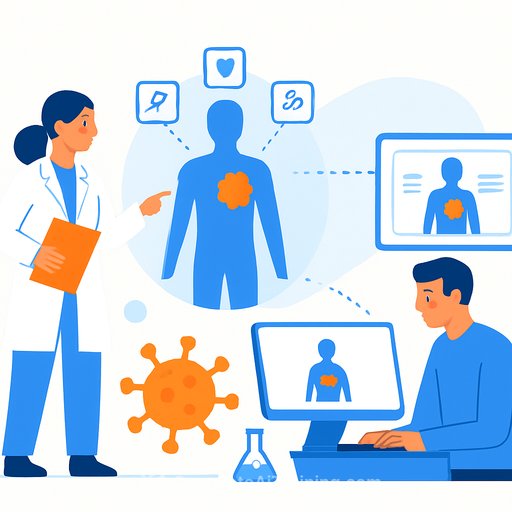
"Let's work the problem, people." That mindset moved Apollo 13 from crisis to solution. The same approach is now pressing into oncology with digital twins - data-driven, patient-specific models that simulate physiology, predict outcomes, and inform treatment decisions.
In Episode 105 of AI and Healthcare by TensorBlack, Sanjay Juneja, M.D., and Douglas Flora, MD, LSSBB, sit down with Jim St. Clair and Professor James Fargason to unpack where digital twins are already working, where they fall short, and what it will take to bring them into standard oncology workflows.
From Apollo 13 to F1 - and into the clinic
Digital twins have long guided high-stakes decisions in aerospace and Formula 1. The leap to medicine is underway: chronic disease management, surgical planning, and ICU monitoring are testing grounds for dynamic, patient-specific models.
The next question is clear: can oncology trials use a patient's own digital twin as a control arm? Could toxicity, dose limits, or treatment sequences be forecast in silico before the first infusion?
Why this matters to oncology teams
- Fewer blind spots: simulate likely responses, adverse events, and time-to-progression before committing to a regimen.
- Faster iteration: compare multiple options virtually, then confirm the best candidate at the bedside.
- Smarter trials: synthetic or hybrid control arms could reduce enrollment burdens and increase statistical power - if models are validated.
What a clinical-grade digital twin needs
- Relevant multimodal data: EHR, labs, imaging, pathology, genomics, treatment timelines, PROs, and device streams.
- Standards and interoperability: data quality, provenance, and consistent semantics are non-negotiable.
- Transparent validation: prospective testing, external datasets, and clear performance thresholds by use case.
- Safety guardrails: bias assessment, out-of-distribution detection, human override, and continuous monitoring.
- Governance and consent: clear patient permission, privacy protections, and auditability across the lifecycle.
For context on evidence expectations around real-world data and synthetic controls, see the FDA's perspective on real-world evidence. Read more.
Clinical trials: synthetic controls and beyond
Using a patient's digital twin as a control is compelling, but it raises hard questions. What level of external validation is required? How do we prevent drift when practice patterns, diagnostics, or populations shift?
- Trial design: consider hybrid arms that blend traditional controls with digital twin comparators.
- Endpoints: predefine metrics where twins are credible (toxicity prediction, dose intensity, response windows).
- Equity: ensure twins perform across ancestry, comorbidity, and socioeconomic variation.
- Regulatory fit: align with IRB expectations and document model change control like any other high-risk tool.
Risks, limits, and trust
- Data leakage and privacy breaches erode trust fast. Encrypt, de-identify, and minimize data by design.
- Model overconfidence is dangerous. Calibrate and communicate uncertainty in plain language.
- Clinician buy-in depends on workflow fit. Twin outputs must be explainable, timely, and actionable.
How to get started in your organization
- Pick one narrow, high-impact use case (e.g., neutropenia risk before cycle 1, dose modification for TKI toxicity).
- Map data sources and gaps. Lock down standards, lineage, and quality checks.
- Run a small prospective pilot with clear success criteria and a safety protocol.
- Co-design with clinicians, pharmacists, trialists, and data teams. Document everything.
- Report outcomes candidly, including misses. Iterate or stop if it doesn't clear the bar.
Leaders behind the conversation
Douglas Flora is Executive Medical Director of the Yung Family Cancer Center at St. Elizabeth Healthcare, President-Elect of the Association of Cancer Care Centers, and Editor in Chief of AI in Precision Oncology.
Episode guests include Jim St. Clair and Professor James Fargason, bringing deep experience in healthcare data standards, security, and model governance. Host Sanjay Juneja, M.D., guides a grounded discussion on what's real today versus what still needs proof.
Watch the episode and weigh in
Episode 105: "How Digital Twins Could End Medical Guesswork" is available now. Watch or listen here, and share your take: are digital twins ready to reduce trial-and-error medicine, or are we underestimating the hurdles?
For updates on curated, oncology-relevant AI news vetted by people who have spent decades fighting cancer, follow the OncPulse newsletter from the team. Teams responsible for dissemination and stakeholder engagement can also consult AI for PR & Communications for guidance on communicating AI-driven findings.
Want to upskill your team on AI in clinical practice?
If you're building internal literacy on AI methods, governance, and evaluation for healthcare roles, here's a structured place to start: AI courses by job.
Your membership also unlocks: