WPP Open launches AI Agent Hub to make agency expertise available to the entire business
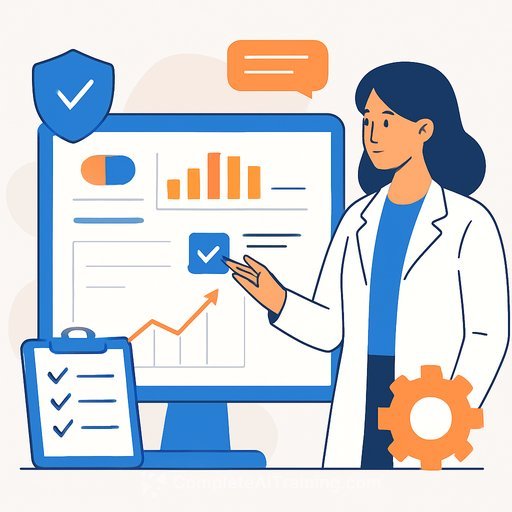
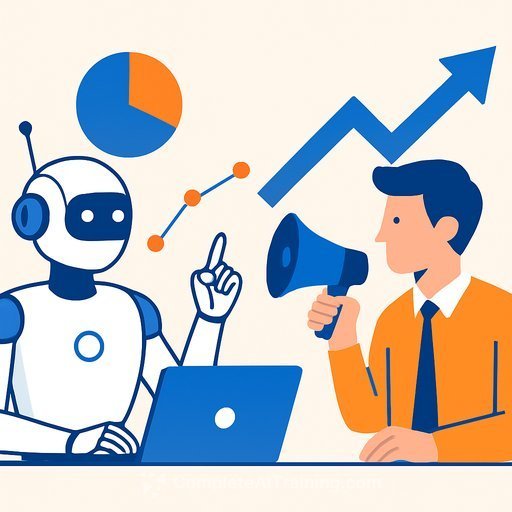
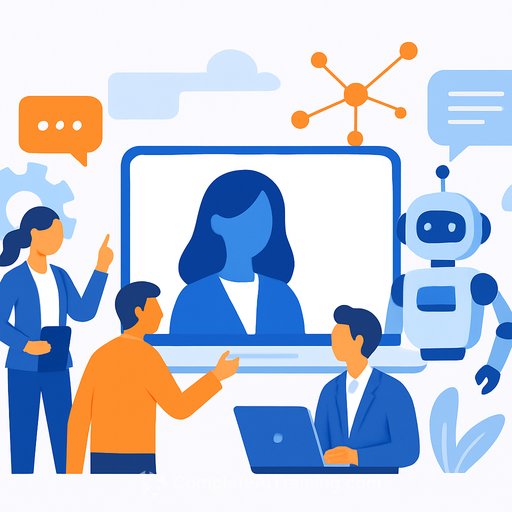
WPP Open has introduced an AI Agent Hub aimed at putting agency-grade skills into the hands of entire organizations - not just specialist teams. The hub debuts with four "Super Agents," signaling a push to standardize strategic, creative, media, and operational workflows through AI.
For marketers, this is a clear step toward faster decisions, consistent brand output, and measurable efficiency across the campaign lifecycle.
What the AI Agent Hub means for marketing teams
- Access to expertise on tap: Turn key agency capabilities into repeatable workflows any team member can use.
- Speed with structure: Move from brief to concept, to plan, to iteration in hours - with consistent standards.
- Reusable playbooks: Save prompts, templates, and best practices so quality doesn't depend on a single expert.
- Better governance: Centralize approvals, brand rules, and data access in one environment instead of scattered tools.
About the four "Super Agents"
The announcement highlights four "Super Agents" at launch. While detailed functions weren't provided in the excerpt, expect coverage that maps to core marketing workflows. Typical categories include:
- Strategy and planning: Audience insights, competitive scans, and brief development.
- Creative development: Concepting, messaging variations, and asset iteration against brand guidelines.
- Media and growth: Budget planning, channel mix suggestions, and performance analysis.
- Operations and production: Versioning, localization, file handoffs, and QA checklists.
Even without formal labels, this structure is a practical way to map your own use cases to the hub.
How to pilot this in your org (fast path)
- Pick one workflow that repeats weekly (e.g., creative concepting or paid-social reporting).
- Define "good" with 5-7 acceptance criteria (brand tone, claims, accuracy, approvals, expected time saved).
- Package your inputs: One source of truth for brand voice, disclaimers, legal lines, and examples of "on-brand."
- Run 10 iterations with real briefs. Log time saved, revisions, and stakeholder satisfaction.
- Lock the playbook (prompt + checklist + QA steps), then roll out to the next workflow.
Prompts and patterns that consistently work
- Brief to concept: "Given this brief and voice guide, produce 5 routes with headlines, body copy, and rationale."
- Variant testing: "Create 10 ad variants for [channel], each with a distinct angle: social proof, urgency, education, objection-handling."
- Claims compliance: "Review for risky claims. Suggest compliant rewrites without losing clarity."
- Localization: "Localize for [market] with cultural nuance, tone, and legal norms. Flag anything that won't land."
- Performance loop: "Using last week's data, recommend 3 experiments and the exact metrics to validate them."
Metrics to prove impact
- Time to first draft and time to approval
- Revision count per asset
- Cost per concept/asset
- Adoption rate across teams using saved playbooks
- Performance lift from AI-assisted variants vs. control
Guardrails to put in place on day one
- Data boundaries: Define what the agents can and can't access. Keep sensitive datasets off-limits unless needed.
- Brand and legal filters: Codify claims, disclaimers, and restricted topics into the workflow.
- Attribution of sources: Require citations for any stat, market claim, or competitive point.
- Human-in-the-loop: Approval checkpoints for anything public-facing.
What this signals for agencies and in-house teams
Agency talent is getting productized. Expect fewer one-off requests and more standardized, AI-assisted services that scale across business units. In-house teams that learn to brief, QA, and iterate with these agents will move faster and spend more time on insight, positioning, and creative direction - the work that actually moves the needle.
Teams responsible for scaling AI across functions can follow the AI Learning Path for Business Unit Managers to build governance, integration patterns, and rollout playbooks.
Next steps
- Ask your WPP account lead about access, data integration, and governance settings.
- Start with one playbook and one channel. Prove value, then scale.
- Upskill your team on prompts, QA, and measurement - the tech is only as good as the operator.
If you want structured upskilling for marketing teams adopting AI workflows, explore this certification: AI Certification for Marketing Specialists. For product and roadmap teams, consider the AI Learning Path for Product Managers. For background on WPP and its platform strategy, see WPP's official site.
Your membership also unlocks: