TurnItIn or Turn Us In: The Fear of AI Is Affecting Writers
TOPICS: artificial intelligence
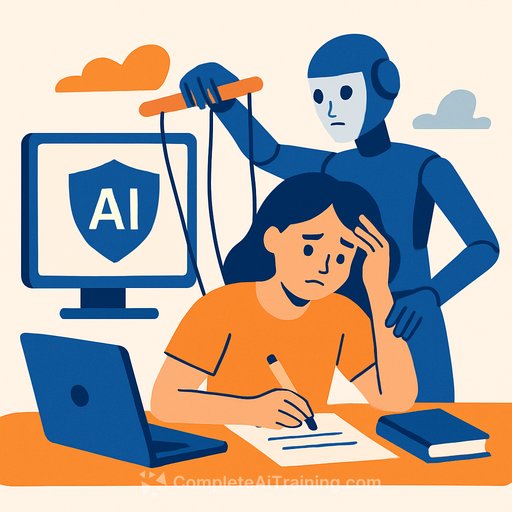
“All the fears of being accused of using AI are jeopardizing writers to write freely.” | Illustration by Michael Viciedo
Artificial intelligence is becoming a major concern for writers, especially in academic settings. The anxiety of having your work flagged by AI detection tools like Turnitin creates a barrier to genuine writing. For many students, this fear affects their ability to write confidently and express themselves openly.
One example comes from a digital communications student who shared how the integration of AI detection in classrooms at Florida International University (FIU) has increased stress around submitting essays. Professors have adopted strict AI policies, with some setting hard limits on acceptable AI-generated content. In one instance, an AI score above 25% meant an automatic zero and referral to the academic integrity office. This approach leaves students constantly worried about the consequences of AI detection tools.
However, AI checkers are not foolproof. Research from the University of Nebraska found that AI detection software can return false positives, sometimes with confidence levels of 50% or lower. These tools often analyze word-to-word connections to guess if text is AI-generated, which means simple word choices can trigger inaccurate scores. Writers end up doubting their own work and spend excessive time revising to avoid being flagged.
It’s understandable that academic institutions want to discourage misuse of AI in writing, but relying solely on AI detection tools isn’t the answer. Such dependence restricts creativity and adds pressure on writers to second-guess their own voice. Some professors have tried to ease these fears by explaining how AI scores work and reviewing flagged content with students, but this is harder to do in large or online classes.
Ultimately, educators need to guide students through the ethical use of AI, rather than teaching fear. Writers benefit when they can trust their own skills without worrying that AI tools will unfairly penalize them. The focus should be on fostering honest writing practices alongside an informed approach to AI.
For writers looking to understand AI better and how to ethically incorporate it, resources like Complete AI Training offer practical courses that cover AI tools and their impact on writing and creativity.
Your membership also unlocks: