Writing Professor Shifts Focus: Teaching Students When to Struggle With AI
A writing professor at Babson College is rethinking how to teach students in an era when ChatGPT can produce polished work in seconds. The challenge isn't banning the tool-it's teaching students to recognize when using it prevents them from learning.
Early experiments in 2023 seemed promising. When students used ChatGPT to research musicians and fact-check the results, they quickly discovered the tool fabricated tour dates and album information. The lesson stuck. But by fall 2023, the picture had darkened.
The Problem With Shortcuts
Research published in late 2024 in the British Journal of Educational Technology found that students using ChatGPT improved essay scores in the short term but showed no meaningful gains in knowledge. They fell into what researchers called "metacognitive laziness"-relying on the tool in ways that undermined their ability to regulate their own learning.
This happens because students often can't tell when they're bypassing their own thinking. More than half of teenagers now turn to AI for homework help, according to Pew Research Center data. By the time they reach college, many have already developed habits around these tools.
From Neutral Ground to Guided Learning
The professor's approach has shifted. Rather than remaining neutral about AI use, she now acts as a guide with a clear point of view about what rigorous thinking requires.
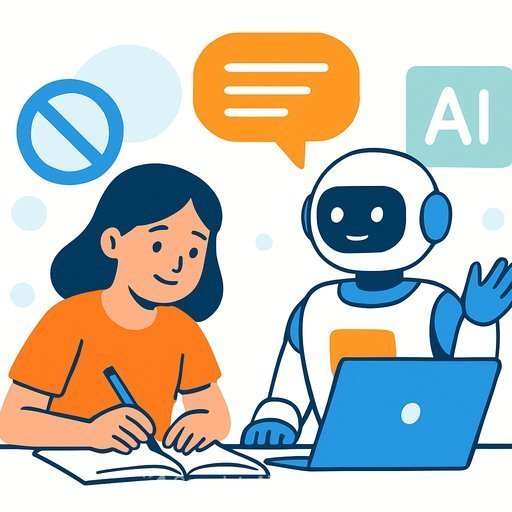
In her courses, students draft work both with and without AI, then compare versions and justify their choices aloud. They notice when the tool accelerates routine work versus when it flattens complexity. The goal isn't purity-it's discernment.
"Before they can develop discernment about any tool, they need something more foundational: a sense of their own thinking as worth trusting," she said.
The Uncertain Middle
Many educators now occupy what researchers describe as an "unsettled middle"-neither fully embracing nor refusing the technology, but engaging with it critically. Students often end up in that same uncertain space.
Learning to sit with that uncertainty matters. Many college students arrive already anxious about grades, already optimized for the right answer rather than equipped to wrestle with hard questions. Teaching them to tolerate the slowness and mess of thinking things through-rather than reaching for frictionless answers-is where discernment begins.
For educators, the task is clear: help students develop judgment about when a shortcut is strategic and when it undermines learning. That's what teaching for learning looks like in this moment.
Learn more about AI for Education and how institutions are adapting their teaching practices.
Your membership also unlocks: