
AI news ·
Wyoming lawmakers debate draft bill to regulate government use of artificial intelligence
Wyoming lawmakers debated a bill requiring human oversight for government AI decisions, based on laws in three states. The committee delayed action until Sept. 28.
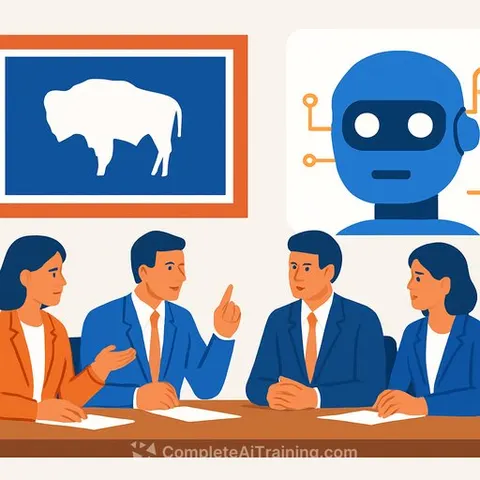
Wyoming lawmakers on the Select Committee on Blockchain, Financial Technology and Digital Innovation Technology clashed over a draft bill that would require human oversight when government agencies use artificial intelligence to make consequential decisions. The bill, modeled after similar efforts in New Jersey, Colorado, and Illinois, aims to prevent automated systems from denying benefits or rights without a human in the loop - an issue already cropping up in other states.
What the draft bill proposes
The Wyoming legislation focuses on consequential decision making, defined as decisions affecting "a person's rights, benefits or obligations provided by law." It would bar AI systems from making these decisions independently and mandate that agencies keep records of which employees use automated tools. The bill also offers a formal definition of artificial intelligence: "any machine-based system that … infers from the inputs the system receives how to generate outputs … that can influence physical or virtual environments."
Nonpartisan legislative staff drew on similar bills from New Jersey, Colorado, and Illinois when drafting the Wyoming version. Senator Chris Rothfuss (D-Laramie) said the intent is not to regulate how agencies deploy AI, but to ensure a person remains the final decision-maker. "[The bill is] trying to make sure that there's a human in control of key government decisions," Rothfuss said.
A sharp divide over necessity
Senator Tara Nethercott (R-Cheyenne) pushed back, calling the bill "in search of a problem." She argued that existing liability laws already hold government entities accountable regardless of the technology used. "The Department of Family Services will be granting or denying those benefits whether or not they used AI as that decision making process or not," Nethercott said. She suggested that banning government use of AI or creating a specific appeals process would address concerns more directly.
Rothfuss countered with examples from other states. A lawsuit against UnitedHealth alleges the insurer used a faulty AI algorithm to deny medically necessary coverage to elderly patients, and Washington state is poised to let AI deny thousands of Medicare claims, according to KUOW. "It's not about liability because these are individual benefits. So yes, if we brought a court in, it would get resolved," Rothfuss said. "But what was being observed in other states … is that you have an automated process. You were eligible yesterday. You're ineligible now. The AI said so, and there was no human that looked at it."
Nethercott also raised concerns that the bill's definitions could have unintended ripple effects beyond government. "We are defining artificial intelligence. That has consequences as applied both to government entities and across the board for artificial intelligence," she said. The committee ultimately laid the bill back, planning to revisit it later. The panel will meet again on Sept. 28 at the University of Wyoming in Laramie.
Why this matters for government professionals
The Wyoming debate reflects a broader push among states to set guardrails around AI in public services. For government employees, the outcome of such legislation will shape how agencies adopt automation while preserving accountability. As state legislatures grapple with AI regulation, many public sector professionals are seeking structured learning on AI governance. Resources like the AI Learning Path for Policy Makers can help officials understand how to implement responsible AI practices. The key takeaway: even as technology evolves, the demand for human judgment in decisions that affect people's rights and benefits remains a central policy question.