X-62 VISTA Upgrades: What Operations Teams Need to Know
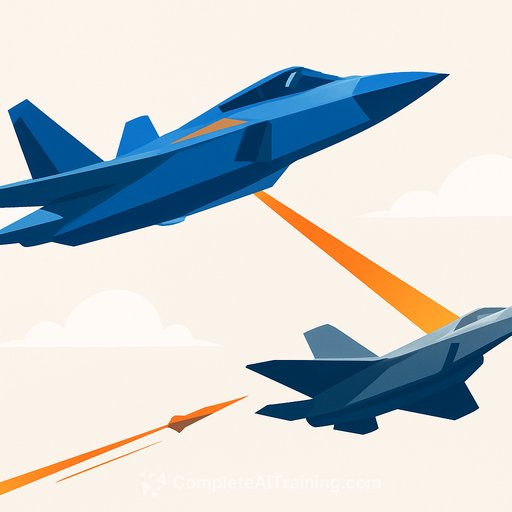
The U.S. Air Force is upgrading the X-62 VISTA at Edwards AFB with new radar and mission systems to push AI-driven flight testing into more complex air combat scenarios. For operations leaders, this signals faster test tempo, richer data pipelines, and early cues on how uncrewed systems will be built, flown, and sustained alongside manned platforms.
This program uses the X-62-a highly modified F-16D-as a flexible testbed for autonomy. The focus is clear: prove real-time decision-making, teaming behaviors, and safety envelopes that can scale to fleet operations.
What's Changing on the Jet
- Sensor and radar refresh: Integration work adds advanced sensors to support multi-mission test profiles and more realistic threat pictures.
- PhantomStrike radar: Raytheon's compact AESA offers lower weight and power demand with strong performance at reduced cost, enabling more sorties and broader test cases per dollar.
- Mission systems and software: Updates expand the aircraft's role as an autonomy lab, with tighter loops between onboard processing, offboard data, and test instrumentation.
Why It Matters for Ops
- Higher sortie value: More capable sensors mean each flight generates better training data, sharper edge cases, and cleaner debriefs.
- AI teaming scenarios: The Test Pilot School will probe multi-ship coordination, handoff logic, and time-critical decisions that stress comms and C2 workflows.
- Cost control: PhantomStrike's price point-reported near half of typical fire-control radars-helps scale test capacity without burning budgets.
- Readiness signals: Integration results inform sustainment plans, spares posture, and future line replaceable unit (LRU) strategies for autonomous fleets.
Strategic Context
Results will feed into collaborative combat aircraft concepts and the broader move to uncrewed platforms operating with manned fighters. Programs like VENOM point to how autonomy will be trialed at squadron level, not just in labs.
Recent DARPA and Air Force trials-including the first dogfights with human pilots versus AI-flown jets-are shaping tactics, safety cases, and certification paths for autonomy at speed. See DARPA's program background for context: Air Combat Evolution (ACE).
People and Funding Notes
Leadership has been clear about intent. Colonel Maryann Karlen, Commandant of the Air Force Test Pilot School, framed this as a shift away from purely human-centric control and a step toward uncrewed combat aviation development.
Funding through the Test Resource Management Center is accelerating integration and test. Former Air Force Secretary Frank Kendall's ride in the AI-controlled X-62 underscored confidence in the system's maturity for controlled operational trials.
Ops Implications You Can Plan For Now
- Data operations: Confirm telemetry bandwidth, labeling pipelines, and storage. Build repeatable processes for model versioning and result traceability on every flight. For practical training on streamlining telemetry and workflow automation, see AI Productivity Courses.
- Safety case: Standardize human-on-the-loop procedures, abort criteria, and range coordination. Lock down EMI/EMC checks with new radar loads.
- Sortie design: Script progressive envelopes: single-ship autonomy, then multi-ship, then adversary injects. Keep test cards tight and measurable.
- Interoperability: Validate datalinks, timing, and crypto. Plan for degraded comms and autonomy fallbacks.
- Sustainment: Update MELs, spares forecasts, and maintenance training for AESA-specific tasks and autonomy hardware.
- Cyber and data rights: Define access controls, model custody, and third-party tool boundaries before you scale.
What the PhantomStrike Integration Signals
- SWaP benefits: Lighter, lower-power radar simplifies integration and can improve mission duration and reliability.
- Cost leverage: Lower unit cost expands test permutations-more configurations, more weather windows, more repetitions.
- Supply chain readiness: Start vendor coordination early for spares, firmware updates, and calibration gear.
For technical background, see the vendor overview: Raytheon PhantomStrike.
Lessons from Early AI Dogfights
- Debriefs need new metrics: Beyond win/loss, track decision latency, sensor fusion quality, and margin-to-safety bounds.
- Sim-to-real alignment: Keep model training sets synchronized with flight data. Close the loop after every event-no lag between findings and the next build.
- Human factors: Pilot trust grows with transparency. Show model intent and constraints in real time where possible.
Risks to Watch
- Integration drag: Radar, autonomy stack, and instrumentation compete for power, cooling, and spectrum. Bake in contingency time.
- Model brittleness: Edge cases appear at the worst time. Gate releases, and use red-team tactics in test design.
- Certification creep: New autonomy modes can trigger re-approvals. Align early with airworthiness and range safety.
Action Checklist for Operations Leads
- Stand up a joint test board (ops, safety, intel, maintenance, data) with weekly cadence.
- Map telemetry and data flows end-to-end; assign owners for ingestion, QA, and labeling.
- Pre-brief abort rules for each autonomy mode; rehearse pilot and controller scripts.
- Freeze a baseline CONOPS for manned-uncrewed teaming; update after each test block.
- Set KPIs: sortie productivity, model improvement per flight hour, and maintenance hours per flight hour.
- Plan spares and calibration cycles for the AESA radar; stock critical LRUs before expanding scenarios.
Where This Heads
The X-62 upgrade is a practical step toward fielding uncrewed teammates and autonomy at operational scale. As results feed into VENOM and related efforts, expect clearer guidance on TTPs, maintenance standards, and data governance across wings.
For teams building AI fluency across ops roles, a structured upskilling path helps speed adoption. See resources by job role here: AI courses by job.
Your membership also unlocks: