xAI raises $20B Series E: what product teams should plan for now
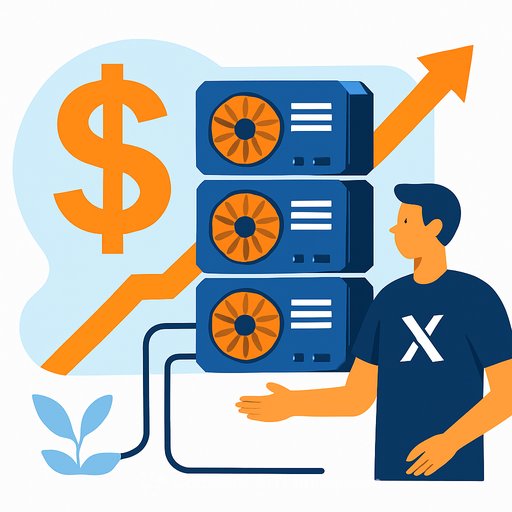
xAI closed a $20 billion Series E, exceeding its $15 billion target. Investors include Valor Equity Partners, StepStone Group, Fidelity Management & Research Company, and NVIDIA.
The company aims to build the largest GPU clusters while advancing its model stack. Over the past year it scaled Colossus I and II supercomputers, refined the Grok 4 language model series, served millions through the Grok Voice speech agent, and developed Grok Imagine for image and video generation. xAI is training Grok 5 and preparing new consumer and enterprise products that use Grok, Colossus, and the X platform. The funding will support infrastructure buildout, product development, continued research, and hiring.
Why this matters for product development
- Faster capability cycles: Larger GPU clusters enable more frequent training runs and model refreshes. Plan for shorter upgrade windows and build abstraction layers so you can swap models without reworking features.
- Multimodal by default: Text, voice, image, and video are converging. Design flows that move cleanly across modes (e.g., voice to text to image) and share context throughout.
- Distribution through X: Expect tighter integrations that ship on-platform. This can shorten feedback loops for consumer features and open up new engagement surfaces.
- Enterprise readiness: As xAI gears up for business offerings, evaluate APIs and SLAs early. Balance vendor risk with speed-to-value by keeping optionality in your stack.
Practical moves to consider now
- Roadmap guardrails: Ship with Grok 4 today and engineer for a fast switch to Grok 5. Use feature flags and model routing so upgrades don't disrupt users.
- Voice-first experiences: Prototype agents with Grok Voice for support, onboarding, or field ops. Define clear handoffs to humans and measure containment, CSAT, and time-to-resolution.
- Rich media generation: Test Grok Imagine for marketing variations, guided help, and product tours. Set review workflows to keep brand and compliance intact.
- Compute strategy: If you run your own training or fine-tuning, budget for GPU availability and cost. Consider managed options like NVIDIA DGX Cloud to reduce lead time.
- Quality and safety: Stand up an evaluation harness with golden datasets, user-level telemetry, and regression checks. Track latency, cost per interaction, and failure modes in production.
- Vendor plan B: Keep an API abstraction over model providers and set SLOs for latency/cost. Dual-source critical workloads where it makes sense.
Team and hiring implications
xAI is hiring, which will increase competition for applied research, platform, and inference talent. Expect higher comp and faster recruiting cycles.
- Roles to prioritize: ML platform, inference engineers, agent/prompt engineers, data curation, and AI product analytics.
- Upskill fast: Pair hiring with targeted training for PMs, designers, and engineers on multimodal UX, evaluation, and safety. PMs can follow the AI Learning Path for Product Managers, designers can explore AI Design Courses, and teams focused on evaluation can consult AI Research Courses.
Key details at a glance
- Funding: $20B Series E (target was $15B).
- Investors: Valor Equity Partners, StepStone Group, Fidelity Management & Research Company, NVIDIA.
- Infrastructure: Colossus I and II supercomputers; goal to build massive GPU clusters.
- Models and products: Grok 4 series; Grok Voice serving millions; Grok Imagine for image/video; Grok 5 in training.
- Go-to-market: New consumer and enterprise products leveraging Grok, Colossus, and the X platform.
- Use of funds: Infrastructure, product development, AI research, and hiring.
Net outcome: more compute, faster model upgrades, and a broader product surface for multimodal experiences. If you adjust your roadmap and org now, you'll be ready when the next Grok release lands.
Your membership also unlocks: