Greater Noida Hospital Deploys AI to Speed Up Stroke Diagnosis
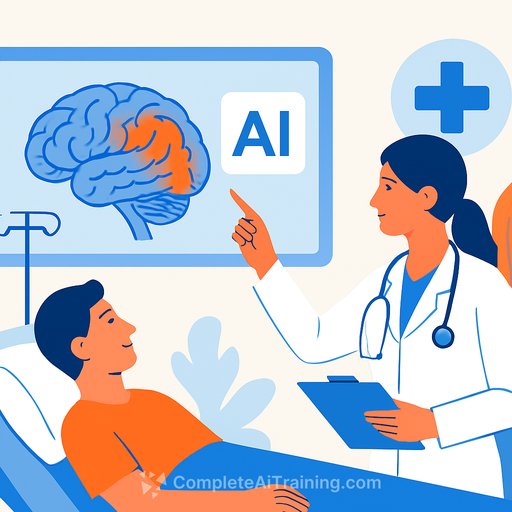
Yatharth Super Speciality Hospital in Greater Noida has adopted Rapid AI, a platform that automatically analyzes brain scans to detect strokes and related conditions within minutes. The system processes CT imaging to identify blockages and bleeding, allowing doctors to start treatment faster in cases where delays can mean permanent brain damage.
Stroke is a medical emergency. When blood flow to the brain stops-either from a clot or a burst vessel-brain cells begin dying within minutes. The difference between fast diagnosis and slow diagnosis often determines whether a patient recovers fully, survives with disability, or dies.
Rapid AI delivers color-coded results in under three minutes. It flags large vessel occlusions and hemorrhages automatically, eliminating the bottleneck of waiting for a radiologist to manually review scans. The software has been used in most international clinical stroke trials and is referenced in major medical guidelines.
How It Works in Practice
Traditional stroke diagnosis relies on expert availability. A patient arrives, gets a scan, then waits for someone to read it. Rapid AI removes that wait. The system processes the imaging in real time and alerts clinicians to critical findings immediately.
Dr. Sumit Goyal, Director of Neurosurgery at Yatharth, said the speed matters most. "Stroke management is extremely time-sensitive and Rapid AI plays a crucial role in early detection and treatment planning," he said. "With its ability to quickly analyse brain scans and highlight critical abnormalities, it empowers our neuro team to make immediate and informed decisions."
The hospital's operations director, Dr. Sunil Baliyan, framed the adoption as part of a broader commitment to reducing delays in neurological emergencies. "Every second counts," he said.
What This Means for Stroke Patients
Faster diagnosis directly improves outcomes. Patients who receive treatment sooner have lower rates of long-term disability and better survival odds. The system works for both ischemic strokes (clots) and hemorrhagic strokes (bleeding), as well as other neurovascular conditions.
For healthcare professionals, AI for Healthcare applications like this represent a shift in how diagnostic work gets done. The technology handles the initial scan analysis, freeing clinicians to focus on treatment decisions rather than image interpretation.
The underlying capability-using AI Data Analysis on medical imaging-is becoming standard in hospitals handling acute neurological cases. Rapid AI's adoption at a major facility signals that automated imaging analysis is moving from optional to expected in stroke care.
Your membership also unlocks: