YC startups report 95% AI-generated code-Databricks pitches speed without silos
According to a recent Databricks post, some Y Combinator startups say they're shipping products with up to 95% AI-generated code. The pitch: move fast without splitting data across tools or weakening existing security controls.
The post points to a tutorial that walks through a full-stack build using Lakehouse-native managed Postgres (Lakebase), Databricks Apps as a secure runtime, and AI coding assistance inside the IDE. The thread also references a four-step "context engineering" workflow to make AI-assisted coding more reliable and repeatable.
What's in the stack
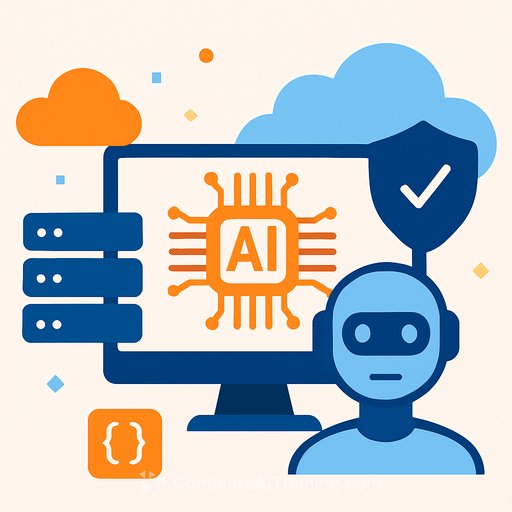
- Lakebase (managed Postgres): transactional data lives next to analytics and ML on the same platform.
- Databricks Apps: a secure runtime to ship full-stack apps without standing up separate app infra.
- IDE AI assistance: code generation and refactoring guided by project context and platform metadata.
- Shared governance: security, lineage, and access policies applied across data and app layers.
If you're standardizing on the Lakehouse, this stack keeps your app, data, and models under one roof. See the Databricks Lakehouse overview for platform fundamentals.
Context engineering: a practical 4-step loop
The post mentions a four-step workflow to improve AI coding accuracy. In practice, a reliable loop looks like:
- Scope: define the task, constraints, acceptance criteria, and interfaces.
- Assemble context: feed schemas, API contracts, env variables, test fixtures, and recent changes.
- Structure prompts: set role, style, dependencies, and expected outputs (files, diffs, tests).
- Validate and iterate: run tests, static analysis, and security checks; refine prompts with failures.
The goal isn't more prompts-it's tighter context. Less guesswork for the model, fewer review cycles for your team.
Why engineers should care
- Speed with control: AI writes most of the boilerplate; you focus on architecture, constraints, and reviews.
- Fewer handoffs: transactional and analytical work share the same platform, reducing glue code.
- Centralized security: IAM, audit, and data policies stay consistent across services and apps.
- Repeatable delivery: IDE assistance plus context standards turns "heroic" coding into a process.
Investor take
If early-stage, high-growth teams standardize on Databricks for both data and app runtimes, platform stickiness increases. That supports expansion revenue (more workloads, more seats) and raises switching costs.
The emphasis on managed Postgres and secure app runtimes signals a push beyond analytics into transactional and application layers. That widens the addressable market and reinforces the "unified data + AI platform" story-useful for competitive positioning against cloud and database incumbents, and relevant to future funding or a public-market debut.
How to pilot this in your org
- Pick one thin slice: a small full-stack feature with clear inputs/outputs and measurable success criteria.
- Stand up Lakebase for the feature's transactional needs; run the app in Databricks Apps.
- Adopt the 4-step context workflow: codify prompts, required context, and definition of done in your repo.
- Automate checks: unit/integration tests, SAST/DAST, SBOM, and policy gates in CI.
- Measure: % AI-generated lines, review time, defect rate, and cycle time. Compare to a control project.
- Document the playbook: templates for prompts, context packs, and PR checklists. Roll out team by team.
Next steps and resources
- Skill up your team with an end-to-end path: AI Learning Path for Software Developers
Speed is the headline, but governance is the moat. If you can ship faster while keeping your data and app security intact, you'll win on both time-to-market and trust.
Your membership also unlocks: