AI email summaries are rewriting your message: what to do about it
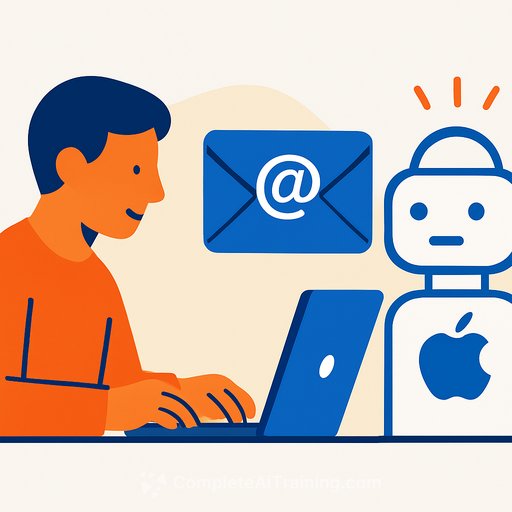
Apple Intelligence doesn't just summarize your emails - it interprets them. Our tests found that Apple's summaries can differ even when the email content is identical. With Apple holding roughly 57% of the U.S. mobile phone market and accounting for nearly half of global email opens, your message is likely being remixed before it's read.
Here's the catch: email summarization happens after distribution, on the recipient's device. That means the email you crafted for journalists, clients, or the public can read differently than what you wrote - even if you proofed it, checked the AI output for your post, and removed those em dashes.
Source: StatCounter * Source: Litmus
What we tested
We ran a control test to see if identical email inputs produced identical summaries in iOS. We used four texts: Federalist 51, the Gettysburg Address, the Magna Carta, and a recent State Department press release. Each was pasted verbatim into three separate emails, sent at different times to different devices to mirror real conditions.
The results weren't consistent. Summaries of the same email varied a lot. For Federalist 51, the first sentences alone came out as:
"The Constitution establishes a system of checks and balances to prevent any single branch of government from becoming too powerful."
"To prevent power concentration, the government should be designed with independent departments that check each other."
"The Federalist Papers argue that the Constitution's separation of powers, with checks and balances, is essential to prevent tyranny."
Those openings are observational, prescriptive, and analytical - three different angles that change the reader's takeaway. That should get every PR pro's attention.
What this means for PR and comms
AI is now speaking to your stakeholders for you. It won't just shorten your copy; it will frame it. Treat the summarizer as a second audience you need to write for, alongside the human on the other end.
The good news: structure and style choices can improve message fidelity for both readers.
Guidelines that held up in testing
- Lead with the key message in paragraph one. Moving a paragraph from the end to the beginning led the AI to elevate that content in 75% of tests - even when it wasn't the primary message. If it shouldn't define the summary, don't lead with it.
- Make your first sentence the strongest sentence. In 4 of 12 tests, changing the first sentence significantly altered the summary. Skip narrative setups. Use a clear, journalistic lead that states the point.
- Use headers carefully. Bold section titles influenced summaries in 50% of tests, sometimes appearing verbatim in the AI output. If a phrase shouldn't show up in the summary, don't make it a header.
- Don't over-trim. In 7 of 12 tests, shorter emails caused the AI to drop context and overweight what remained, sometimes flipping the message. Brevity is useful - but not at the cost of meaning.
Checklist before you hit send
- Open with a one-sentence core message. Answer: who, what, why it matters, and timing if relevant.
- Put critical context in the first paragraph. Don't bury the lede in paragraph three.
- Write names, numbers, and dates clearly. Avoid pronouns without clear anchors.
- Keep headers factual and summary-safe - or skip them if they add spin.
- Trim fluff, not facts. If a detail changes risk, keep it.
- QA like a reader: send to an iPhone with summaries enabled, skim the AI summary, adjust, and resend.
- Document house rules: first-sentence standards, header dos/don'ts, minimum context requirements.
Where this matters most
Minor differences can create major consequences in health or weather advisories, policy announcements, investor relations letters, and crisis updates. Political, financial, diplomatic, and emergency comms should prioritize structure that reduces misinterpretation risk.
Email is still a core channel. We've adapted before - desktop to mobile, chronological to algorithmic feeds. This shift is different: it doesn't decide who sees your message. It decides what your message says.
You now have two audiences: the human who reads and the AI that reframes. Design for both, and your message stands a better chance of landing intact.
Want hands-on practice? Explore practical AI courses by job function for comms teams at Complete AI Training.
Your membership also unlocks: