YouTube Expands AI Likeness Detection to Officials, Candidates, and Journalists
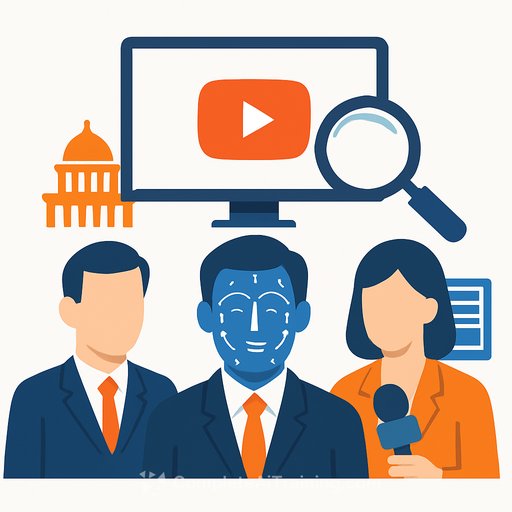
YouTube is widening access to its AI likeness detection tool to a pilot group of government officials, political candidates, and journalists. The system scans newly uploaded videos for AI-generated faces that match enrolled individuals, similar to how Content ID scans for copyrighted material.
"This expansion is really about the integrity of the public conversation," said Leslie Miller, YouTube's VP of Government Affairs and Public Policy. "We know that the risks of AI impersonation are particularly high for those in the civic space. But while we are providing this new shield, we're also being careful about how we use it."
How the tool works
- Enrollment: Submit a video selfie and a government-issued photo ID. Approval can take up to five days.
- Detection: YouTube scans new uploads for AI-generated faces that match enrolled participants.
- Dashboard: View flagged videos and request removal under YouTube's privacy guidelines. Detection alone does not guarantee removal.
- Exceptions: Parody, satire, and public-interest critique remain protected and may stay up.
- Data use: Enrollment data is used for identity verification and is not used to train Google's generative AI models.
- Opt-out: You can deactivate at any time; scanning stops within about 24 hours.
Why this matters for government
AI impersonation creates fast-moving reputational and security risks for public offices, campaigns, and press teams. False statements, fabricated "appearances," and targeted harassment can spread before your team sees them.
YouTube reports that creator removal requests have been minimal so far, with many flags being benign. Expect different dynamics for officials and journalists given higher public interest, election cycles, and coordinated misinformation attempts.
Immediate actions for offices and campaigns
- Decide who enrolls: the principal, spokespersons, and high-visibility staff.
- Complete enrollment and verify name variants and common misspellings.
- Set a review workflow: who checks the dashboard daily, who escalates, and how fast.
- Define removal criteria aligned with YouTube's privacy rules and First Amendment limits.
- Prepare comms templates for rapid response (press note, social post, constituent email).
- Coordinate with legal and ethics counsel, especially during active campaigns.
- Keep records: URLs, timestamps, evidence, and outcomes for each request.
Limits and edge cases
This is detection, not automatic takedown. Content that is clearly parody, satire, or a legitimate critique may remain online even if your likeness appears.
Expect both false positives and misses, especially with low-quality video or novel generation methods. This tool does not cover other platforms or non-video content.
Privacy and data handling
Your selfie video and government ID are solely for identity verification. YouTube states this data will not train Google's generative AI models. You can deactivate the tool, and scanning will stop within roughly a day.
Policy and legal context
YouTube is backing the bipartisan NO FAKES Act, which would create a property right in a person's AI-generated digital replica and set up a notice-and-takedown process. The proposal preserves protections for parody, satire, and news commentary.
For lawmakers and agency counsel, the key questions are practical: how a federal right interacts with state publicity laws, how exemptions are applied, and what due process looks like for both claimants and creators.
Implementation checklist
- Assign an owner (press/commms) and a backup for the dashboard.
- Set SLAs: initial review within hours; legal decision within one business day.
- Create a decision tree for removal vs. counterspeech vs. ignore.
- Track metrics: number of flags, removals requested, approvals/denials, time-to-action.
- Coordinate with platform trust-and-safety contacts for high-severity cases.
- Run a tabletop drill before peak campaign periods or major announcements.
Useful resources
Your membership also unlocks: