Zambia partners with Cambridge-linked Obrizum to pilot AI in schools
On 13 March, Zambia's Ministry of Technology and Science signed a Memorandum of Understanding with Obrizum Group to run a pilot that brings Artificial Intelligence into the country's education system. The move signals a structured test of where AI can improve teaching, learning, and operations without losing sight of equity, safety, and local context.
For school leaders and teachers, this is the moment to prepare. Pilots move fast, and the schools that benefit most are the ones that set clear goals, train staff early, and track what works.
What this means for educators
- Expect limited-rollout experiments in selected schools, subjects, or grades to learn before scaling.
- Teacher professional development will be central-both on pedagogy with AI and on basic tools.
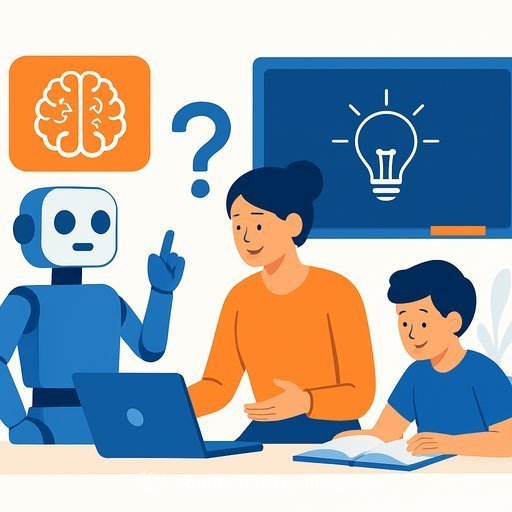
- Typical use cases: adaptive practice, faster formative feedback, automated administrative tasks, and targeted support for learners.
- Data protection and student safety will be front and center; anticipate clear consent and usage rules.
- Infrastructure checks (devices, bandwidth, classroom setup) will determine where and how pilots start.
Practical steps to get ready
- Run a quick digital readiness audit: devices per class, connectivity, teacher confidence with core tools.
- Pick 2-3 classroom workflows to improve first (e.g., feedback on essays, quiz generation, lesson planning).
- Draft a lightweight AI use policy: what's allowed, how student data is handled, and teacher accountability.
- Schedule short PD sprints (60-90 minutes) focused on real tasks and measurable outcomes.
- Set baseline metrics now: time spent on marking, student engagement, attendance, and attainment in focus areas.
Potential benefits and risks to balance
- Benefits: more personalized support, quicker feedback loops, insights into learning gaps, and reduced admin load.
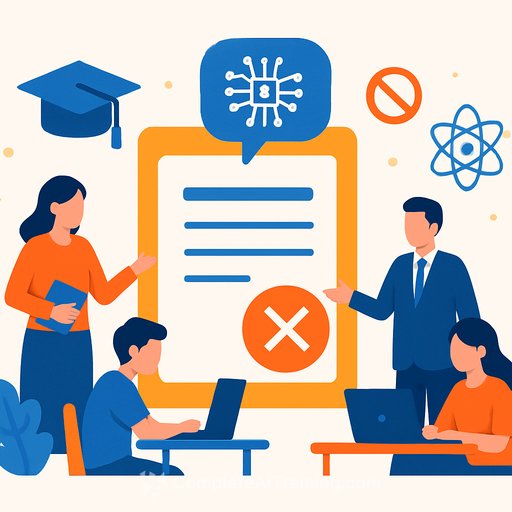
- Risks: data privacy exposure, biased outputs, over-reliance on tools, and access gaps for underserved schools.
- Mitigation: clear guardrails, diverse training data and prompts, human oversight, and equitable device plans.
About Obrizum's role
The pilot involves Obrizum Group, a company linked to the University of Cambridge that develops AI-enabled learning and assessment technology. Their tools focus on adaptive content and analytics, which could support differentiated instruction and evidence-based decision-making in schools. Learn more about Obrizum.
What to watch next
- Which schools and subjects are included in the first wave.
- The teacher training plan and any certification or micro-credentialing offered.
- Data governance standards and parental consent processes.
- How success will be measured and reported to the sector.
- Funding and timelines for expansion if the pilot delivers value.
Resources to move faster
- AI Learning Path for Teachers - structured, practical steps to build classroom-ready AI skills.
- UNESCO: AI in Education - guidance on policy, ethics, and classroom use.
This pilot is a chance to solve real problems: teacher workload, uneven outcomes, and resource gaps. Start small, measure honestly, protect your learners, and you'll be ready to plug into the program the moment it reaches your school.
Your membership also unlocks: