
AI news ·
Zara's AI Fashion Photography Cuts Time and Costs-at a Human Price
Zara's AI now swaps outfits onto existing model shots, turning days of production into hours. Costs drop, clicks rise, and creatives must rethink contracts and skills.
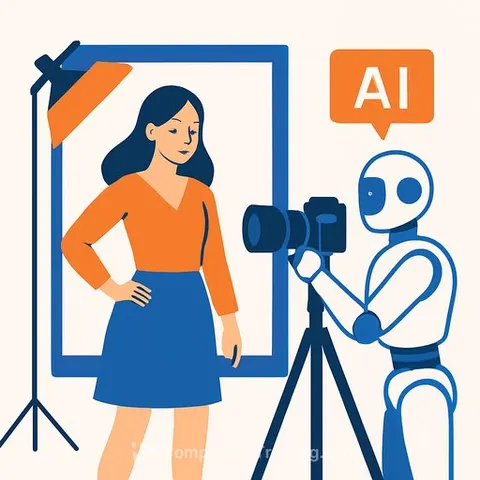
Zara's AI Fashion Photography Signals a Seismic Shift for Creative Industries
Zara is using AI to "dress" real models in new garments without booking fresh shoots. The system takes existing model photos, swaps outfits, and places them into digital scenes. Inditex says the tech complements current workflows, with model consent and pay equivalent to a separate shoot-important today, but not a guarantee of future demand.
The signal is clear: high-volume fashion brands can create more images, faster, with fewer logistical costs - a major Productivity gain. For creatives who depend on frequent bookings, that changes the math.
Why Retailers Are Moving This Way
H&M created AI clones of models. Zalando is accelerating image production with similar tools. This looks less like a test and more like a new baseline.
Reported results are hard to argue with: production times cut from eleven days to under forty-eight hours, a 35% drop in shoot costs, and an 18% lift in click-through rates on new arrivals. Thousands of product visuals, generated overnight, without studios, travel, or large crews.
The Human Cost
Isabelle Doran, CEO of the Association of Photographers, cautions that fewer shoots means fewer jobs for photographers, models, stylists, set designers, and crews. If one session feeds dozens of garments, repeat bookings shrink.
Big-picture Research echoes the risk. Goldman Sachs estimates generative AI could affect hundreds of millions of jobs globally, with creative and knowledge work highly exposed. The disruption isn't theoretical-it's already here.
Beyond Fashion
Fashion often adopts commercial trends first. If this works at Zara's scale, expect the same approach across e-commerce, advertising, and media. The tech-fabric simulation, photorealistic edits, and fast iteration-keeps getting better.
There's a tension worth noting. Inditex's leadership champions fashion photography as art through museum-grade exhibitions, while the brand automates large parts of its commercial image pipeline. That paradox will define creative work in the next decade.
What Creatives Can Do Now
- Update contracts: add clauses for digital redressing, virtual locations, and synthetic composites. Require explicit consent and approval before any AI edits publish.
- Price for multiplicative use: if one session can fuel dozens of SKUs, rates should reflect that downstream value.
- Separate likeness rights from training rights: no model or photographer likeness used to train systems without clear, paid permission and usage limits.
- Offer AI-enabled production: become the person who can plan, shoot, and deliver AI-ready assets and QC the outputs.
- Build style IP: develop a look clients want beyond "acceptable product photos"-light, color, story, and direction that's hard to imitate.
- Specialize where AI struggles: complex editorial narratives, location-driven shoots, motion direction, talent coaching, and brand story.
- Own the audience: share process, BTS, and case studies to attract direct clients. Community reduces dependency on intermediaries.
Practical Workflow Ideas
- Capture "base" sessions: neutral poses, varied focal lengths, clean lighting, and consistent camera profiles for reliable AI redressing.
- Create asset libraries: poses, hand variations, fabric swatches, shadows, and backdrops that speed iteration and keep brand consistency.
- Build prompt/style sheets: maintain prompt banks, negative prompts, color profiles, and composition templates for repeatable results.
- QC every output: watch seams, hand geometry, fabric stretch, specular highlights on leather, jewelry reflections, and pattern alignment.
- Track consent and versions: maintain signed releases, edit logs, and metadata so usage questions don't become legal fires.
- Deliver at scale: standardized file naming, batch exports, and color-managed profiles to drop into CMS without rework.
Contract and Ethics Checklist
- Explicit consent for digital alterations, virtual locations, and repurposing across garments.
- Separate compensation for base shoot vs. AI-extended usage; set floors for future reuse.
- No training on talent or photographer assets without written terms, limits, and fees.
- Approval rights before publishing synthetic edits; credit where applicable.
- Embed metadata that flags AI-edited assets for transparency and traceability.
Tools, Learning, and Next Steps
Treat AI like lighting: learn it, control it, and make it serve the idea. Producers and photographers who can direct both capture and synthesis will stay booked while others fight over leftovers.
If you're reskilling, start with structured practice and real briefs. For guided options by role, see Complete AI Training: Courses by Job.
Further reading on the shift and its impact:
- Bloomberg: Inditex on working with human models while testing AI
- Goldman Sachs: Generative AI's impact on jobs and productivity
The bottom line: clients will pick "good enough" at scale unless you offer something unmistakably better-or you're the one running the pipeline. Adjust your offer now, before your bookings adjust for you.