ZTE CDO Highlights Efficient and Green AI as a Driver of Sustainable Development Goals Progress
Cui Li, Chief Development Officer (CDO) at ZTE, recently outlined the company’s approach to advancing efficient and green artificial intelligence (AI) during the "AI for Good Global Summit 2025" held in Geneva. The summit session focused on the intersection of AI, environment, and energy for a sustainable future.
Li emphasized that the current surge in AI, especially fueled by large language models, comes with increasing computational demands and energy consumption. This trend raises urgent questions about how to achieve sustainable AI without compromising progress.
Two Perspectives: Energy for AI and AI for Energy
Li framed the challenge from two angles:
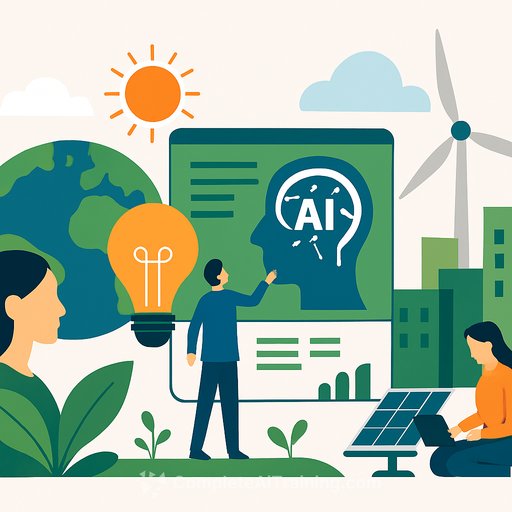
- Energy for AI: Addressing the rising energy costs of AI by improving efficiency.
- AI for Energy: Using AI itself to optimize energy consumption and support the transition to a low-carbon economy.
She referred to the industry's current "Inverted Triangle Dilemma," where AI's energy needs grow disproportionately as models scale. The solution lies in efficiency, which ZTE tackles on three fronts:
- Developing efficient infrastructure
- Enhancing intelligence with energy-efficient methods
- Accelerating impact by maximizing efficiency gains
Integrating AI with ICT for a Low-Carbon Future
Under the strategy "AI for All," ZTE is embedding AI deeply into its ICT products and technologies. This integration spans industrial, household, and consumer applications, enabling cost reductions, operational improvements, and a greener economic path.
This approach showcases how AI can be both a consumer of energy and a tool for energy conservation, creating a balanced pathway toward sustainability.
About the AI for Good Global Summit
The "AI for Good" initiative, organized by the International Telecommunication Union (ITU) in partnership with over 40 UN agencies and the Swiss government, is dedicated to exploring AI applications that address global challenges. Since its first summit in 2017, it has grown into a multi-stakeholder platform involving governments, academia, industry, civil society, and the UN.
For IT professionals and developers interested in deepening AI expertise with a focus on efficiency and sustainability, exploring specialized training can be valuable. Resources like Complete AI Training’s latest AI courses offer practical guidance on emerging AI topics.
Your membership also unlocks: