AI agent for automotive engineers
Bill of Materials Cost Rollup Agent
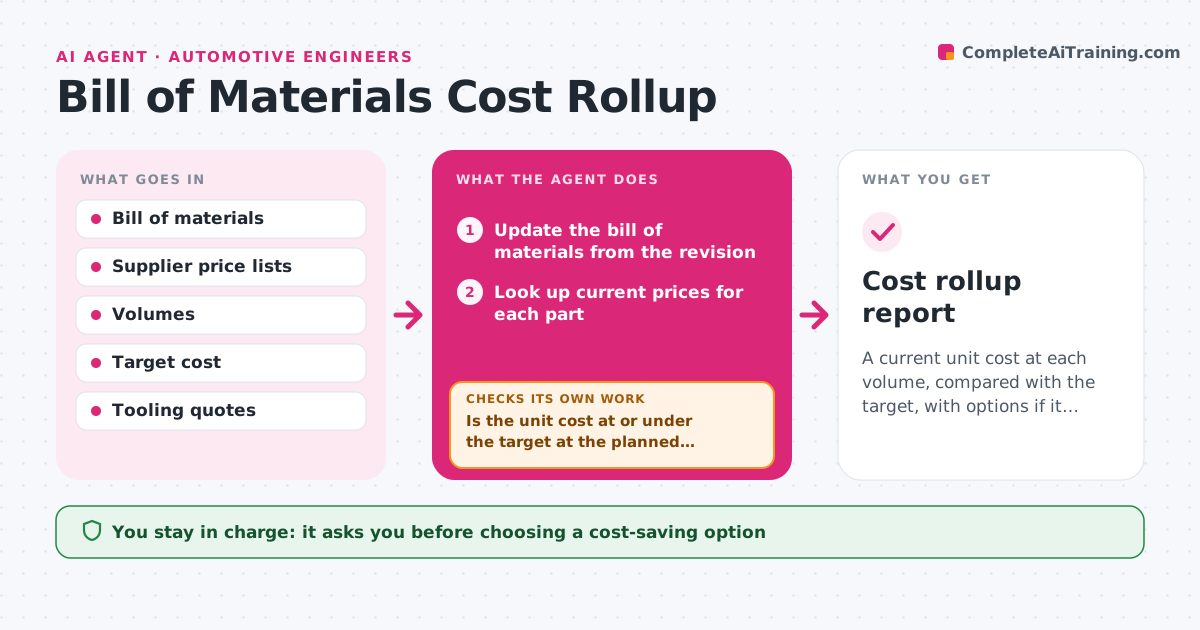
A current unit cost at each volume, compared with the target, with options if it is over
What it does
Cost grows with every design change and is checked only at the end. After each design revision, this agent updates the bill of materials and asks suppliers' price lists or current quotes for each part. It rolls up the unit cost at several volumes, such as 1,000, 5,000 and 20,000 units, and compares the result with the target. If the cost is over target, it lists the biggest cost drivers and options, such as a cheaper material, fewer parts or a different supplier, and recalculates each. It then checks that each option still meets the spec. The designer approves the final cost. Edge case: a tooling cost is spread over the volume and shown separately so it does not hide a high part price.
How it works
Follow the arrows from top to bottom. The orange dashed arrow is the loop: when a check fails, the agent goes back and tries again.
Read the steps as a list
- Design revision saved
- Update the bill of materials from the revision
- Look up current prices for each part
- Roll up the unit cost at each planned volume
- Is the unit cost at or under the target at the planned volume?If not: list the top cost drivers and calculate options. Back to step 2.
- Check each option against the spec
- Does each option still meet the spec?If not: remove the option and try the next. Back to step 6.
- Designer approves the final cost and chosen optionsThe agent waits here for your OK.
- Cost rollup report
How it decides
A revision passes when the unit cost at the planned volume is at or under target. Options are kept only if they still meet the spec.
- Compare cost at each planned volume
- Show tooling separately and per unit
- Rank cost drivers by share of total
- Drop an option that breaks the spec
Make it yours
Every agent is a starting point. You choose these settings for your own situation.
- Volumes to roll up
- Target cost
- Maximum age of a price (default 90 days)
- Currency
What keeps you in control
It always asks you first
- Choosing a cost-saving option
- Updating the cost shown to the client
Hard limits
- Never places an order
- Never uses prices older than 90 days without noting it
It stops when
- Done: cost known and the designer approved
- Stop: price data is missing for a major part
Set it up
We guide you through the set-up, step by step
Members get the full set-up guide for this agent. No technical skills needed: you copy, paste and upload.
- One set of instructions to paste into your AI, with the clicks for ChatGPT, Claude, Microsoft 365 Copilot, Gemini and Grok
- The agent then walks you through connecting your own data, one source at a time
- A downloadable copy with the flow chart, the rules and the full guide