
Learning path
Learning AI as a Mechanical Engineer
Learn to use AI in your mechanical engineering work without slowing down your day. This path covers setup, prompts, video courses, and certificates built for the job.

Your path
Everything in the Mechanical Engineer AI kit, in the order that makes sense. Members tick off each step and see their progress.
Set up your AI
We guide you through each click.
Let skills do your everyday tasks
Connect your apps and pick your AI apps
Hand whole tasks to AI agents
Build your own tools
Keep growing
Everything for mechanical engineers
All the courses, certifications, AI tools, MCP servers and apps for mechanical engineers, most relevant first. Open any list to see more.
Take the prompt courses
A short framework course to learn how to ask, then 8 lessons with ready-to-use prompts for mechanical engineers.
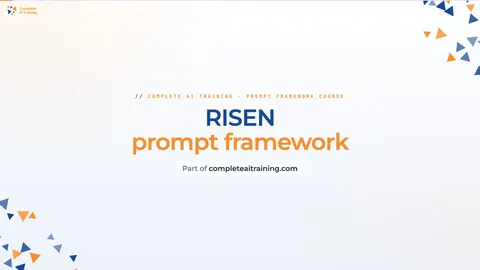
Start with this framework: how to talk to AI
RISEN fits your mechanical engineering work because it structures multi-step deliverables like a pump specification from requirements through testing.
Then your prompt course for mechanical engineers- 1Quick Engineering Calculations3 prompts
- 2CAD Modeling and Drafting3 prompts
- 3Simulation Setup and Results3 prompts
- 4Prototype Testing and Validation4 prompts
- 5Troubleshooting and Failure Analysis5 prompts
- 6Manufacturing and Supplier Coordination4 prompts
- 7Design Documentation and Reviews3 prompts
- 8Standards and Professional Admin4 prompts
Watch the video courses or add them to your Favorites for later
86 video courses our AI picked for mechanical engineers, most useful first. Save the ones you want to watch later with the heart.
Favorites are saved to your account: sign in or get your AI kit first.
Show all 86 video courses
Get certified, or add certifications to your Favorites
Every course ends in an exam and a certificate you can add to LinkedIn. Save the certifications you are aiming for with the heart.
Favorites are saved to your account: sign in or get your AI kit first.
More certifications for mechanical engineersShow all 24 certifications
Try the AI tools for mechanical engineers
1 AI tools our AI matched to the work of mechanical engineers, best fit first. Each review shows what it does, its alternatives and the jobs it suits.
Favorites are saved to your account: sign in or get your AI kit first.
Connect your AI to the apps mechanical engineers use
MCP servers let ChatGPT, Claude or Copilot look things up and get work done in other apps, like your email, calendar or bookkeeping software. These 3 fit the work of mechanical engineers best, well-known apps first.

Everything Search MCP server
by mamertofabianLets your AI search the files and folders on your own computer by name, size, or date.
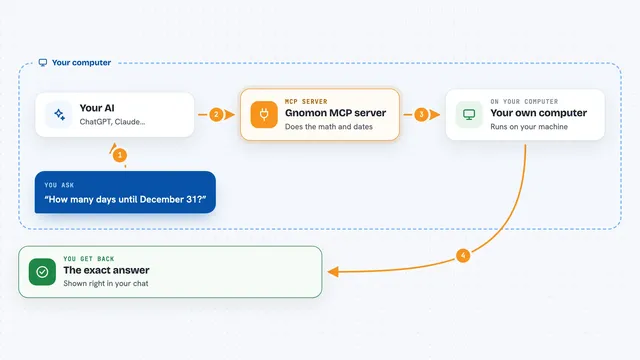
Gnomon MCP server
by lihtnessGives your AI a reliable calculator and calendar so dates, math, and unit conversions stop being guesses.
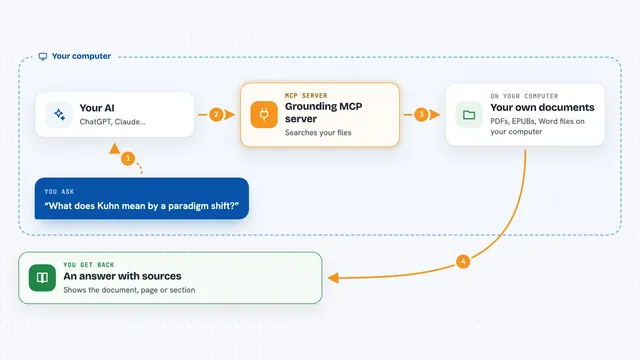
Grounding MCP server
by andyliszewskiSearch your own PDFs, EPUBs and Word files locally and get answers with page and section citations.



































About this learning path
6 topicsAI for Mechanical Engineers: A Practical Learning Path
Mechanical engineering work is full of small decisions: a material choice, a tolerance, a draft angle, a test plan. AI can help you move through those decisions faster while keeping your judgment in charge.
This learning path starts with setup questions and connecting your AI, then builds job skills inside your AI. You finish with a prompt course, video courses chosen for mechanical engineers, and the certifications that come with them.
Why AI Matters Now
Mechanical engineers are asked to do more with less time. AI tools can draft calculations, suggest CAD approaches, and help you write clearer reports. The engineers who use these tools well are the ones who stay focused on the hard problems.
What the Path Includes
You begin with setup questions and connecting your AI to your work. Then you build skills for the job inside your AI, followed by a prompt course with lessons on calculations, CAD, simulation, testing, troubleshooting, manufacturing, documentation, and standards. Video courses picked for mechanical engineers come next, along with the certifications of those courses.
How It Saves You Time
A first-pass calculation that used to take an afternoon can start in minutes. A supplier email that used to sit in your drafts can be ready to send after a short review. The time you win back goes into design decisions, testing, and the parts of the job that need your hands and your judgment.
How It Protects Your Career
AI does not replace mechanical engineers. It changes what the job asks for. Knowing how to check AI output, keep your data safe, and explain your reasoning makes you more valuable on any team.
How to Get Started
Start with the setup questions and connect one AI tool you already have access to. Then work through the prompt course one lesson at a time. Add the video courses when you want a deeper look at a topic. The certificates come as you complete each course.
Frequently asked questions
Do I need to be technical to use this path?
No. The path is written for working professionals who are not technical. You will learn how to ask good questions and check the answers, not how to write code.Will AI do my engineering work for me?
No. AI can help with first drafts, calculations, and communication. You still make the final call on design, safety, and testing.How long does the learning path take?
You can move at your own pace. Most people work through the prompt course over a few weeks, then add video courses as their schedule allows.What if I already use AI at work?
You can skip ahead to the lessons that matter most to you. The path is built to meet you where you are, whether you are new to AI or already using it daily.